Summary

  1. Cost of fare cap a tiny proportion of government's spendingpublished at 12:07 BST

    Most of the money needed to enact the single bus fare - projected to cost over £500m - will be reallocated from the Department for Energy Security and Net Zero, the government says.

    This cost is a small drop in the ocean of the government's overall spending - it's forecast to spend £1,416bn in 2026/27.

    Alex Chapman of the New Economics Foundation told BBC Radio 4 earlier that the money being spent on the policy is "very small in government terms".

    Sankey-style diagram titled “Health and social protection make up half of government spending,” showing the UK government spending forecast for 2026–27. Total spending of £1,416bn flows into categories of varying thickness. The largest allocations are £400bn for social protection and £294bn for health, together accounting for about half of spending. Other categories shown include £145bn education, £135bn debt interest, £90bn defence, £69bn transport, £62bn public order and safety, £56bn industry, agriculture, and employment, £54bn personal social services, £51bn housing and environment, and £60bn classified as other. A note states that figures may not sum due to rounding, with sources listed as the Office for Budget Responsibility and HM Treasury, and a BBC logo at the bottom.
  2. Burnham says 'no commitment' made on changing tax-free personal allowance thresholdpublished at 11:56 BST

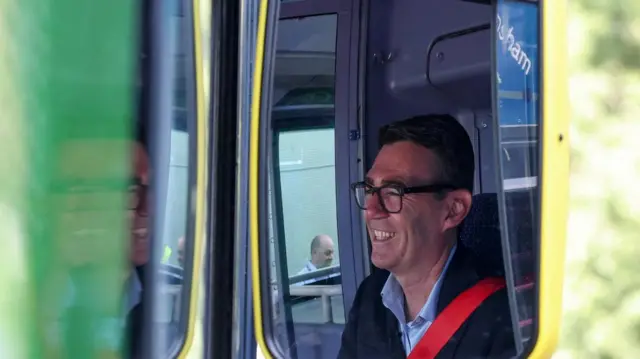
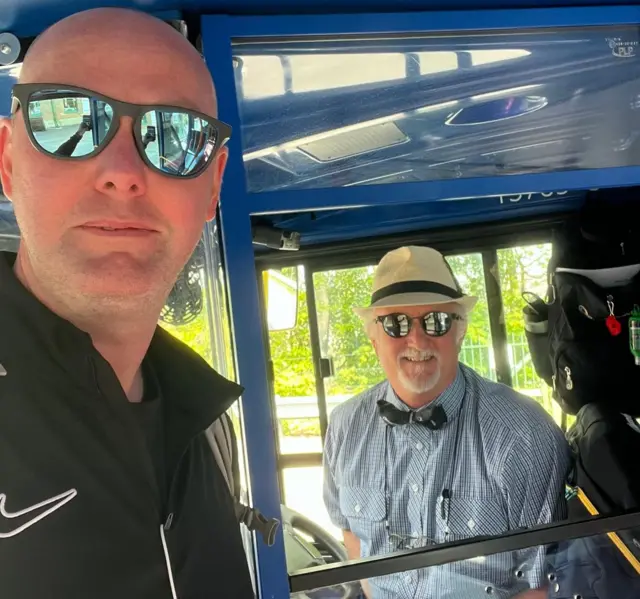
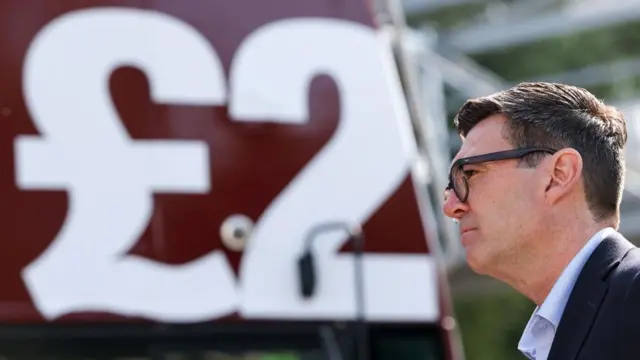
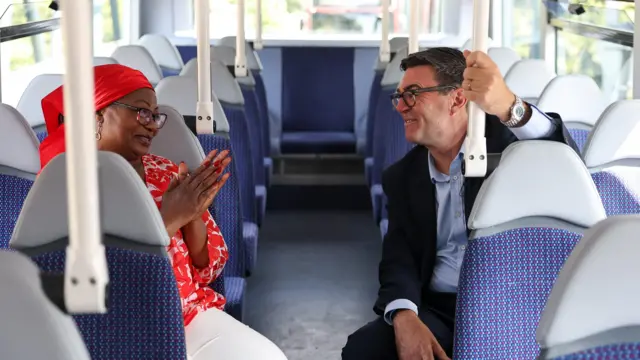
    Andy Burnham sitting in the driver's seat on the bus putting on his seatbelt and seen through the windowImage source, PA Media

    More from Andy Burnham's comments from Bath now.

    Burnham, asked about the possibility of freezing the £12,570 tax-free personal allowance threshold he says there is "no commitment at this point to change".

    Earlier, those close to Burnham told the BBC will not be part of his initial plan to tackle the cost of living, after suggestions that he could freeze the tax.

    The PM says "we will have to look at it in the budget", adding that no "unfunded promise" has been made.

    On council housing, he says the government is putting a "greater priority" into this area.

    He says this will not mean tax rises in the next budget, adding "this is about re-prioritising in this phase" and addressing issues such as the housing crisis and cost of living crisis.

    "How much longer are we going to talk about these things without actually doing something to help people?" he adds.

  3. Burnham says £2 cap originally his idea and policies will be funded by 're-prioritising' fundspublished at 11:45 BST

    The prime minister has insisted that the £2 bus fare cap was his policy idea originally, when asked by reporters about "bringing back Boris Johnson's policy" on a £2 cap that was introduced in 2023.

    Speaking to journalists in Bath, Andy Burnham says it was "actually my policy originally" and that he'd "worked with Boris to take it national".

    He says he believes the cap on bus fares will "really help" people and "put money in people's pockets".

    Moving onto the policies he has revealed since Monday, he says they are being fully funded by "re-prioritising" the government's budget.

    Burnham says the policies he has announced so far - the cut to VAT on electricity bills for six months from October, the £2 cap on bus fares, and his pledge to end rough sleeping - are all "fully funded".

    "The public's priority is reducing the cost of living pressures" he says, adding that he's taking "a difficult look" at previous government commitments and re-prioritising.

  4. 'Bus fare cut is no good for those who drive,' says Durham manpublished at 11:21 BST

    Rozina Sini
    BBC Your Voice

    Mark Tait smiling as he looks towards the cameraImage source, Mark Tait

    Mark Tait, who lives near Durham, tells the BBC the bus fare cap will make little difference to him.

    "This is great if you use the bus, but no good for those who drive. Yet again, the working class person is left out," Tait says.

    "I work 13 miles away and for me to use public transport it would take three buses. They keep talking about using public transport, saying it's better for the environment but that's not always possible."

    Tait says the announcement was fine for older people or students, "but for the majority of people who work the £2 cap means nothing to us".

    "But a further cut on fuel duty would help," he says.

    Your Voice banner
  5. Chancellor: Fares will be cut by a third for millionspublished at 11:13 BST

    Newly appointed Chancellor of the Exchequer John Healey departs Downing Street on July 20, 2026 in London, England.Image source, Getty Images

    The government's £2 bus fare cap will cut fares by a third for millions of people, Chancellor John Healey says.

    The chancellor says everyone's bus fares will be capped at £2 "throughout 2027".

    The Lib Dems have called on the government to cut bus fares further, while Shadow Chancellor Mel Stride has accused the government of not properly specifying where the funding is coming from - here's what the government has said.

    Alongside VAT cuts to household electricity bills, Healey says the latest measure shows how Andy Burnham's government will "build a new economy, create new hope, and advance working people across the country".

    As a reminder, the £2 bus fare cap applies for England, but in their announcement the government says funding has also been allocated for devolved governments.

  6. Cap 'would save me about £20 a month', Newcastle commuter sayspublished at 11:00 BST

    Rozina Sini
    BBC Your Voice

    Peter Hogg from Newcastle welcomes the £2 price cap, telling the BBC he currently spends £5 a day on his return journey to work.

    "I currently spend £2.50 for a single ticket, there is not a discount for a return ticket," he says.

    "The next step up is a day-rider ticket at £6 that allows you to jump on multiple buses in the day but I don’t do that.

    "If it does go down that will be fantastic. It would save me about £20 a month."

    As a reminder, you can get in touch with us in the following ways.

    Your Voice banner
  7. Income tax, Sarwar and Streeting: What else is making political headlinespublished at 10:54 BST

    Anas Sarwar wearing a suit and tie and looking to the rightImage source, PA Media
    Image caption,

    Scottish Labour leader Anas Sawar is set to join Burnham's government

    As Andy Burnham's third day in office picks up, here are some of the other stories on the political agenda:

    Burnham pulls back on income tax: As we've reported, the prime minister told the Times over the weekend that "frustration" about the £12,570 tax-free personal allowance threshold was "lodged in my mind". Those close to Burnham have since told BBC News that any changes to the personal allowance are not part of his initial plan to tackle the cost of living.

    Scottish Labour leader to join Burnham team: Anas Sarwar is set to stand down from his role as leader of Scottish Labour, to take up a seat in the House of Lords and become a minister in Burnham's government. It is thought he will become a business minister. Read more about that here.

    Streeting apologises for prisoner comments: Defence Secretary Wes Streeting says there was "no ill intent" behind comments he appeared to have made about the early prisoner release scheme, which were caught on camera. He can be heard telling Home Secretary Shabana Mahmood that Justice Secretary Alex Norris is "the enemy now" as the latter walks towards them. Our full story is here.

  8. Wales and Scotland first ministers discuss UK relationship with Burnhampublished at 10:42 BST

    Rhun ap Iorwerth stands in a navy suit beside a sign that says "Welsh Government" in English and Welsh.Image source, Welsh Government/PA
    Image caption,

    Rhun ap Iorwerth says he and Andy Burnham have made it clear they want to have a 'constructive' relationship

    Welsh First Minister Rhun ap Iorwerth says Andy Burnham is “open to listening perhaps in a way that Keir Starmer wasn’t” regarding the devolution of powers in Wales.

    He tells the Today programme that he had a conversation with the new prime minister on Tuesday and both made clear they wanted to have a positive and "constructive" relationship, adding that powers over policing, rail and funding are included in the list of things he wants devolved.

    Scotland's first minister John Swinney says Burnham also reassured him he was interested in a "collaborative" relationship, saying he felt relations between the UK and Scottish governments "soured significantly" when Douglas Alexander was appointed as Secretary of State for Scotland in September 2025.

    Alexander remains in his role after Burnham unveiled his cabinet this week.

    Swinney tells Radio Scotland Breakfast he is taking the words of Burnham at "face value" and hopes that his assurances are reflected in the approach taken by Alexander.

  9. Extra funding for Northern Ireland, but no obligation to spend it on transportpublished at 10:35 BST

    John Campbell
    BBC News NI economics and business editor

    Public services in Northern Ireland will get a small amount of additional money as a result of the PM's decision to freeze bus fares in England.

    The exact amount will not be known until the autumn budget but is likely to be about £10m to £15m.

    Ministers will not be obliged to spend the money on public transport. The rules of devolution funding mean local ministers set their own policies and priorities.

    The government said this morning the funds allocated for the bus fare cap included money for devolved governments.

    Earlier this month Translink, Northern Ireland's public transport company, said it would have to make cuts to services due to budget pressures.

  10. VAT on electricity cut and bus fares capped: Burnham's announcements so farpublished at 10:13 BST

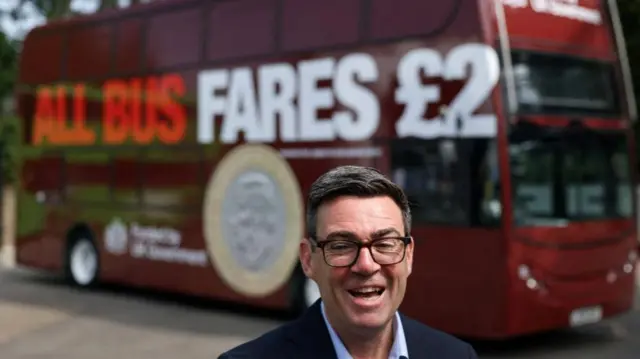
    Andy Burnham outside No 10Image source, Reuters

    Since arriving at Downing Street as the newly appointed prime minister on Monday, Andy Burnham has made two specific policy announcements.

    Bus fares cap: He announced this morning that most single bus fares in England would be capped at £2 from 1 January 2027.

    This policy is expected to cost over £500m. The government has said £454m will be reallocated from the Department for Energy Security and Net Zero.

    VAT on electricity: Yesterday morning, Burnham said he would cut VAT from household electricity bills from October for six months, which is projected to save households an average of £45.

    The government expects the cost to be £850m, which it will finance through reallocation of funds from the cancellation of the Digital ID programme. It has insisted the change is "fully funded".

    What else Burnham has promised: In his first speech as PM, Burnham pledged to end rough sleeping, with the government later saying it would allocate £340m over the next five years.

    Burnham also promised to build more council homes, and vowed to help more young people into work by changing the education system and giving them more mental health support. He has so far not offered further detail on these promises, including how they would be funded.

  11. Lib Dems call for Burnham to slash bus fares furtherpublished at 10:01 BST

    The Liberal Democrats say it is "a relief to see the cap back down to £2" but the policy change is "an easy win for Burnham".

    Liberal Democrat transport spokesman Olly Glover accuses the government of still leaving millions of people behind as rural communities struggle with few or no bus services.

    "Now the work of transforming transport for the whole country must begin," Glover adds.

    He urges Andy Burnham to turn to "emergency measures" to ease costs exacerbated by the US-Iran war, including "capping national bus fares at £1, slashing rail prices by 10%, and cutting fuel duty by 10p per litre".

  12. Analysis

    Quick wins for now on living costs, but what next?published at 09:46 BST

    Kevin Peachey
    Cost of living correspondent

    A quid a week off electricity bills won’t count for much if global energy costs keep rising.

    Young workers paying a £2 bus fare will want a decent job at the end of the journey.

    The Burnham-led government is unashamedly going for the quick wins on living costs in its early days. Hence the Conservatives’ “people pleaser” attack line.

    But the bigger stuff is harder to pull off. Like changes to taxation (see the retreat from raising the personal allowance), like turbocharging the economy, raising living standards, overhauling how we pay essential bills and to whom.

    Some of that will be within the government’s control. Some will be dictated by uncontrollable events elsewhere.

    All of it will be a challenge for a new PM and chancellor, just as it was for their many, recent predecessors.

  13. Morning recap: Bus fare cap latest pledge from Burnham on third day as PMpublished at 09:25 BST

    Joe Coughlan
    Live reporter

    Andy Burnham speaking to his cabinet on Tuesday.Image source, Getty Images

    Andy Burnham has announced that most bus fares in England will be capped at £2 from the start of next year, with the prime minister saying no one should be "priced out" or "left behind" when it comes to affordable transport links.

    The pledge is expected to cost over £500m, of which £454m will be reallocated from the Department for Energy Security and Net Zero, including by switching investment set aside for international climate finance to loans.

    Chancellor John Healey says the action being funded by savings made elsewhere will allow there to be "no burden to British taxpayers", while Transport Secretary Heidi Alexander tells the BBC she is "100% sure" the money is there to pay for the cap.

    Even so, the announcement prompted Shadow Chancellor Mel Stride to accuse the government of "not actually specifying where the money is going to come from".

    The scheme comes after the government pledged on Tuesday to cut VAT from 5% to zero in household electricity bills from October. Burnham told his cabinet on Tuesday he would lead a "cost of living government".

    But the prime minister has pulled back from suggestions he will increase the tax-free personal allowance.

    A blue Arriva bus arrives at a bus stop by shops in Royal Turnbridge WellsImage source, Getty Images
  14. We're not making unfunded spending commitments, transport secretary sayspublished at 08:58 BST

    Heidi Alexander speaking into a microphone in front of BBC Today Radio 4 logo

    Transport Secretary Heidi Alexander is doing the media round this morning - she's just spoken to BBC Radio 4's Today programme.

    Speaking about the bus fare cap, she says this government is "not making any unfunded spending commitments" and has been "very clear about where the money is coming from for this proposal".

    Earlier on BBC Breakfast, the transport secretary said she was "100% sure" the money was there to pay for this single bus fare cap.

    "There is £454m of re-prioritising money. It's switch spending, we're not going to be giving those grants for international climate projects in other countries. We're going to be making those loans instead so that money comes back," she said.

    Following the announcement to remove VAT from electricity bills, Alexander calls the fare cap pledge a "signal of intent" which "shows you the direction of travel of the government under Andy Burnham".

    She admits it's "not the whole solution" but says "giving people a little bit of hope that help is on the way" is the right thing to do.

  15. Trade body calls for 'fair' reimbursement model for bus operatorspublished at 08:55 BST

    Bus and coach trade body CPT is calling on the government to provide a "fair" reimbursement model for operators taking part.

    Chief executive Graham Vidler says it is "vital" for the government to work with the industry to place it on a "sustainable footing" following the £2 fare cap announcement.

    However, Vidler says CPT will work with the government "to make the £2 fare cap a success".

    He says the trade body is "pleased" to see Andy Burnham place buses "at the heart of his government's cost of living plans".

    Most of England, not including London and Manchester, currently operate under deregulated bus networks, where private operators set fares.

  16. Bus usage still recovering from Covid droppublished at 08:44 BST

    Katy Austin
    Transport correspondent

    Before the pandemic, bus usage had been trending down. Covid caused a huge drop, from which numbers are still recovering.

    In the year ending March 2025, 1.9 billion journeys were made by local buses in England outside London. That’s 4% up on the year before, and at 93% of pre-pandemic levels.

    It's hard to get an exact number on how many bus services are running overall. But bus mileage, or miles run, gives an indication of the size of the bus network.

    In the year ending March 2025, bus mileage in England outside London was at 86% of pre-pandemic levels.

  17. Fare cap 'not enough' to convince people to use bus instead of car, think tank policy chief sayspublished at 08:41 BST

    Alex Chapman sits instead of a white wall with a painting at the top. He is wearing a dark shirt and glasses.

    Andy Burnham's £2 fare cap is "not going to be enough" to convince people to use the bus instead of a car, says the economics and environment policy chief at a British left-wing think tank.

    Alex Chapman of the New Economics Foundation tells Radio 4's Today programme that he was pleased to see the initiative being brought in so soon into Burnham's premiership, but that the money being spent on the policy, expected to be over £500m, is "very small in government terms".

    He adds: "The actual scale of this is very limited. It's really the reinstatement of a policy that we had only a couple of years ago."

    Chapman says he would love to see more ambition on cutting bus fares for youths, adding that a £1 bus fare cap would make the service "much more competitive" with the cost of a private car.

  18. Fare cap announcement applies to all areas of England outside Londonpublished at 08:31 BST

    People waiting to board a double decker London bus.Image source, EPA
    Image caption,

    Single bus fares in London currently cost a flat rate of £1.75

    The government's announcement of a £2 single bus fare cap applies to all areas of England outside of London.

    London has its own integrated transport system - Transport for London - which is part of the Greater London Authority, and chaired by London Mayor Sadiq Khan.

    Single bus fares in London currently cost a flat rate of £1.75. Earlier this month, the mayor extended a bus and tram fare freeze until 1 November.

    Most of England, not including London and Manchester, currently operate under deregulated bus networks, where private operators set fares (when there is no cap).

    In 2023, Manchester became the first place outside of London to introduce bus franchising - bringing buses back under public control - since privatisation in 1986. It was a key policy when Burnham was Greater Manchester mayor.

    The Labour government has brought in more powers for local authorities to take control of buses, and more mayoral authorities, including West Yorkshire and the West Midlands, now have plans to do so.

  19. Transport secretary speaking to Today programme - watch livepublished at 08:21 BST

    Transport Secretary Heidi Alexander is speaking to BBC Radio 4's Today programme about the £2 bus fare cap.

    You can watch the interview live at the top of the page.