Summary

  1. Earthquake last night was strongest to hit Venezuela since 1900, says USGSpublished at 09:39 BST
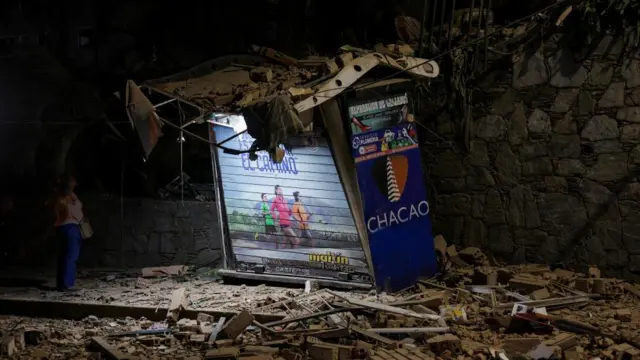
    A person looks on at the site of a collapsed building, with a shuttered unit warped and covered in rubble.Image source, Reuters
    Image caption,

    Rubble near the site of a collapsed building in Caracas after the earthquakes last night

    One of the earthquakes that struck Venezuela last night was the strongest to occur in the country since 1900, according to data from the US Geological Survey (USGS).

    The first earthquake that struck the country last night was registered with a magnitude of 7.2 by the USGS, with a second quake of 7.5 magnitude striking less than a minute later.

    The government agency's catalogue of earthquakes states that an earthquake with a magnitude of 7.7 struck near the coast of Venezuela on 29 October 1900, known as the San Narciso earthquake.
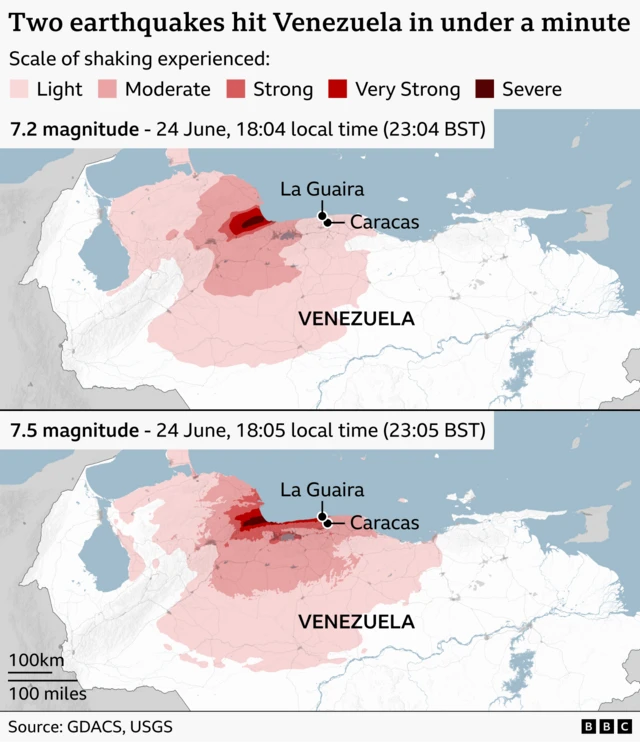
    Two maps showing powerful earthquakes striking northern Venezuela less than a minute apart on 24 June. The first, magnitude 7.2 at 18:04 local time, produced strong to severe shaking concentrated inland near the coast, while the second, slightly larger magnitude 7.5 at 18:05, spread more intense shaking across a wider area particularly along the northern coast. The maps use a colour scale from light to severe to illustrate shaking intensity, highlighting heavily affected zones around La Guaira and Caracas, with broader regions experiencing moderate to strong tremors. The source is GDACS and the USGS
  2. Residents set up tents on streets away from damaged buildingspublished at 09:22 BST

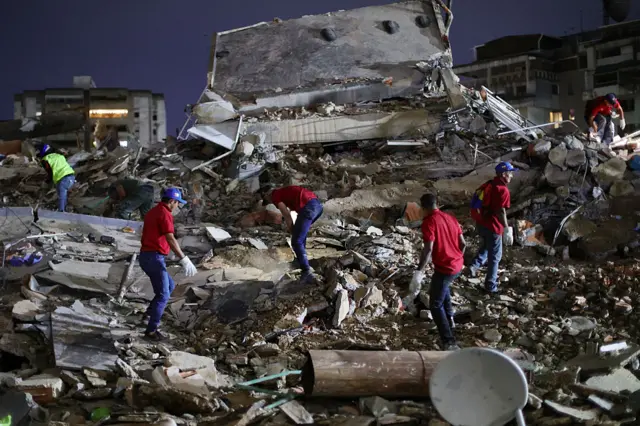
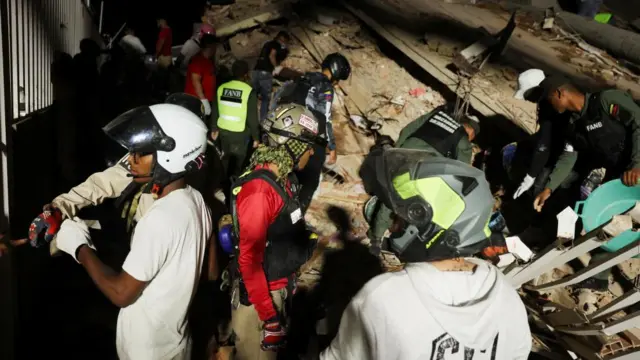
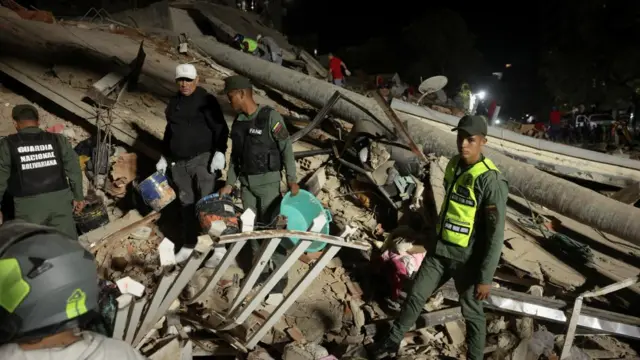
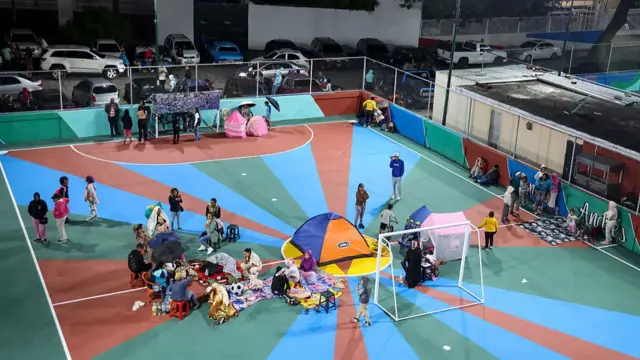
    Rescue and recovery operations continue in Caracas and other areas affected by the two back-to-back earthquakes that struck Venezuela on Wednesday.

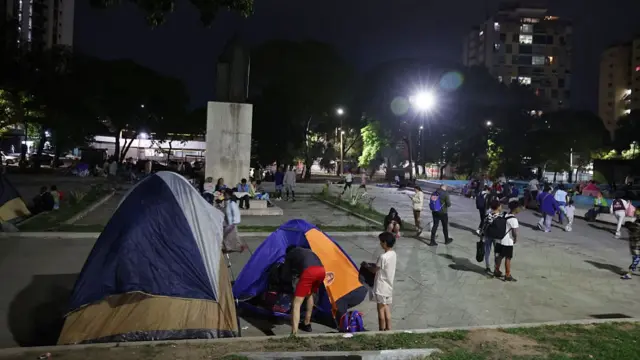
    Some are choosing to set up tents on the streets, as fears remain of potential aftershocks or damaged buildings collapsing.

    Caracas families set up tent on a football pitch following a series of earthquakes struck the countryImage source, Getty Images
    In the foreground is a set of tents with children moving things inside the smallest one. The scene appears to be set in a park in Caracas, with several other people with backpacks standing and walking around the backgroundImage source, Getty Images
  3. Most affected is La Guaira state, north of Caracas, acting president sayspublished at 09:12 BST

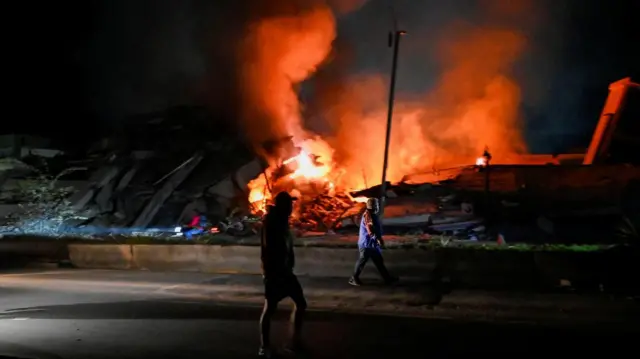
    Two people walk past a huge fire amid collapsed buildingImage source, Reuters
    Image caption,

    A burning building in La Guaira, Venezuela

    We can bring you a little more from Delcy Rodríguez's update from earlier this morning.

    The acting president says the most affected state is La Guaira, north of Caracas, where "dozens" of buildings have collapsed. She calls it a "disaster zone" and a "true tragedy".

    Speaking of the reports of 32 dead, the interim president says this is "not including any figures that may come in from the state of La Guaira".

  4. Priority is saving lives, acting President Delcy Rodríguez sayspublished at 09:01 BST

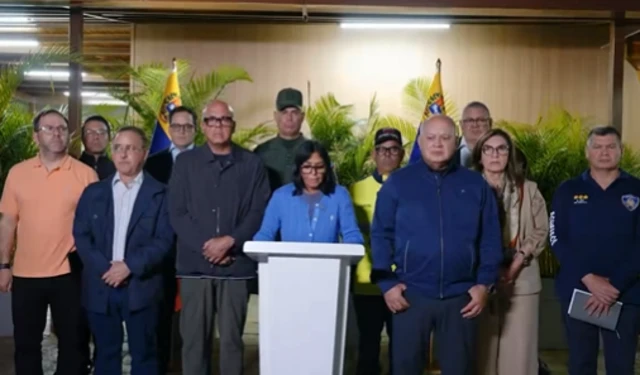
    Delcy Rodriguez speaking at a lecturn alongisde authoritiesImage source, Delcy Rodriguez/X

    Venezuela's interim president, Delcy Rodríguez says the priority is "saving lives" and that authorities are working on rescuing people trapped by collapsed buildings.

    Speaking earlier this morning, Rodríguez says that in the next few hours Venezuela will begin to receive rescue workers from other countries including the US, the Dominican Republic, Mexico and El Salvador.

    She adds that hotels and shelters are available for those who have lost their homes, and that all classes and activities not essential to public services are suspended.

  5. How estimated death tolls and damage are calculatedpublished at 08:47 BST

    Esme Stallard
    Senior climate and science reporter

    Soon after the earthquake struck the US Geological Survey (USGS) gave an estimate on the potential economic damage and fatalities in the region.

    It has put that most likely potential loss of life between 10,000 and 100,000.

    This is not an exact figure of the number of people that may have died - it could be higher or lower.

    The USGS issues this figure to help emergency responders, government agencies and the media understand how potentially significant this event is and deploy resources effectively.

    The organisation uses something called the PAGER system to calculate this figure.

    Emergency workers at a damaged building after an earthquake, in La Guaira, VenezuelaImage source, Reuters

    It looks at many factors including the size of the earthquake, how far below the surface the earthquake started, the amount of ground shaking and the population in the area that could have been exposed. And then based off of previous earthquakes with similar characteristics it gives us a figure.

    But many other factors play into the potential injuries and deaths, including the quality of the buildings and the time of day.

    If people are sleeping when earthquakes occur it increases the likelihood of not being able to evacuate.

    The figure will get updated as more information comes through. But this event has been given a red alert - of which there are usually only 1-2 a year.

  6. The aftermath of Wednesday's back-to-back earthquakespublished at 08:34 BST

    It is the middle of the night in Venezuela, where back-to-back earthquakes struck on Wednesday evening.

    These photographs depict the aftermath in Venezuela's capital city Caracas and nearby Valencia.

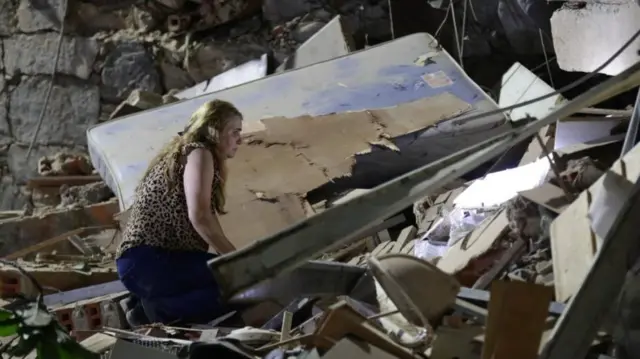
    A woman kneeling on a pile of rubble from a collapsed building in CaracasImage source, EPA
    Image caption,

    A woman kneels on a pile of rubble from a collapsed building in Caracas

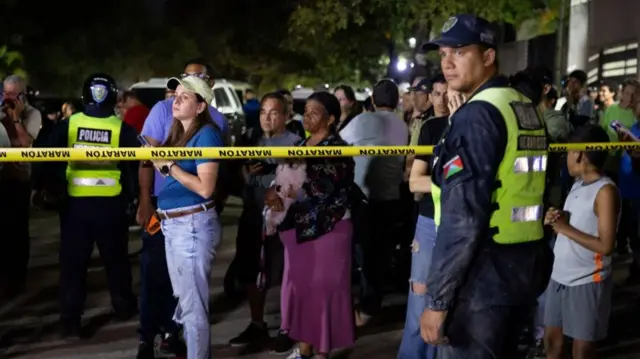
    People wait outside their homes in Caracas while law enforcement officers watch onImage source, EPA
    Image caption,

    People wait outside their homes in Caracas while law enforcement officers watch on

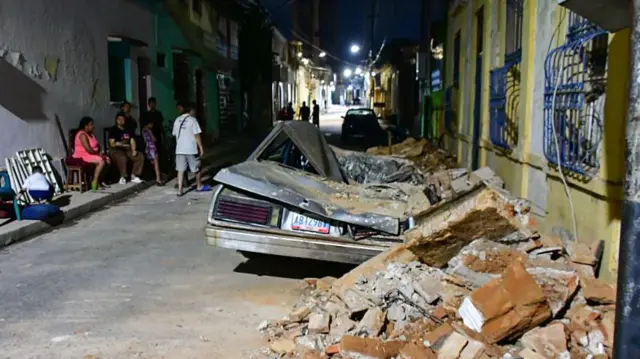
    People gather on a street next to a crushed carImage source, Getty Images
    Image caption,

    Debris has fallen on to the streets

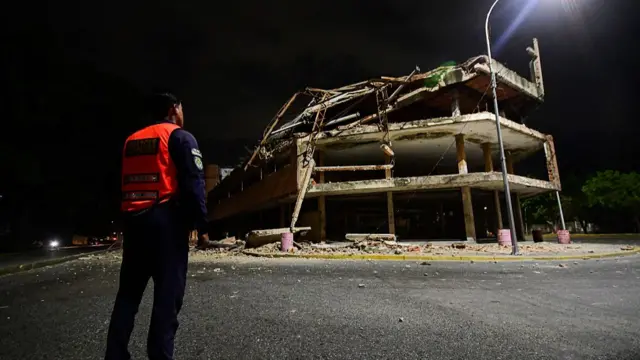
    A Venezuelan municipal police officer stands next to a collapsed building in ValenciaImage source, Getty Images
    Image caption,

    In Valencia, a local officer looks at a collapsed building

  7. BBC Verify

    Hotel in La Guaira reduced to rubblepublished at 08:23 BST

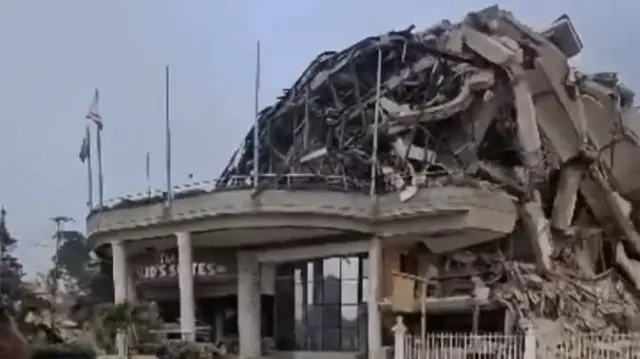
    The collapsed Hotel Eduard's in VenezuelaImage source, X

    By Sarah Jalali and Paul Brown

    We've verified footage showing the aftermath of the earthquakes in Venezuela in which a hotel in La Guaira, Venezuela, has completely collapsed.

    The Hotel Eduard's, on the coast of Venezuela just north of the capital Caracas, once stood 10 storeys tall but has now been reduced to rubble.

    Using online mapping and reverse image searches we were able to verify the location and the recency of the clips.

    We’re looking at other footage coming out of Venezuela showing widespread destruction.

  8. Search for survivors continues in north Caracas suburbpublished at 07:54 BST

    We can now bring you more from BBC reporter Vanessa Silva, who tells us about a collapsed building in the north Caracas suburb of San Bernardino.

    Vanessa says the building contained five flats and security personnel are working to remove debris.

    She adds that they are also trying to confirm whether an individual has died while searching for survivors.

    Vanessa says: "The minister of interior just said that they are evaluating the damages along the north coast of the country and there are reports of many damages in different states of Venezuela."

    Rescuers searching in San Bernardino earlierImage source, Getty Images
    Image caption,

    Rescuers searching in San Bernardino earlier

  9. 'Venezuelans are very resilient,' says teacher in Caracaspublished at 07:44 BST

    Many buildings in Caracas have been left with parts of their walls falling down and visible cracks, says a teacher at a British school in the capital.

    Alan Chung, who has lived in Venezuela for seven years, tells Radio 4's Today programme that he was in a restaurant at the time of the quakes, before running outside and seeing "a cloud of dust" and electricity lines "exploding".

    He says people in the country are accustomed to minor earthquakes, but this was "the most serious for a long time".

    "Venezuelans are very resilient," Chung says.

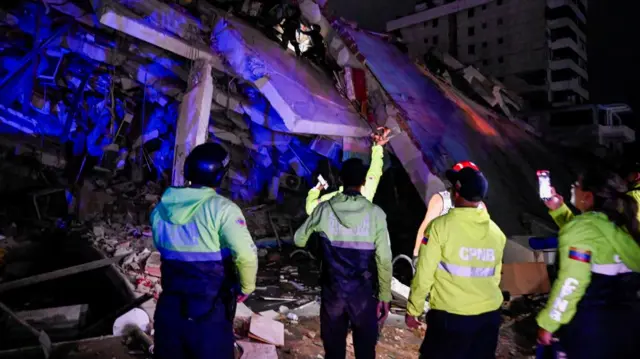
    Emergency services work at the site of a collapsed building after an earthquake in CaracasImage source, Reuters
    Image caption,

    Emergency services work at the site of a collapsed building in Caracas after the earthquakes

  10. Venezuela earthquakes kill at least 32 and injure hundreds, with many more feared deadpublished at 07:39 BST

    Back-to-back earthquakes in Venezuela have killed at least 32 and injured hundreds. If you're just joining us, here is what we know so far:

    Emergency services work at the site of a collapsed building after an earthquake in VenezuelaImage source, Reuters
  11. US 'immediately' sending search and rescue teams to Venezuela, says Rubiopublished at 07:12 BST

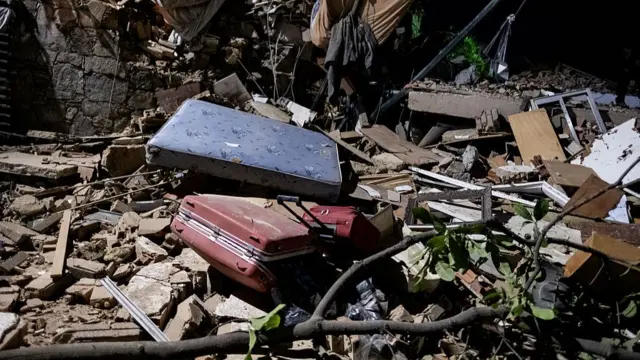
    Suitcases seen among rubble, which includes bricks and a branch in a harshly lit photographImage source, Getty Images

    The US is "immediately deploying search and rescue teams, medical resources and humanitarian assistance" to Venezuela, Secretary of State Marco Rubio says.

    In a post on X, Rubio says that "our hearts are with all those who have lost loved ones, those injured, and the courageous rescue workers working tirelessly in the aftermath".

    It comes after his deputy Christopher Landau said that the US was in touch with Venezuelan authorities and "mobilising assistance".

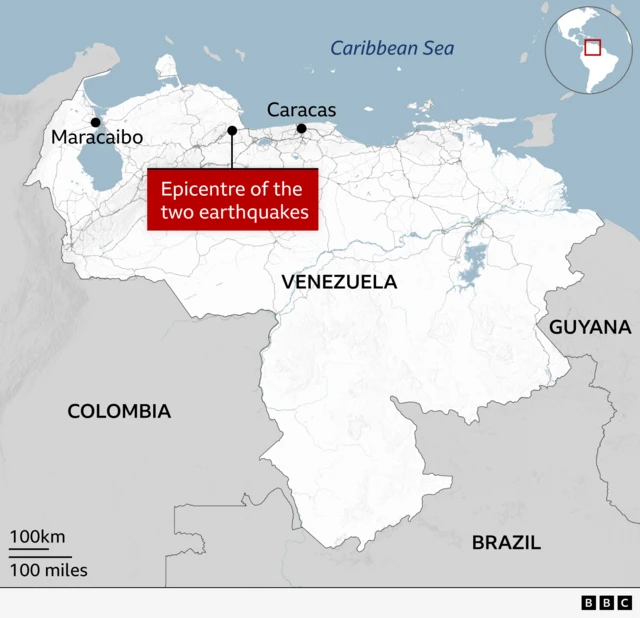
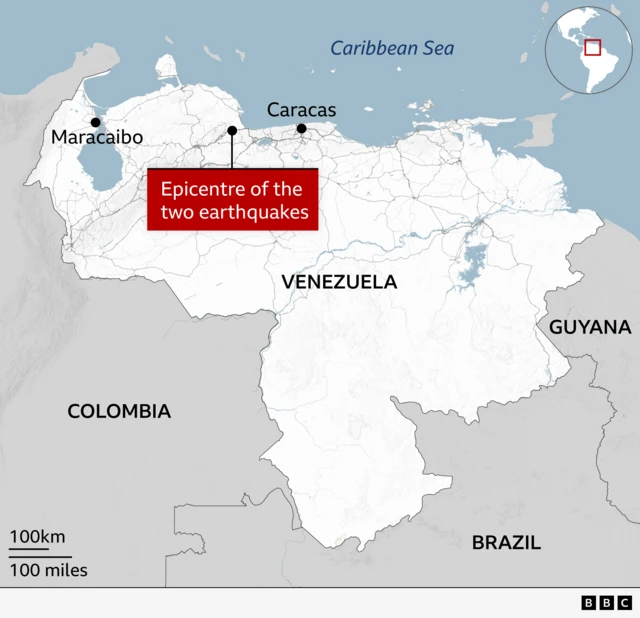
    Map of northern South America focusing on Venezuela, showing the location of two earthquake epicentres inland between Maracaibo in the west) and Caracas on the central north coast. The Caribbean Sea is labelled to the north, with neighbouring countries Colombia, Guyana, and Brazil also marked. An inset map in the top right shows the region’s position within the Americas.
  12. More photos emerge after earthquakes in Venezuelapublished at 07:02 BST

    More photos are emerging from Venezuela following the two major earthquakes on Wednesday, which rocked the capital city of Caracas within a minute of each other.

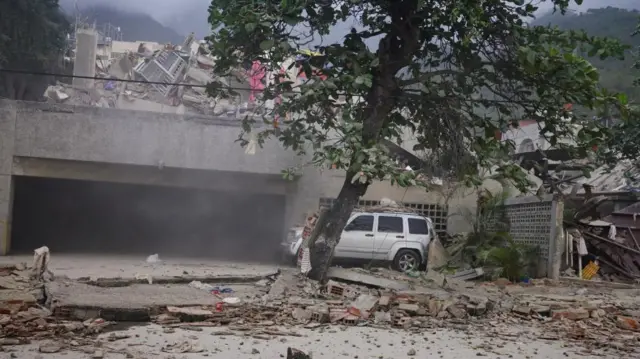
    A silver car is seen among rubble, with a tree in front and more rubble in the background.Image source, Reuters
    Image caption,

    Debris of a collapsed building in La Guaira, one of the areas hit hardest by the quakes

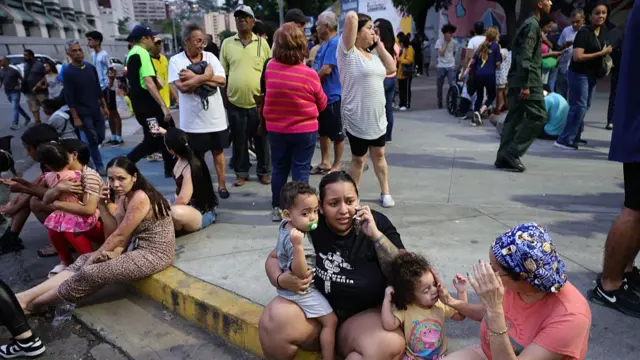
    Multiple people standing and sitting at a kerb on a street in various brightly coloured clothes.Image source, Getty Images
    Image caption,

    Evacuated people in the capital of Caracas, where some residents spent the night outdoors

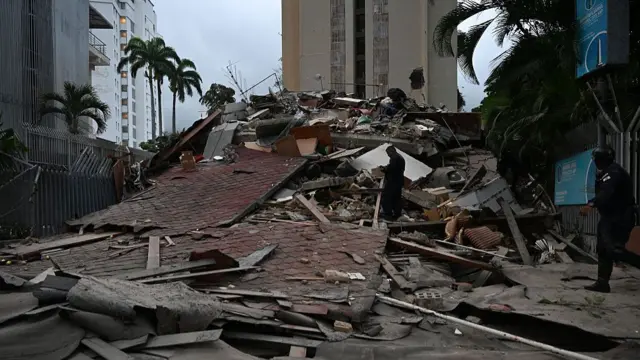
    Rubble, including roofing, from a collapsed building on a gloomy day. Two figures are visible in the foreground.Image source, Getty Images
    Image caption,

    Personnel inspect a collapsed building in Caracas

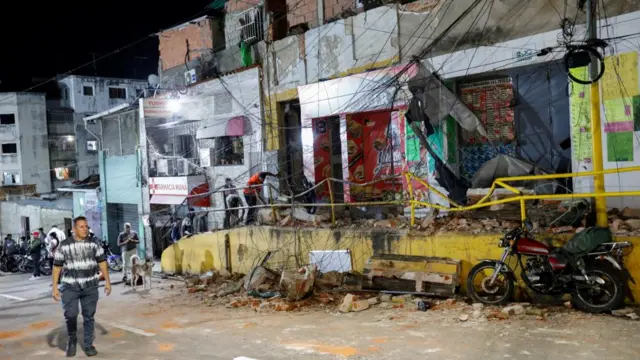
    A man passes a street with damaged railings and shopfronts in the aftermath of an earthquake.Image source, Reuters
    Image caption,

    A man passes a set of damaged shops in Caracas following the earthquakes

  13. Rodríguez thanks Trump for US supportpublished at 06:31 BST

    Venezuela's interim president Delcy Rodríguez has thanked US President Donald Trump in a social media post, saying he has been in constant contact with the Venezuelan authorities.

    In a statement shared on Facebook she says that the US government have offered support and solidarity to Venezuela.

    It is one of a series of messages Rodríguez has shared thanking other leaders for their support. She has also thanked Indian PM Narendra Modi and Chile's President José Antonio Kast among others.

    Trump said in a post on Truth Social earlier that the US "stands ready, willing, and able to help", adding that he had "instructed all agencies of our government to get ready to move quickly".

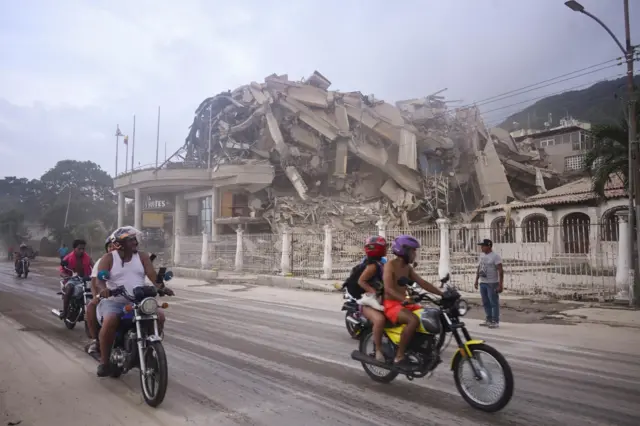
    Motorcyclists pass a damaged building in CaracasImage source, Reuters
  14. At least 32 dead and around 700 injured - interim presidentpublished at 06:03 BST
    Breaking

    At least 32 people have died in the earthquake and some 700 people are injured, according to Venezuela's interim president Delcy Rodríguez.

    These are the first figures that she has given regarding the number of deaths. We'll bring you more updates when we get them.

  15. Three killed by collapsed buildings in Baruta municipality - mayorpublished at 05:59 BST

    Three people have been killed after two buildings collapsed in Baruta, a municipality in Caracas, according to its mayor Darwin González.

    In a post on X, González wrote that the other residents had been rescued and the injured were being treated.

    As a reminder, authorities have not given a rough estimate of the death toll, though there are fears that the number could be very high.

    The USGS earlier calculated a 44% chance of more than 10,000 fatalities, and a 30% chance of more than 100,000 after the second main quake.

  16. Fearful residents wait out the night in the openpublished at 05:44 BST

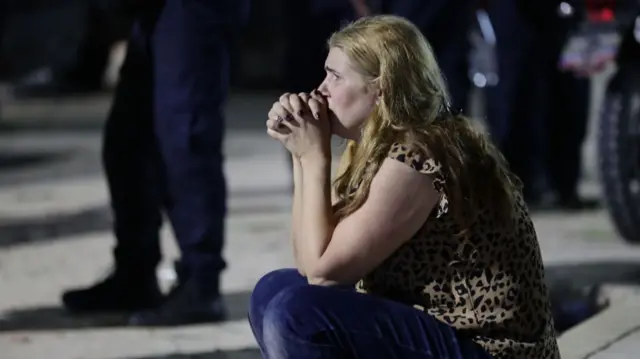
    A woman clasps her hands together as she sits on the side of a road.Image source, EPA/Shutterstock

    It's just past midnight in Caracas, where some shaken residents are spending the night outdoors.

    There remains the fear of aftershocks, or that buildings damaged by the quake may suddenly collapse. Many are also waiting for news of their loved ones.

    Authorities have asked people to leave their homes while the damage is being assessed - but not everyone has a place to take refuge after the quakes.

  17. Extent of damage unclear after dual earthquakes rattle Venezuelapublished at 05:32 BST

    Venezuela's capital Caracas was rocked by two major earthquakes last night, causing buildings to collapse and residents to flee.

    If you're just joining us, here's what's been happening:

    • Two strong earthquakes rocked Caracas within a minute of each other - the first a magnitude 7.2 and the second 7.5
    • Rescue crews are searching the rubble, from where BBC Mundo contributor Nicole Kolster said she could hear people calling for help
    • Acting Venezuelan President Delcy Rodríguez has declared a state of national emergency and offered her condolences, without specifying how many people have died
    • Leaders across Latin America have offered support and solidarity, as has US President Donald Trump

    Stay with us as we bring you more updates.

    Map of northern South America focusing on Venezuela, showing the location of two earthquake epicentres inland between Maracaibo in the west) and Caracas on the central north coast. The Caribbean Sea is labelled to the north, with neighbouring countries Colombia, Guyana, and Brazil also marked. An inset map in the top right shows the region’s position within the Americas.
  18. What caused the earthquakes?published at 05:15 BST

    Venezuela lies in a seismically active zone where two tectonic plates, the Caribbean and the South American, meet.

    According to the US Geological Survey, the second and larger of the two quakes today occurred as a result of "shallow strike-slip faulting" near the boundary of these plates.

    This is when faults, or fractures between the plates, move horizontally. An earthquake is caused when this movement happens quickly.

    "While commonly plotted as points on maps, earthquakes of this size are more appropriately described as slip over a larger fault area," USGS reports.

    The pair of quakes today "likely indicates a complex, rupture interaction process", the organisation says.

    Aftershocks, including "some potentially with strong shaking" are still possible, it adds.

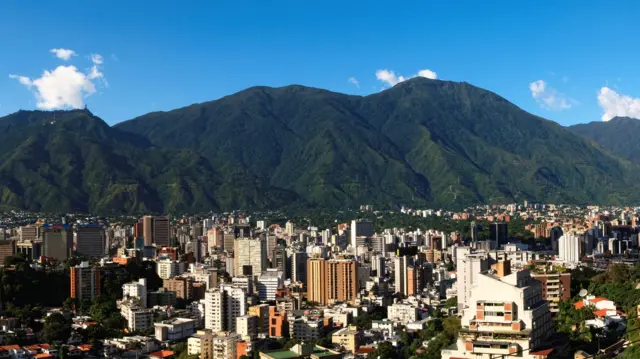
    High-rise buildings in the foreground with tall green mountains in the backgroundImage source, Getty Images
  19. Trump says there is a 'devastating number of deaths'published at 04:53 BST

    "The two major earthquakes that just hit the great people of Venezuela are both massive in scale and have left a devastating number of deaths," US President Donald Trump has written in a post on Truth Social.

    "The U.S.A. stands ready, willing, and able to help!"

    Trump says he has "instructed all agencies of our government to get ready to move quickly.

    "We will be there for our new and great friends. Early reports are not good!!!" There have so far been no official public reports on the number of casualties.

  20. 'Sister, I thought we were going to die' - my two hours of anguish trying to reach family in Caracaspublished at 04:47 BST

    Valentina Oropeza
    BBC Mundo

    My sister Veronica sent me an audio message on WhatsApp yesterday evening: "The house just shook horribly, it's still shaking."

    Living in the US, I had not yet caught up with what was happening in Caracas. For the next two hours, Veronica did not respond to my calls – and neither did our mother, who was with her.

    I soon learned about the earthquake through a chat group with journalists in Caracas. Then a friend sent me a clip of a building in Los Palos Grandes that had disintegrated like a cookie.

    I recognised it immediately – It was just a few metres from where Veronica and mum were.

    By this time, my phone was beeping continuously with updates of damage in the area. I was so worried.

    It wasn't until two hours later that I heard from Veronica again, when she regained internet connection.

    "Sister, I thought we were going to die," she said before hanging up. She'll return home tomorrow to see if she still has a place to live.

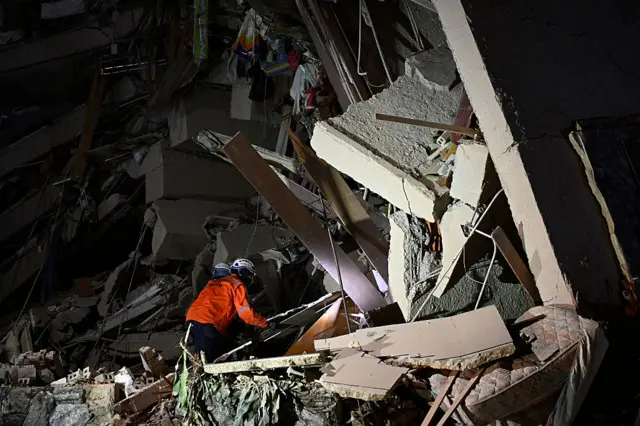
    First responders in orange jackets and white helmets pick through the rubble of a collapsed buildingImage source, Getty Images