Summary

  1. BBC Verify

    Internet connectivity in Venezuela affected by the earthquakespublished at 12:11 BST

    By Adam Durbin and Rachel Flynn

    Internet connectivity in Venezuela has been significantly affected by the earthquakes, according to monitoring group NetBlocks.

    As of 08:00 BST (03:00 local time) connectivity had recovered to about 77% of normal capacity - having fallen to 59% shortly after the earthquakes hit.

    The 08:00 data is the latest available from NetBlocks.

    NetBlocks says the widespread issues “corresponds to power cuts and infrastructure damage, hindering rescue efforts and limiting visibility into events on the ground”.

    The disruption to the internet, combined with the relatively rural location of the earthquakes’ epicentre, is likely a significant factor contributing to the concentration of social media footage we are seeing from the Venezuelan capital, Caracas.

    Separately, the UN's Independent International Fact-Finding Mission on Venezuela has called for the country’s telecommunications regulator to "fully unblock access to social media and all media outlets", adding that “access to information will be a matter of life and death”.

    Venezuela ranked 159 out of 180 countries and territories in the 2026 Reporters Without Borders World Press Freedom Index, which ranks 180 countries on the ability for journalists to work without interference or threats.
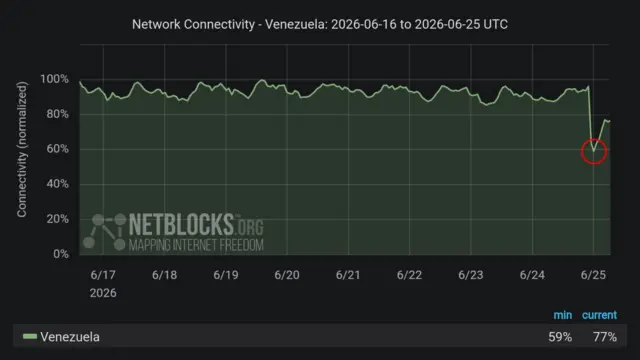
    Line chart titled “Network Connectivity – Venezuela: 2026-06-16 to 2026-06-25 UTC” showing internet connectivity levels mostly between about 85% and 100% over the period. The line remains relatively stable until 25 June, when there is a sharp drop to around 59%, highlighted with a red circle, followed by a partial recovery to about 77%. A NetBlocks logo appears in the lower left.Image source, NetBlocks
  2. What causes an earthquake?published at 11:54 BST

    Mark Poynting
    Climate and science reporter

    The outer layer of the Earth is divided into different sections called tectonic plates - a bit like the Earth’s puzzle pieces.

    These plates move very slowly - perhaps only a few centimetres a year, which is roughly the same rate as your fingernails grow.

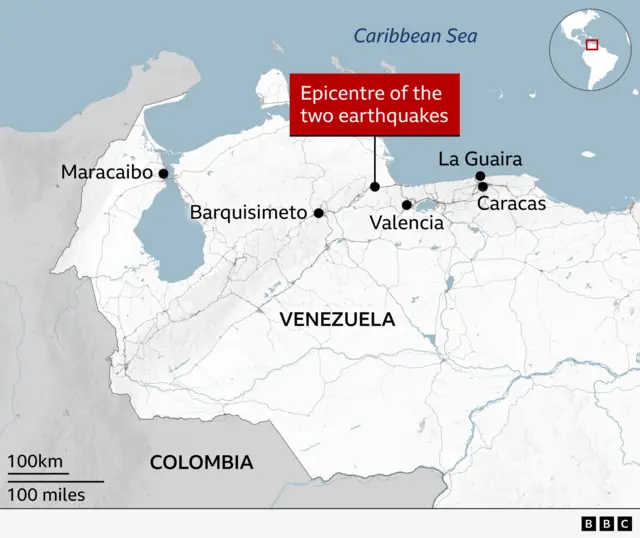
    Northern Venezuela sits on the boundary of the Caribbean and South American plates.

    As they move relative to one another, parts of the plates can get “stuck”, and stress builds up over a long period of time.

    Eventually, this stress becomes too much and the plates jolt or slip back into place.

    That releases the huge amounts of energy experienced as an earthquake.

    Map of northern Venezuela showing the locations of two earthquake epicentres along the Caribbean coast. Black dots mark major cities including Maracaibo (west), Barquisimeto (central-west), Valencia (central), Caracas, and La Guaira (near the coast). A highlighted label points to the epicentre area north of Valencia, close to the coast. The Caribbean Sea is shown to the north and Colombia to the southwest and a small inset world map shows the region’s location.
  3. Are you in Venezuela and did you experience the earthquakes?published at 11:48 BST

    If you are safe and able to do so, you can tell us your story.

    You can get in touch in the following ways:

    Please read ourterms & conditionsandprivacy policy

    In somecasesaselectionof your comments and questions will be published, displaying your name and location as you provide it unless you state otherwise. Your contact details will never be published.

    Your Voice banner - purple background, your voice in foreground in white
  4. Analysis

    Earthquake response a big test for Venezuela and Trumppublished at 11:41 BST

    Paul Adams
    Diplomatic correspondent

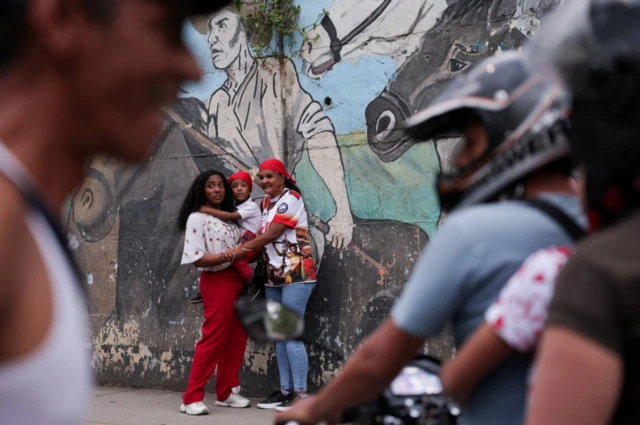
    A young woman in red trousers holds a toddler, an elderly woman in a red cap with her arms around both of them. In the foreground are people walking by, and a man riding a bike, a young girl with her arms around himImage source, Reuters

    This is a big test for the government of Delcy Rodriguez and for the Trump administration.

    Since the US military intervention in January, when the former dictator Nicolas Maduro was abducted and flown to the US, his former deputy, Rodriguez has been running the country.

    But with the US controlling the country’s vital oil revenues, Venezuela has become a vassal state, heavily dependent on decisions taken far away in Washington.

    Members of the US Congress have complained about a lack of transparency over how Venezuela’s oil revenues are managed and audited, as well as the lack of moves towards a democratic transition.

    In January, the US Secretary of State, Marco Rubio, said Venezuela said the Maduro regime had been characterised by "corruption and graft".

    It’s not clear what, if anything, has changed since then. Suffice to say that Venezuela is unlikely to be well equipped to deal with a disaster on this scale.

  5. Death toll rises to 164, says Venezuela's interim presidentpublished at 11:25 BST
    Breaking

    The number of deaths from the earthquakes that struck Venezuela last night now stands at 164, Venezuela's interim president Delcy Rodríguez has said, according to Reuters and AFP.

  6. Fear of aftershocks in Los Palos Grandespublished at 11:21 BST

    Nicole Kolster
    Reporting from Caracas for BBC Mundo

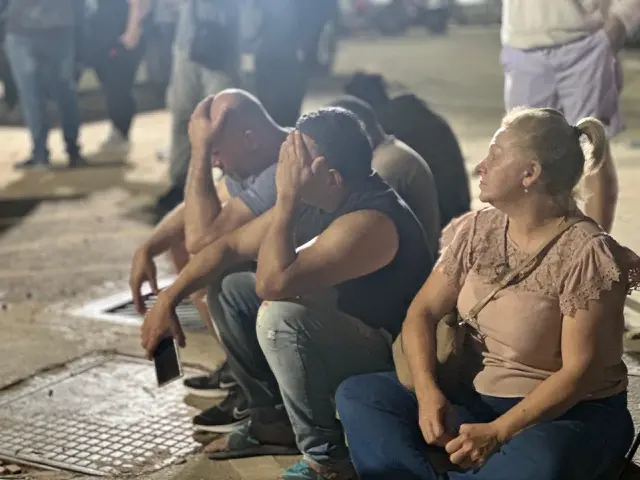
    Three people sat down on the street, two with their heads in their hands

    “How do you go back to living like this? This is like something out of a movie - I’ve never seen anything like it in my life… when I got here [to Los Palos Grandes] I was in shock,” says a woman sitting on the steps of a square who isn’t even trying to fall asleep.

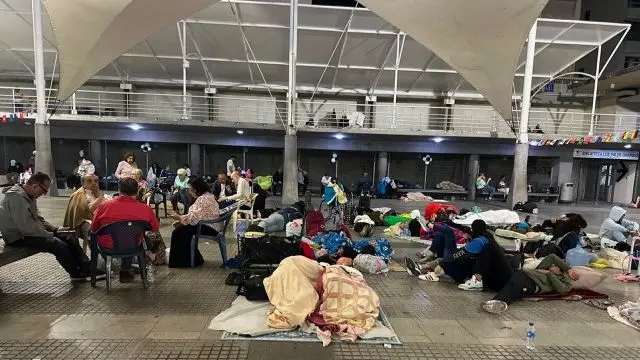
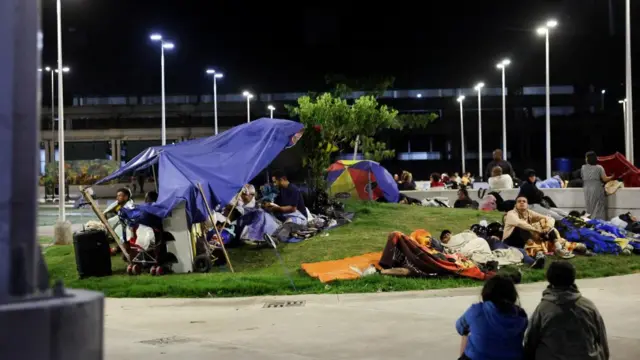
    It’s past 05:00 in the morning. In Caracas, in Los Palos Grandes—a residential area where buildings have collapsed—hundreds are sleeping (or trying to) in squares, on the streets, or in vehicles parked along the avenues.

    People can be seen lying on the ground with sheets they managed to bring out from their homes - there is a lot of fear of aftershocks.

    Other families are holding their pets in their arms.

    Many here are watching over the rescue efforts and waiting for news about their loved ones who may have been trapped under the rubble. Some cars are blocked in.

    This is one of the most affected areas of Caracas.

    The mayor of the Chacao municipality, Gustavo Duque, reports at least 11 fatalities as of the time of writing.

    People lying on the floor and sitting in plastic chairs sheltering under cover
  7. Extent of damage unclear 12 hours after earthquakespublished at 11:11 BST

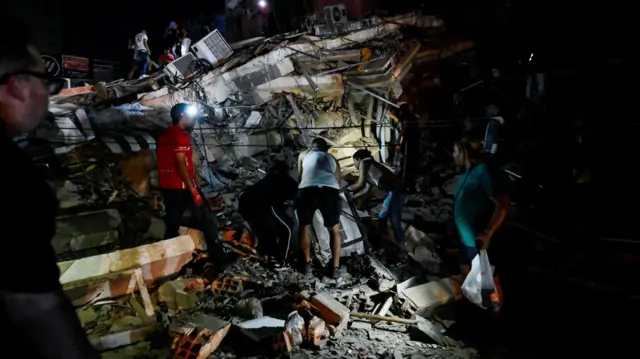
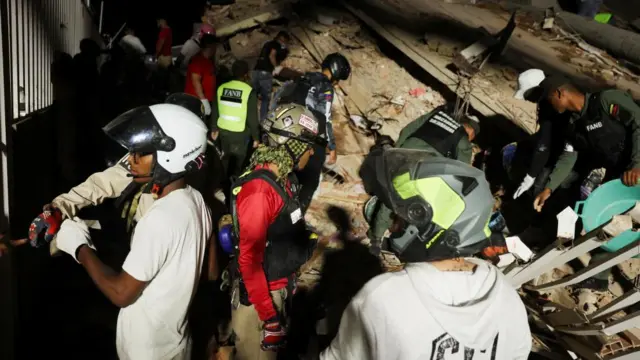
    People inspect rubble of the aftermath of an earthquake, with recovery teams wearing headtorches.Image source, Reuters

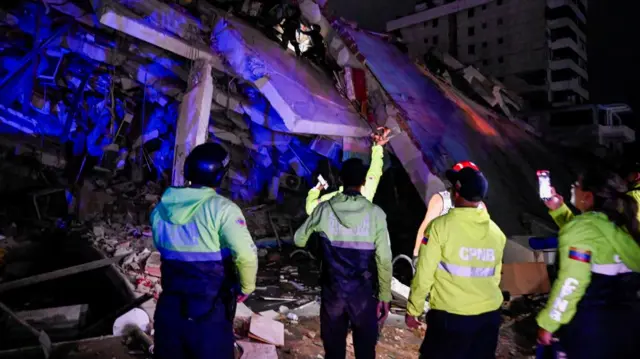
    It has now been around 12 hours since a pair of earthquakes struck Venezuela shortly after 18:00 local time on Wednesday (23:00 BST), affecting numerous areas including the capital city of Caracas.

    'A significant loss to life'

    At least 32 people have died and some 700 have been injured after the two quakes, with magnitudes of 7.2 and 7.5, Venezuela's interim president Delcy Rodríguez said.

    The executive director of the UN Office for Project Services Jorge Moreira da Silva says reports indicate "a significant loss to life, widespread injuries, and severe damage to homes and vital infrastructure" in Caracas and elsewhere.

    La Guaira deemed a 'disaster zone'

    Rodríguez said in her update early on Thursday that the total number of casualties did not include any figures from the state of La Guaira - which she said was most affected and called a "disaster zone".

    Images from La Guaira show rubble from buildings that have fallen, including a collapsed hotel.

    Damages across several states

    Our BBC reporter Vanessa Silva says damage has been reported in different Venezuelan states, while concerns have been raised about getting information given the state of Venezuela's power network.

  8. Venezuelans looking for information struggle with faulty electric networkpublished at 10:53 BST

    Our colleague Jorge Perez from BBC Mundo was texting a friend in Caracas when he heard the first reports of the earthquakes.

    He says that while earthquakes are a regular occurrence in Venezuela due to it being a seismic area, Wednesday's quakes are still "quite shocking".

    Perez has been able to chat with some of his friends in the Venezuelan capital who "cannot sleep" out of fear and nerves.

    One of the main issues, Perez adds, has been the struggle to get information: "The country has a very serious crisis with the electric network so it's very common to have power outages almost every day."

    He says the situation is also stressful for the millions of Venezuelans living abroad who are unable to get in touch with their loved ones.

    Rescuers on the debris of a building in Caracas following Wednesday's earthquakesImage source, Getty Images
    Image caption,

    Rescuers continuing to search the rubble in Caracas following Wednesday's earthquakes

  9. Depth is a crucial factor when it comes to the impact of earthquakespublished at 10:33 BST

    Esme Stallard
    Senior climate and science reporter

    Emergency services searching in Caracas following the earthquakesImage source, EPA

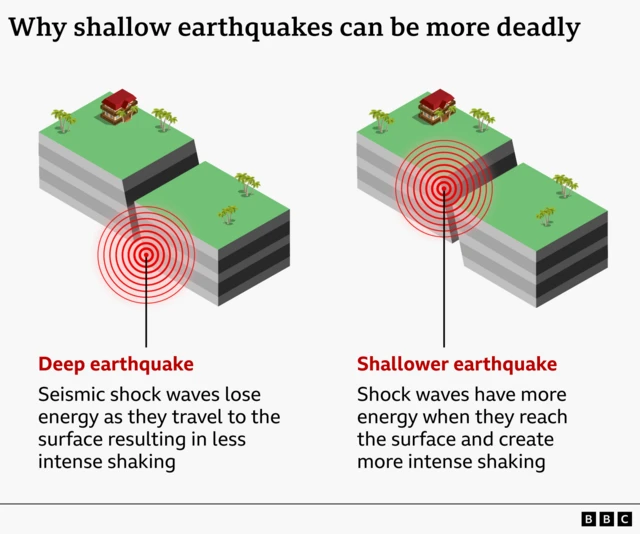
    Venezuela has experienced two earthquakes in quick succession and both of them were very shallow, less than 30km below ground.

    One of the crucial factors that determines the impact of an earthquake is how far below the Earth's surface it occurred.

    An earthquake occurs when two parts of the Earth suddenly move past each other which releases a lot of energy. When this energy reaches the surface it causes the ground to shake.

    The closer it is to the surface the more shaking and potential damage.

    Graphic titled “Why shallow earthquakes can be more deadly” comparing deep and shallow earthquakes. On the left, a deep earthquake is shown beneath the surface, with red shockwave circles spreading upward and losing energy before reaching a block of land with a house and trees, resulting in less intense shaking. On the right, a shallower earthquake occurs closer to the surface, with shockwaves reaching the ground with more energy beneath a similar block, causing stronger shaking.
  10. Support and solidarity extended by world leaderspublished at 10:11 BST

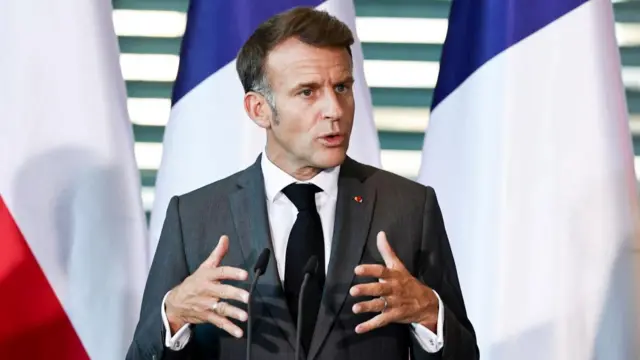
    French President Emmanuel MacronImage source, EPA

    World leaders have expressed their support for Venezuela following Wednesday's earthquakes:

    • Emmanuel Macron, France's president, says in a post on X that he extends solidarity to the victims, their loved ones, and those mobilised on the ground
    • Spanish Prime Minister Pedro Sánchez says all of his support, "and that of Spain", is with those in Venezuela, adding that his and the country's thoughts are with the victims and their families
    • China's foreign ministry spokesperson Guo Jiakun told a news briefing that the country would do what it could to help Venezuela, adding there had been no reports so far of Chinese casualties
    • President of El Salvador Nayib Bukele says 300 rescuers and paramedics alongside 50 tons of equipment, medicines and essential supplies are ready to be sent to Caracas from the country
    • Earlier, US President Donald Trump said he had "instructed all agencies of our government to get ready to move quickly", while Secretary of State Marco Rubio said the country was "immediately deploying search and rescue teams, medical resources and humanitarian assistance" to Venezuela
  11. 'There's a lot of uncertainty, a lot of fear,' says Caracas residentpublished at 09:58 BST

    Caracas-based journalist Luis Hernandez was at home when the two quakes hit and was forced to evacuate with his dog.

    His building was left with structural damage after the "terribly horrifying" shaking - but he tells BBC Newsday that assessing the damage, both in his home and around the country, will be difficult.

    "Due to the economic crisis in the country it is very difficult for us to assess the damage in the country," Hernandez says. Power outages and internet failures are further complicating attempts to understand the scale of the damage.

    "But we are getting a sense that around the country everyone is now not in their apartments, or their buildings, but on the lower floors trying to escape the possibility of the buildings falling down," he says.

    "There's a lot of uncertainty, a lot of fear, because I don't think as a Venezuelan we were prepared for this."

    People resting outside in CaracasImage source, Reuters
    Image caption,

    People resting outside in Caracas following the earthquakes

  12. Earthquake last night was strongest to hit Venezuela since 1900, says USGSpublished at 09:39 BST

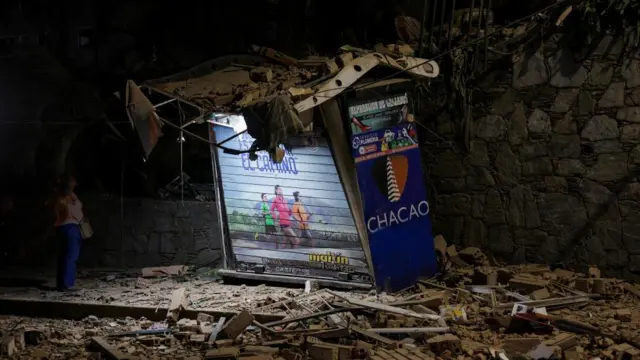
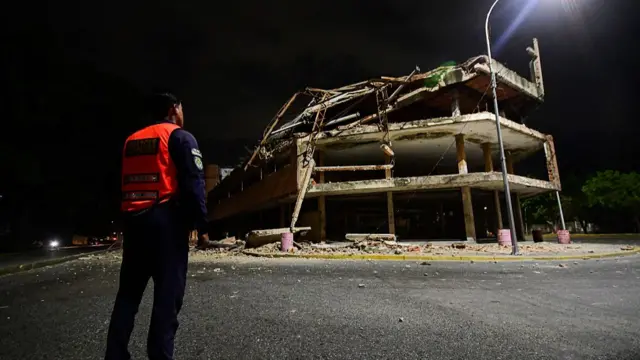
    A person looks on at the site of a collapsed building, with a shuttered unit warped and covered in rubble.Image source, Reuters
    Image caption,

    Rubble near the site of a collapsed building in Caracas after the earthquakes last night

    One of the earthquakes that struck Venezuela last night was the strongest to occur in the country since 1900, according to data from the US Geological Survey (USGS).

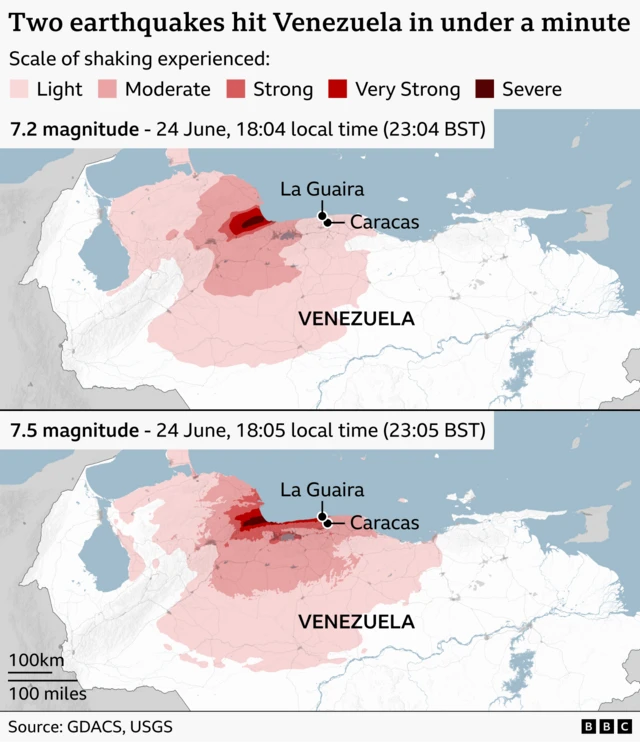
    The first earthquake that struck the country last night was registered with a magnitude of 7.2 by the USGS, with a second quake of 7.5 magnitude striking less than a minute later.

    The government agency's catalogue of earthquakes states that an earthquake with a magnitude of 7.7 struck near the coast of Venezuela on 29 October 1900, known as the San Narciso earthquake.

    Two maps showing powerful earthquakes striking northern Venezuela less than a minute apart on 24 June. The first, magnitude 7.2 at 18:04 local time, produced strong to severe shaking concentrated inland near the coast, while the second, slightly larger magnitude 7.5 at 18:05, spread more intense shaking across a wider area particularly along the northern coast. The maps use a colour scale from light to severe to illustrate shaking intensity, highlighting heavily affected zones around La Guaira and Caracas, with broader regions experiencing moderate to strong tremors. The source is GDACS and the USGS
  13. Residents set up tents on streets away from damaged buildingspublished at 09:22 BST

    Rescue and recovery operations continue in Caracas and other areas affected by the two back-to-back earthquakes that struck Venezuela on Wednesday.

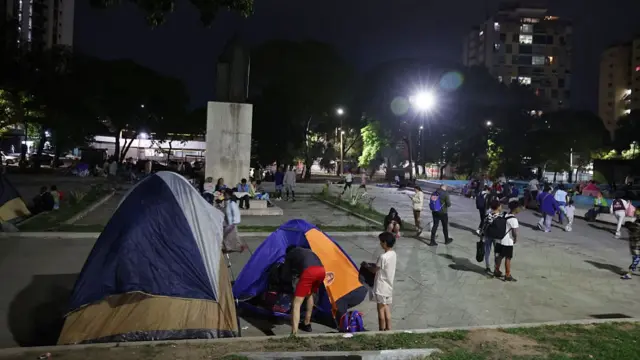
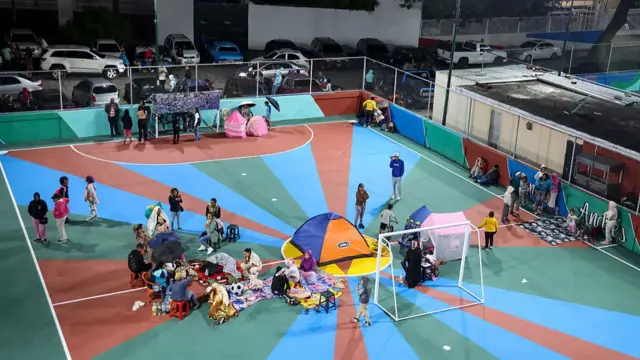
    Some are choosing to set up tents on the streets, as fears remain of potential aftershocks or damaged buildings collapsing.

    Caracas families set up tent on a football pitch following a series of earthquakes struck the countryImage source, Getty Images
    In the foreground is a set of tents with children moving things inside the smallest one. The scene appears to be set in a park in Caracas, with several other people with backpacks standing and walking around the backgroundImage source, Getty Images
  14. Most affected is La Guaira state, north of Caracas, acting president sayspublished at 09:12 BST

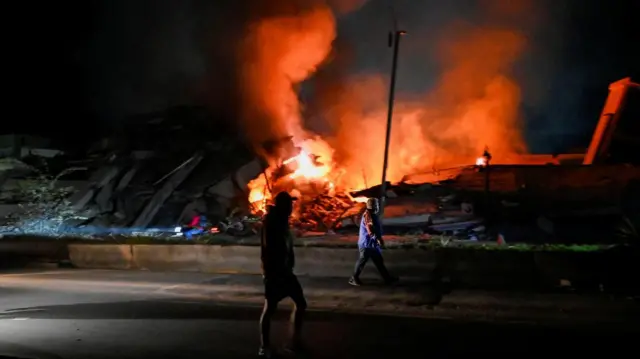
    Two people walk past a huge fire amid collapsed buildingImage source, Reuters
    Image caption,

    A burning building in La Guaira, Venezuela

    We can bring you a little more from Delcy Rodríguez's update from earlier this morning.

    The acting president says the most affected state is La Guaira, north of Caracas, where "dozens" of buildings have collapsed. She calls it a "disaster zone" and a "true tragedy".

    Speaking of the reports of 32 dead, the interim president says this is "not including any figures that may come in from the state of La Guaira".

  15. Priority is saving lives, acting President Delcy Rodríguez sayspublished at 09:01 BST

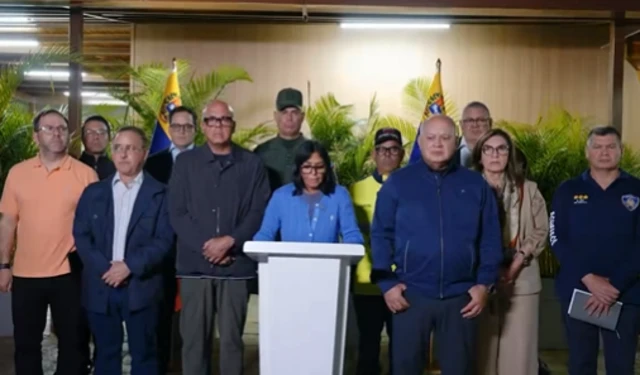
    Delcy Rodriguez speaking at a lecturn alongisde authoritiesImage source, Delcy Rodriguez/X

    Venezuela's interim president, Delcy Rodríguez says the priority is "saving lives" and that authorities are working on rescuing people trapped by collapsed buildings.

    Speaking earlier this morning, Rodríguez says that in the next few hours Venezuela will begin to receive rescue workers from other countries including the US, the Dominican Republic, Mexico and El Salvador.

    She adds that hotels and shelters are available for those who have lost their homes, and that all classes and activities not essential to public services are suspended.

  16. How estimated death tolls and damage are calculatedpublished at 08:47 BST

    Esme Stallard
    Senior climate and science reporter

    Soon after the earthquake struck the US Geological Survey (USGS) gave an estimate on the potential economic damage and fatalities in the region.

    It has put that most likely potential loss of life between 10,000 and 100,000.

    This is not an exact figure of the number of people that may have died - it could be higher or lower.

    The USGS issues this figure to help emergency responders, government agencies and the media understand how potentially significant this event is and deploy resources effectively.

    The organisation uses something called the PAGER system to calculate this figure.

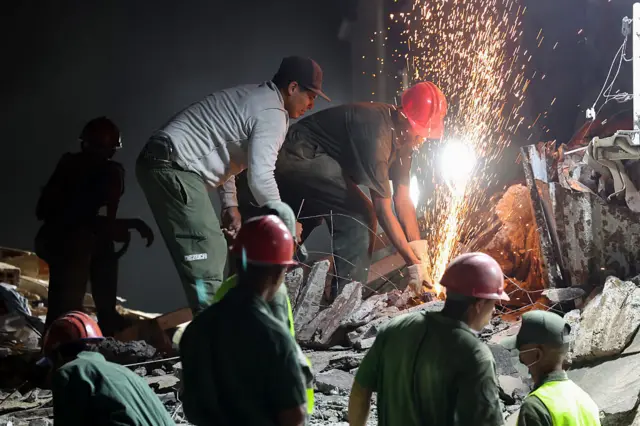
    Emergency workers at a damaged building after an earthquake, in La Guaira, VenezuelaImage source, Reuters

    It looks at many factors including the size of the earthquake, how far below the surface the earthquake started, the amount of ground shaking and the population in the area that could have been exposed. And then based off of previous earthquakes with similar characteristics it gives us a figure.

    But many other factors play into the potential injuries and deaths, including the quality of the buildings and the time of day.

    If people are sleeping when earthquakes occur it increases the likelihood of not being able to evacuate.

    The figure will get updated as more information comes through. But this event has been given a red alert - of which there are usually only 1-2 a year.

  17. The aftermath of Wednesday's back-to-back earthquakespublished at 08:34 BST

    It is the middle of the night in Venezuela, where back-to-back earthquakes struck on Wednesday evening.

    These photographs depict the aftermath in Venezuela's capital city Caracas and nearby Valencia.

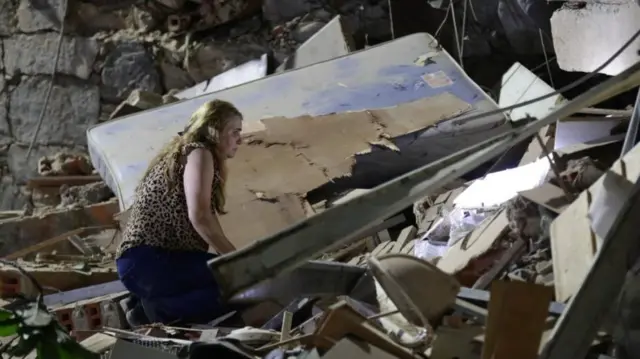
    A woman kneeling on a pile of rubble from a collapsed building in CaracasImage source, EPA
    Image caption,

    A woman kneels on a pile of rubble from a collapsed building in Caracas

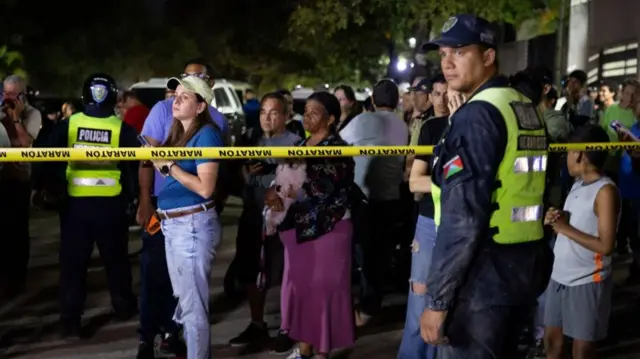
    People wait outside their homes in Caracas while law enforcement officers watch onImage source, EPA
    Image caption,

    People wait outside their homes in Caracas while law enforcement officers watch on

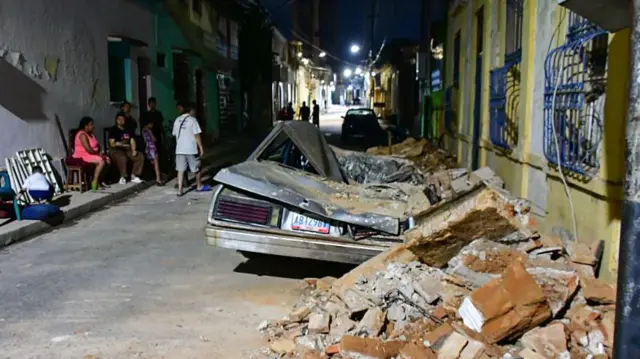
    People gather on a street next to a crushed carImage source, Getty Images
    Image caption,

    Debris has fallen on to the streets

    A Venezuelan municipal police officer stands next to a collapsed building in ValenciaImage source, Getty Images
    Image caption,

    In Valencia, a local officer looks at a collapsed building

  18. BBC Verify

    Hotel in La Guaira reduced to rubblepublished at 08:23 BST

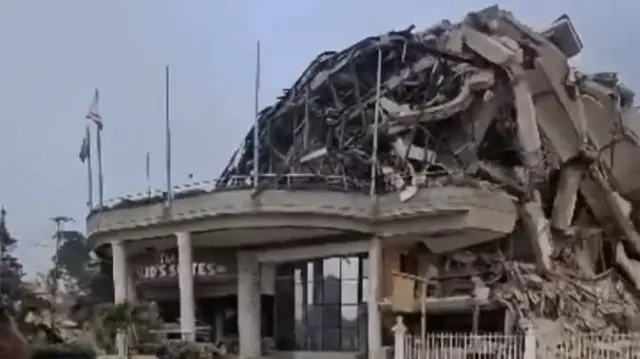
    The collapsed Hotel Eduard's in VenezuelaImage source, X

    By Sarah Jalali and Paul Brown

    We've verified footage showing the aftermath of the earthquakes in Venezuela in which a hotel in La Guaira, Venezuela, has completely collapsed.

    The Hotel Eduard's, on the coast of Venezuela just north of the capital Caracas, once stood 10 storeys tall but has now been reduced to rubble.

    Using online mapping and reverse image searches we were able to verify the location and the recency of the clips.

    We’re looking at other footage coming out of Venezuela showing widespread destruction.

  19. Search for survivors continues in north Caracas suburbpublished at 07:54 BST

    We can now bring you more from BBC reporter Vanessa Silva, who tells us about a collapsed building in the north Caracas suburb of San Bernardino.

    Vanessa says the building contained five flats and security personnel are working to remove debris.

    She adds that they are also trying to confirm whether an individual has died while searching for survivors.

    Vanessa says: "The minister of interior just said that they are evaluating the damages along the north coast of the country and there are reports of many damages in different states of Venezuela."

    Rescuers searching in San Bernardino earlierImage source, Getty Images
    Image caption,

    Rescuers searching in San Bernardino earlier

  20. 'Venezuelans are very resilient,' says teacher in Caracaspublished at 07:44 BST

    Many buildings in Caracas have been left with parts of their walls falling down and visible cracks, says a teacher at a British school in the capital.

    Alan Chung, who has lived in Venezuela for seven years, tells Radio 4's Today programme that he was in a restaurant at the time of the quakes, before running outside and seeing "a cloud of dust" and electricity lines "exploding".

    He says people in the country are accustomed to minor earthquakes, but this was "the most serious for a long time".

    "Venezuelans are very resilient," Chung says.

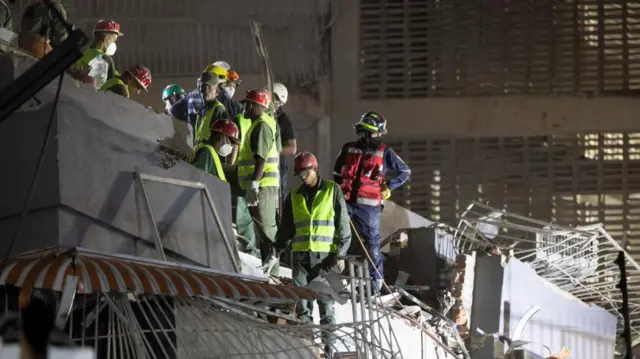
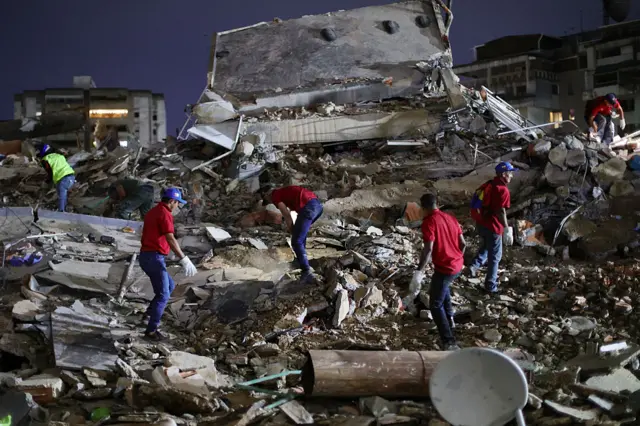
    Emergency services work at the site of a collapsed building after an earthquake in CaracasImage source, Reuters
    Image caption,

    Emergency services work at the site of a collapsed building in Caracas after the earthquakes