| 13 November 2014 |

| |
| BBC Homepage | | |
| |||
| Contact Us | | |
Mining historyYou are in: Leeds > History > Mining history > From miner to Mayor 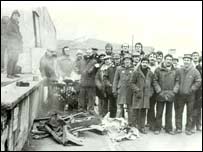 Can you spot a future Lord Mayor? From miner to MayorLeeds City Councillor Keith Parker (Kippax and Methley ward) was a miner at Ledston Luck during the strike. Here's his story. "I was a miner with 30 years experience when the strike started, I was 49 then and at Ledston Luck. I look back on the strike with a mixture of good and bad memories. The best was the camaraderie between the men and their families over that year, it was something to be believed. "Images on TV of the strike often show police horses charging and bricks flying, and I had my share of that, but at the end of the year I hadn't a penny in the bank and it was a real experience of poverty for our family. "I went all over raising support during that year. I remember spending a week in Farnborough (Hampshire) after the local Labour Party down there got in touch. Eight of us, including me and my son, went down there and collected round the town with buckets and I remember getting a lot of money at a local hospital. "Later on I stayed with a family in Farnborough before visiting a union conference in Southampton. I was down to speak to the delegates on the Sunday and there was a dance and a dinner on over the weekend. "I was supposed to speak along with the local council leader and Ray Buckton of ASLEF the rail union, when Ray Buckton had to cancel at short notice it was suggested that my wife Leanora (known as Lenny), who helped organise the local soup kitchen, also speak to the conference. Mrs Parker had never made a speech to a gathering like that before. "I was up half the night before the speech trying to make some notes for her, so she could read them out and I, for one, was very nervous about her speaking debut. "When she stood up Lenny never looked at that piece of paper once but just spoke right from the heart. At the end the whole conference stood and applauded, hardened union men were crying and I had a tear in my eye. We'd already had a collection but the buckets went round again and we brought back £1,500 for the branch funds. "During the strike we used to meet every Saturday night in the local club, there were 250 men without fail, every Saturday for a year. We reported on what had gone on during the week and were we would be picketing next week. I remember Vanessa Redgrave and her mother once turned up at the meeting unannounced, Vanessa Redgrave asked to speak to the meeting and made a wonderful speech in support. And she joined the Ledston Luck NUM branch on several marches - since then I've been a fan. "It doesn't seem 25 years ago, I'm looking at a picture on the wall in my office taken during the strike (see above) and I struggle to name all the men and some are in the churchyard now. In the picture we were off picketing Bickershaw pit in Lancashire to stop the pit deputies going in. "I became a miner in 1952 and when I first got on the face the method was shovel, pick and hammer, and that was how I shifted 20 tons as did many colliers. By the time of the strike we had gained more mechanisation. "Ledston Luck had re-opened in 1948 and it wasn't the best quality coal (that went to households) but we mainly supplied the power stations. The seams varied from the Middleton Little, that was 7 foot thick so you could stand up, to some much thinner so you had to work on your knees. It was one extreme to another but men coped. "In my ward there are a lot of ex-miners and, as I'm 73 now, I am going to more funerals than I care for. "I kept a couple of diaries about the year-long strike and I will never lose them. I will make sure they are handed down. I am the son and grandson of a miner. I am proud to be from Kippax and Yorkshire but researching my family history I have found my great, great, great grandmother (something like that) was one of the last women to work down a pit in Lancashire. Her husband had been killed in the pit and with 10 kids, and no benefits, she had to go down a pit near Rochdale. You never know what you are going to find when you start out researching. "I got elected to Leeds City council in 1986 and played my part in getting the site of the pit used as a business park so, unlike many former pit sites, it is still employing people. "In 1999-2000 I was proud to be chosen as the Lord Mayor of Leeds it was fabulous, despite my wife being diagnosed with cancer. However the treatment worked and I'm pleased to say she is still making speeches - but only to me and the kids." last updated: 17/03/2009 at 11:44 SEE ALSOYou are in: Leeds > History > Mining history > From miner to Mayor   |
| | About the BBC | Help | Terms of Use | Privacy & Cookies Policy |