


Day Two: Water or the web?
- 15 Sep 09, 08:21 GMT
What does Africa need more - easy access to fresh water or better cheaper internet connections? A no-brainer you might think, but a journey I took out from Mombasa into the countryside set me thinking.
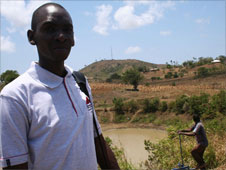 My guide was Martin Rogena, a Kenyan working for an organisation called KickStart, which supplies irrigation pumps to farmers across East Africa. Martin is also a big believer in the power of the internet to transform countries like Kenya.
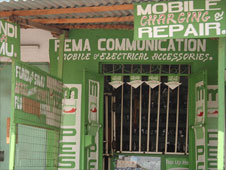
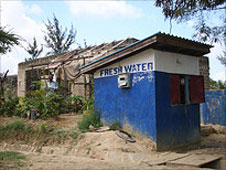
We set off down a bumpy road through a poor suburb of Mombasa, lined with small shops. Every other one seemed to be selling mobile phones or offering to recharge them - and every few yards there was a stand selling fresh water at around 20p a litre.
 As we drove, Martin explained that Kickstart was a charity but it didn't give away the "Moneymaker" pumps it supplies - "if you did that, the farmers would just stick them in a corner and not use them." So they charge around £50 for a portable pump - far short of the cost of making and supplying them - and they are now in use right across drought-stricken areas of Kenya, Tanzania and Uganda.
Our destination was a little settlement among some low hills about 10 miles from the beach where the Seacom cable bringing broadband to the region comes ashore.
The farmers who worked a small patch of land there had clubbed together to buy a pump. They use it to draw water from the hole they excavated last year to collect rain, a supply now dwindling fast after a very dry period.
 We watched as they watered their crop of tomatoes which, along with a field of maize and some other vegetables, was the means of support for around 20 people. Then we visited their homes - simple mud huts, with chickens and dogs sharing the yard where the children played.
These people had very little - finding the money for the pump had obviously been a big deal - but nearly all of them had mobile phones. While there was no electricity in the village, a tall 3g phone mast stands on the hill above it. The farmers explained that the phones - which they have to take to a nearby shop to recharge - had made them feel much more connected to the rest of Kenya.
Then, as we sat outside one of the huts, Martin Rogena got out his laptop, plugged in a broadband dongle, and went online at a reasonable speed - he was picking up the signal from the nearby mast, which is in turn linked to the fibre-optic cable at the coast. But why, I asked, did a faster internet connection matter to a charity which was trying to alleviate the impact of drought?
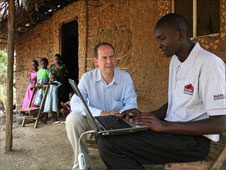 He explained that Kickstart collects data from every pump it supplies across the region, sending staff armed with laptops to talk to the farmers and make sure they are getting the right results. From its Nairobi office, It also needs to communicate with donors around the world and with its branch office in Tanzania.
The charity is already finding that faster broadband is making communication easier - and is cutting costs, though perhaps not to quite the extent that has been promised.
"Any dollar we save means we get more pumps to the people," says Martin, "and our mission is to end poverty."
The farmers had never been on the internet - but they too were excited about what it might mean for them. "It will help us find information to help us improve the way we farm." said one. "We will use it for marketing our crops to other countries outside Kenya," said another.
We headed back into Mombasa, past lines of women carrying water containers on their heads. This country is short of lots of things - water, electricity, books for schools. But there is a great thirst for better connectivity - and who are we to say that they've got their priorities wrong?
The BBC is not responsible for the content of external internet sites
This is dot.life - a blog about technology from BBC News.
Rory Cellan-Jones is the BBC's technology correspondent.
Maggie Shiels is the BBC's tech reporter based in Silicon Valley.
Archive
« January 2010
| Sun | Mon | Tue | Wed | Thu | Fri | Sat |
|---|---|---|---|---|---|---|
| 1 | 2 | |||||
| 3 | 4 | 5 | 6 | 7 | 8 | 9 |
| 10 | 11 | 12 | 13 | 14 | 15 | 16 |
| 17 | 18 | 19 | 20 | 21 | 22 | 23 |
| 24 | 25 | 26 | 27 | 28 |
Being Discussed Now
- Logging out... and straight back in(3)
- Gadgets of the Noughties(20)
- Plastic Logic's long journey to Vegas(21)
- Sexting teens(17)
- Wikipedia on the wane?(49)
- 'Cooling-off' for mobile phones? Not on the High Street(37)
- 2009 - the social year(36)
- Twitter, Iran and #uksnow(25)
- Broadband Britain - how far down the league?(55)
- Microsoft and Murdoch: Teaming up to bash Google?(34)
BBC Technology Headlines
- %28none%29
%28none%29 - %28none%29
%28none%29 - %28none%29
%28none%29
Visit the Technology index
Visit the BBC News website
Rory's TV/Radio reports
- Residents block Google car
Broadcast: 3 April 2009 - New adverts to tackle film piracy
Broadcast: 2 April 2009 - Call to scrap 'illegal databases'
Broadcast: 23 March 2009 - Female robot takes to the catwalk
Broadcast: 16 March 2009 - Super-charged battery breakthrough
Broadcast: 12 March 2009

- News Editors
- Sport Editors
- Journalism Labs
- BBC Internet Blog
- Radio 4 Blog
- Peston's Picks
- Nick Robinson's Newslog
- Stephanomics
- Mark Easton's UK
- Mark Mardell's America
- Nick Bryant's Australia
- Andrew Harding on Africa
- Gavin Hewitt's Europe
- Soutik Biswas' India
- dot.Rory
- Science: Jonathan Amos
- Richard Black on environment
- Today: Tom Feilden
- Fergus Walsh's medical files
- Newsnight: Paul Mason
- Newsnight: Mark Urban
- Torin Douglas
- Will Gompertz's arts
- Phil Coomes on photojournalism
- Magazine Monitor
- Mark D'Arcy in Westminster
- NI: Mark Devenport
- Scotland: Brian Taylor
- Scotland: Douglas Fraser
- Wales: Betsan Powys
- Martin Rosenbaum on FOI
- 5 Live Breakfast
- Newsnight
- PM programme (iPM)
- World Tonight: Robin Lustig
