


The new tech start-up: US government
- 21 Aug 09, 08:28 GMT
Shortly after President Obama took office, he made a promise to make the default position for government open rather than secret. This is evident today in a host of websites already up and running and being dubbed as part of Government 2.0. Yes, think Web 2.0 but without the overarching social media obsession evident during the campaign.
 • Data.gov provides access to government data and allows the public to create new web applications, carry out analysis and perform research.
• USAspending.gov is "where Americans can see where their money goes."
• Recovery.gov shows where stimulus money is being spent and how.
• Regulations.gov the one-stop shop for government regulations.
• WhiteHouse.gov which is of course where citizens can find out what the occupants of 1600 Pennsylvania are up to.
All these websites contain a treasure trove of information, statistics and raw data, but what good is it all and what does all this mean?
Anil Dash from Six Apart, which is one of the most significant players in blogging, said what the government is doing represents the "most promising new start-up of 2009 (and) one of the least likely."
"I am not a Polyanna about this, " Mr Dash told me.
"I don't think necessarily everything that comes out of this will be immediately great. It will take people some time to understand the potential there is for something great to happen.
"In the past, when this information was printed on paper and stuffed into a box and filed in a building no-one had access to, there wasn't any potential for anything great to happen," explained Mr Dash.
Mike Masnick at techdirt.com backs that sentiment.
"With a focus on openness and data sharing... I have to agree with Anil Dash that one of the most interesting tech "start-ups" to watch this year is the federal government of the US. The tech projects they are already coming out with are compelling and well done," said Mr Masnick.
And cities throughout the United States are following suit.
Here in Silicon Valley, San Jose has just just approved what it calls some "sunshine" reforms to ease public access to some city records. The move however was seen by critics as too timid and not going far enough.
San Francisco launched DataSF.org in the hope, said mayor Gavin Newsom, it will "create a torrent of innovation similar to when the developer was given access to the platforms behind popular technologies and devices like Facebook and Apple's iPhone."
Mr Newsom gives as an example the use of data on recycling that was released by the Department of Environment and used by a third party to develop EcoFinder, an iPhone app that helps residents recycle based on their location.
And for Mr Dash and many others who have weighed in on this topic, the crucial factor
is allowing the public to take all this open and easily accessible information and use it in new and exciting ways.
"That is when innovation happens. You build a system for one thing and someone uses it for something different. In the technology world that is very common and these government efforts allow that to happen.
"With the closed system we had in the past, only what government staffers anticipated was what was created," explained Mr Dash.
As part of a project called Apps for Democracy, developers have set up a website to show people "interesting ways to mash up data for the betterment of all."
These include an app called StumbleSafely that uses crime data to help people get home safely after a night on the tiles and Carpool Mashup Matchmaker to help people find carpools.
Others agree that the focus on openness and data sharing is key to changing government and how citizens relate to it.
Tim O'Reilly, the internet guru and the man who popularised the phrase Web.20 puts it best.
"Rather than licencing government data to a few select "value added" providers, who then license the data downstream, the federal government (and many state and local governments) are beginning to provide an open platform that enables anyone with a good idea to build innovative services that connect government to citizens, give citizens visibility into the actions of government and even allow citizens to participate directly in policy-making.
"That's Government 2.0: technology helping build the kind of government the nation's founders intended: of, for and by the people."

Read the manual? Never!
- 21 Aug 09, 08:21 GMT
Ever been on an online discussion forum to inquire about some technical problem you're trying to sort out? Then it's quite likely that after a while you will have received a terse message from some smart-alec, which will end with the acronym RTM, followed by a number of exclamations marks. That apparently stands for Read The Manual! - and in fact the acronym usually includes the letter "f" placed before the "m" to supply added emphasis.
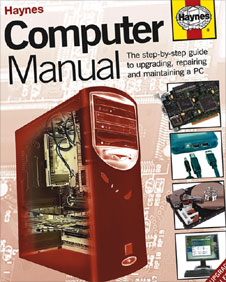 Well, sorry, I'm not going to read the manual, as I explained to the makers of a charming Radio 4 programme which you can hear this morning at 1100.
"How to Write An Instruction Manual" is presented by an engineer from King's College London, Dr Mark Miodownik. He's also written this article about the man behind the Haynes Instruction Manuals, regarded by many as the works which define the art of describing in painstaking detail just how something works.
Now if you were acquiring a second-hand car 20 years ago, and were expecting to do your own maintenance, then one of these manuals would have been just the ticket. But, as I told Mark when he came to interview me for his programme, the world has moved on. The whole point of modern devices - from cars, to mobile phones, to wireless routers - is that they are designed for idiots like me who don't even know how to lift the bonnet, and wouldn't know how to proceed if they could. We want to take things out of the box, turn them on and see them leap into action without having to read anything.
There is a serious point here. These days, good product designers know that they must ensure that extraordinarily complex devices can be used by people without any kind of specialist knowledge. When I was at school - oooohh shortly after the last war - there was one computer in the science block. It was attended by what seemed like a team of engineers, feeding tickertape into it, and only physics students wearing white lab coats - I kid you not - were allowed to approach. Now, when I acquire a new laptop, I open the box, chuck out any accompanying paper, and power it up. There may be the odd on-screen instruction but that's your lot, and I often feel I can use my computer without wearing a lab coat.
And if I get sent a new mobile phone to try out, and find I actually need to open the chunky instruction manual in seven languages, I put it back in its box and return it to its makers. Good products today combine excellent technology with an intuitive user interface - and if they don't they are likely to fail.
Dr Miodownik seemed slightly crestfallen at my lack of enthusiasm for manuals. He fears that our impatience with instructions is a symptom of a throwaway society where products become obsolete within months.
I understand why an engineer might feel passionate about what are sometimes rather lovely products in themselves. On our bookshelves at home we have the Eagle Annual of the Cutaways, a collection of beautifully executed drawings from the boys' comic of the 1950s and 1960s explaining the workings of everything from a VC10 aircraft to a "do-it-yourself" petrol pump.
It may be sad that we no longer seem to have that thirst for knowledge about how things work. But I'm afraid I'm just not going to start reading the manual.
The BBC is not responsible for the content of external internet sites
This is dot.life - a blog about technology from BBC News.
Rory Cellan-Jones is the BBC's technology correspondent.
Maggie Shiels is the BBC's tech reporter based in Silicon Valley.
Archive
« January 2010
| Sun | Mon | Tue | Wed | Thu | Fri | Sat |
|---|---|---|---|---|---|---|
| 1 | 2 | |||||
| 3 | 4 | 5 | 6 | 7 | 8 | 9 |
| 10 | 11 | 12 | 13 | 14 | 15 | 16 |
| 17 | 18 | 19 | 20 | 21 | 22 | 23 |
| 24 | 25 | 26 | 27 | 28 |
Being Discussed Now
- Logging out... and straight back in(3)
- Gadgets of the Noughties(20)
- Plastic Logic's long journey to Vegas(21)
- Sexting teens(17)
- Wikipedia on the wane?(49)
- 'Cooling-off' for mobile phones? Not on the High Street(37)
- 2009 - the social year(36)
- Twitter, Iran and #uksnow(25)
- Broadband Britain - how far down the league?(55)
- Microsoft and Murdoch: Teaming up to bash Google?(34)
BBC Technology Headlines
- %28none%29
%28none%29 - %28none%29
%28none%29 - %28none%29
%28none%29
Visit the Technology index
Visit the BBC News website
Rory's TV/Radio reports
- Residents block Google car
Broadcast: 3 April 2009 - New adverts to tackle film piracy
Broadcast: 2 April 2009 - Call to scrap 'illegal databases'
Broadcast: 23 March 2009 - Female robot takes to the catwalk
Broadcast: 16 March 2009 - Super-charged battery breakthrough
Broadcast: 12 March 2009

- News Editors
- Sport Editors
- Journalism Labs
- BBC Internet Blog
- Radio 4 Blog
- Peston's Picks
- Nick Robinson's Newslog
- Stephanomics
- Mark Easton's UK
- Mark Mardell's America
- Nick Bryant's Australia
- Andrew Harding on Africa
- Gavin Hewitt's Europe
- Soutik Biswas' India
- dot.Rory
- Science: Jonathan Amos
- Richard Black on environment
- Today: Tom Feilden
- Fergus Walsh's medical files
- Newsnight: Paul Mason
- Newsnight: Mark Urban
- Torin Douglas
- Will Gompertz's arts
- Phil Coomes on photojournalism
- Magazine Monitor
- Mark D'Arcy in Westminster
- NI: Mark Devenport
- Scotland: Brian Taylor
- Scotland: Douglas Fraser
- Wales: Betsan Powys
- Martin Rosenbaum on FOI
- 5 Live Breakfast
- Newsnight
- PM programme (iPM)
- World Tonight: Robin Lustig
