Getting ready to see your baby for the first time?
The first routine pregnancy scan (dating scan) is offered for around 10 to 14 weeks (of gestation) to help estimate your due date and check for any issues.
This first scan is a big moment for soon-to-be-parents and can feel a little nerve-wracking!
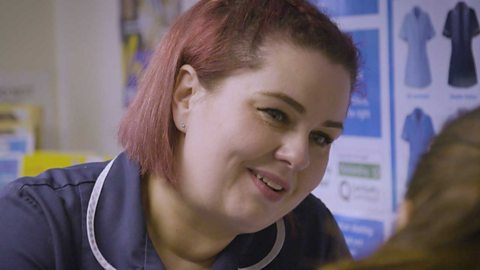
So what do you need to know to make sure everything goes as smoothly as possible? Midwife Gemma Winters spoke to CBeebies Parenting to give the lowdown on everything you'll need to expect and the best ways to prepare for your scan.
What is a 12-week scan and who will be there?
Most 12-week scans will be at your local hospital with a midwife, a radiographer or a sonographer (though some maternity wards have different preparations).
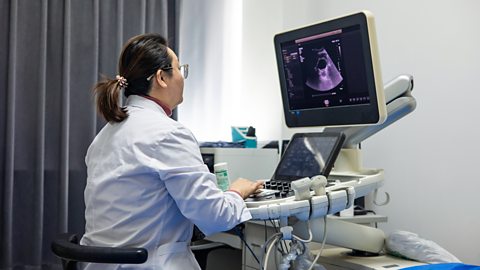
They’ll use an ultrasound machine, which uses sound waves to show you an image of your baby.
They’ll apply a gel (which can be a bit cold!) to the mum’s tummy and use a wand called a transducer to locate the baby. You’ll be able to see your baby onscreen, and you might be able to see it moving around.
Gemma explains:
"Generally it would be an abdominal ultrasound if the mum is measuring very small, they might offer the option of a vaginal scan."
Gemma says that some expectant mums might be asked to come back for a repeat scan to confirm a more accurate due date for the baby.
After the first scan, you may have a booking interview, where midwives take your medical history and answer any questions you may have about your pregnancy. As the booking interview can cover personal issues and concerns, it’s a private discussion without any other family members.
While sonographers and radiographers specialise in scans, midwives are also trained in the scanning process. So don’t worry if the midwife does both the scan and the booking interview.
What does the scanning professional look at during the 12-week scan?
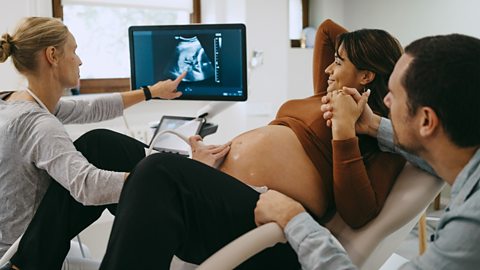
The 12-week-scan isn’t just a chance to meet your baby onscreen for the first time. You can even see their heart beating and make an estimate of their size.
It’s sometimes called the ‘dating scan’ as it is used to work out how far along a pregnancy is, alongside a due date, and whether or not the mum is expecting twins or multiples.
Gemma adds that, for safety reasons, “we’d be looking for where the baby is located because we need to make sure baby is safely in the uterus to ensure a safe environment for growth and birth.”
By reviewing baby’s development, the scan can also involve screening for Down's Syndrome and other conditions.
Gemma says midwives “will be looking for certain early-on abnormalities, and then they would be flagged to a more specialist person to confirm as to what that might be, and how that might look moving forward and the plan of care for that mum.”
Plenty of parents want to know the sex at this stage, but they might be disappointed to discover that this isn’t usually possible.
“People do ask that and to be honest, at this stage, it would never be conclusive!” says Gemma.
What happens if they find something unexpected?
Sometimes 12-week scans pick up complications with a pregnancy.
Gemma says:
"It is good we are more aware of things now than we were years ago, some people are anxious coming to their first scan as they may have read about complications in early pregnancy.”
So what role do midwives and consultants play if something unexpected is picked up?
Gemma explains: “If we recognise anything concerning at the first scan, we will refer onto our highly skilled obstetric doctors to make a plan of care.”
She adds that anything unusual will be referred to the relevant consultants or departments to ensure parents get the necessary support.
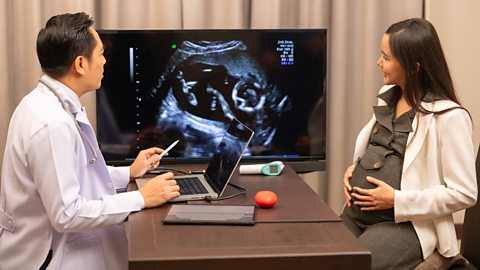
An example might be a fibroid, what the NHS describes as a “non-cancerous growths which develop in or around the womb”, which might affect a baby’s development and can cause issues during labour.
Gemma adds that midwives and consultants would work together to carefully monitor a fibroid to assess if it is “going to grow in pregnancy” or pose any risk to the mum and baby’s health.
She adds that some parents may be offered additional support based on their medical history.
“We talk about additional needs, for example if a mother had previous diabetes in pregnancy or high blood pressure, so that they could be seen earlier,” says Gemma.
Tips and tricks for making the most of your 12-week scan
Drink water before your appointment
“If we get the mum to fill her bladder, it lifts the whole uterus up so we can get a better look,” explains Gemma. She advises drinking some water ahead of the appointment.
Bring someone along for support
“I just think it’s important that you come with somebody,” says Gemma.
Even if you've been through the process before and have an idea of what to expect, it might be beneficial to have someone there that you know and trust in case of any unexpected news.
Leave plenty of time for travel/parking
Being late for appointments causes stress, and costs the NHS money. Gemma suggests “to make sure you leave in good time and be mindful of parking across hospital facilities.”
Keep in touch with your midwives/doctors
Keeping everyone in the loop (before and after your 12-week scan) helps ensure you and your baby receive the necessary support. If you are worried about baby, get in touch with your local maternity unit.
Gemma says it’s “important that everybody keeps the lines of communication open. Please feel free to ask us any questions if you’ve got a concern, query or issue.”
Ask about local resources
Midwives, doctors and health visitors may have useful information about resources in your local area, including antenatal classes and parenting groups.
Some useful info for expectant mums