| 13 November 2014 |

| |
| BBC Homepage | | |
| |||
| Contact Us | | |
Behind the headlinesYou are in: Somerset > Behind the headlines > What to do if your home has been flooded 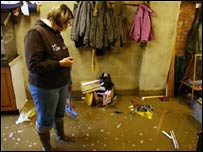 Put all valuables in a safe place What to do if your home has been floodedIf your house has been flooded there's so much to think about that it can be difficult to know where to start. If you're stuck, then Mary Dhonau from the National Flood Forum has this advice. The period after a flood in your home or business is usually the most stressful and with that come the dawn of reality that 'it happened to me'. With a little effort you can make a plan of action that will help you get through this distressing period. If you have household insurance:If you have not done so ring your insurance company immediately - they will send a loss adjuster as soon as they can (usually in a day or so). Try to 'stop' and make a plan. e.g. photograph everything – structure, appliances, furniture and contents, watermarks etc. If you have lost your camera in the floodwater, use a cheep disposable one. If you've got a video camera use that too. If you or your family have had to move out or need to leave the area, make realistic decisions based upon the fact many houses will take six months to dry and become habitable – this is not a two week problem! You may have to live in your house while the loss adjuster arrives and tells you what will happen. In the meantime make a list of what has been damaged and keep it somewhere safe. Recover valuables, keepsakes etc and put them somewhere safe. Use rubber gloves when you are handing them and put them in bags or boxes in a safe place. Your insurance company via your loss adjusters will arrange for a professional cleaning company to come and undertake all of the work in the following section or if the damage is severe appoint a 'strip out' contractor to remove flood damaged walls and floors plus damaged goods No household flood insurance?Local supplies of disinfectant, brushes, driers, generators, pumps, builders and tradesmen will run out very fast. Make a full list of emergency cleaning items to get ahead of the game by arranging for someone to collect these for you from perhaps well outside the local area. What should I do first when the floodwater has gone?When the flood water subsides it is vital to clear standing water as quickly as possible. Many people tend to wring their hands thinking they need to show the Insurance Loss Adjuster "just how bad it is" and perceive little urgency. Bricks and concrete floors soak up water relatively slowly, but conversely take months to dry out if they have been left standing in water for a long period (one inch per month). Fast action at this stage will save months of drying time later. (Very deep water however should be cleared by max. one third each day). 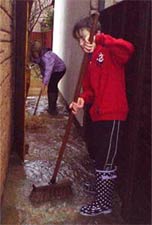 Remove the water straight away Get everything that is wet out of the house. Never try to vac-dry carpets where the underlay or flooring below is wet. Carpets are likely to be contaminated (just before removing them put some gloves on and cut up a small section for the loss adjuster to see). All drying has to be done by exposing the bottom layer of the structure. Laminate floors must be taken up. Traditional floorboards should be lifted in a limited pattern to allow pumping and or ventilation of the sub floor. The boards and joists will usually dry satisfactorily. Chipboard floors may recover but if immersed in water for several days they will swell badly and never recover and are very unsafe to walk on when wet. If they need to be scrapped then remove them immediately to aid ventilation to the joists and sub-ground below. If scrubbing with disinfectant is needed this is the next job. It is pointless to dry concrete floors and then introduce more water in cleaning at a later date. Disinfect very thoroughly otherwise the smell will forever linger. Disinfectant will kill mould that may form as soon as 'wet areas' change to 'damp areas'. Mould and mildew are more dangerous to health than commonly perceived. If kitchen units are wrecked (which is highly likely) then these should be dismantled also. Staircases will usually dry out but need ventilation to the underside if possible. Doors will vary in construction but once twisted will not often straighten. Removing doors will help ventilation. Drying - ventilation, ventilation and more ventilation.In fine weather open windows and doors to create a draft of air through the building. Incoming air will evaporate damp from surfaces and take the moisture out of the building. Heating the house at the same time will speed the process. Hot air electric heaters are excellent since they produce moisture free heat. Propane Gas space heaters are frowned upon by many experts as the gas produces a little moisture and in the wrong hands they could be a fire risk. In my own experience they are very effective but one must appreciate fast track drying can cause cracking of plaster, twisting of door etc. 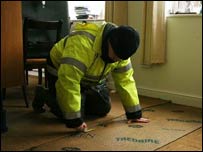 A house can take up to a year to dry out Dehumidifiers work on the principle of extracting water from the humid air of a damp building; the building must be sealed with all windows and doors closed otherwise you are effectively 'drying the outside world'. Ideally a large hire-shop dehumidifier (3ft x 2ft x 2ft) is needed in each room to be dried. The water must be collected into a five gallon barrel and not an open bucket. Dehumidifiers are slow in action and in my view best employed after much heat and ventilation drying has first been achieved. Note, a concrete floor is truly ‘dry’ when a one metre sq polythene sheet left on the floor overnight does not have condensation under it the next morning. Whilst a house can be occupied before this point, tiles or vinyl should not be laid until this test is passed. When windows start to show less condensation drying is being effective. InsuranceDo not wait; do not see this as an insurance 'opportunity'. Insurance Loss Adjusters will be inundated and cannot get to everyone first. They are professionals who are generally keen to help honest people. They like claimants who do everything reasonable to mitigate their own loss. Communicate clearly and clarify what terms of reference the Insurance Company feels is reasonable. If you ‘try it on’ expect a long and stressful process. In general you will get eventually what you are due: • Fully insured – you may get full recompense but the policy may adjust downwards for fair wear and tear and general depreciation since new. A 15 year old kitchen does not always justify a new kitchen! Builders' QuotesBuilders in the area will be inundated with quotation work, and eventually will very likely become over stretched with work and may prove understandably unreliable.  Consider organising quotes from builders / kitchen fitters from further afield. Consider ordering goods like kitchens and doors very early after clearing with any Insurer since supplies may become stretched to long deliver dates. Given the huge pressure that Insurers are likely to be under try to help arrange quotes yourself to move your case 'up the pile'; don't exaggerate the claim at all and you may get a fast decision to proceed with a builder, or manage the work yourself. Plant and EquipmentHire shops will quickly become short of driers, heaters and generators. Consider hiring from outside the area. Hire in general is very costly over a long period. Always consider purchasing equipment since you are likely to need it for much longer that you first anticipate and owning it means that you stay in fully control. If you own the equipment it may be useful in the future or re-sell later. Small generators will be adequate for running small pumps. Very small D.I.Y. dehumidifiers are unlikely to achieve meaningful results however. The purchase of several traditional sturdy household ‘electric fan heaters ’ may prove a fantastic purchase however. Consider several good quality extension leads for getting heat into difficult areas and corners. Hang in there, you will get through this! last updated: 15/12/2008 at 16:53 Have Your SayDo you have any tips? Tammieoldhide robert fairall SEE ALSOYou are in: Somerset > Behind the headlines > What to do if your home has been flooded  |
| | About the BBC | Help | Terms of Use | Privacy & Cookies Policy |