Britain’s Coldest Case
A forensic scientist and a fingerprint expert identify a killer nearly 60 years after the crime, and a plant scientist helps expose a fraudster in a fake tea-growing operation.
The first case in this episode goes back to Bristol in 1967, when 75-year-old widow Louisa Dunne was found dead in the front room of her home. She had been sexually assaulted and killed.
Detectives had little to work with. A palm print on a rear window appeared to show where the killer had tried to get into the house, and swabs taken from Louisa’s body could only reveal a blood type. Men and boys within a one-and-a-half-mile radius were checked for prints, but no suspect was identified, and the case went cold.
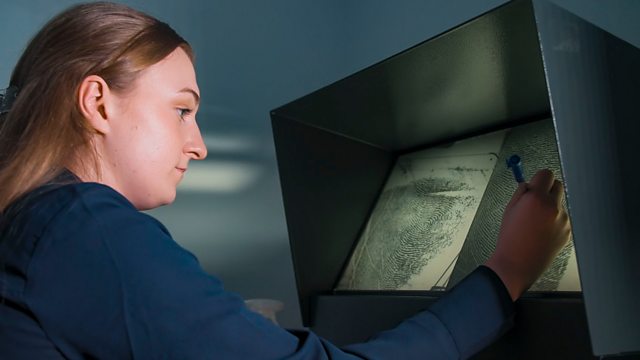
More than five decades later, the investigation was reopened. Advances in DNA technology meant the evidence could be examined again. The major crime team turned to forensic scientist Andrew Parry, a leading expert in cold-case investigations. When the original biological swabs could not be found, he took a different approach and examined the skirt Louisa had been wearing when she was discovered. After detailed testing, he identified a male DNA profile, and police finally had a suspect: Ryland Headley. Detectives then brought in fingerprint expert Elizabeth Hobbs to compare the palm print from the original crime scene with Headley’s prints. Her positive match, alongside Andrew’s DNA evidence, helped secure the conviction of Ryland Headley, who was 92 when he was found guilty of Louisa’s murder. The case includes an interview with BBC senior journalist Cheryl Dennis alongside the expert witnesses.
The second case looks at a fraud that threatened a great British ritual: the cup of tea. In Perthshire, Scotland, a new tea plantation set up by Tam O’Braan appeared to be a remarkable success. Its supposedly Scottish-grown tea attracted attention, awards and lucrative orders from high-end hotels and businesses.
But tea consultant Beverly Wainwright began to question whether the story was too good to be true. With most tea plantations based in Asia, the claim that premium tea was being grown in Scotland raised suspicions among experts.
Expert witness Professor David Burslem, a plant scientist at the University of Aberdeen, was asked to establish the true origin of the tea. His analysis showed it had not been grown in Scotland. His evidence helped secure a fraud conviction for Tam O’Braan, who was jailed for three and a half years.
Last on

More episodes
Credits
| Role | Contributor |
|---|---|
| Presenter | Ashley John-Baptiste |
| Composer | Philip Guyler |
| Production Manager | Andrea McClelland |
| Executive Producer | Emma Barker |
| Executive Producer | Edward Hart |
| Series Producer | Lucy Wedlock |
| Producer | Gary Watson |
| Producer | Catriona Wright |
| Production Company | Rare TV |
Broadcast
- Wed 22 Jul 202610:45
