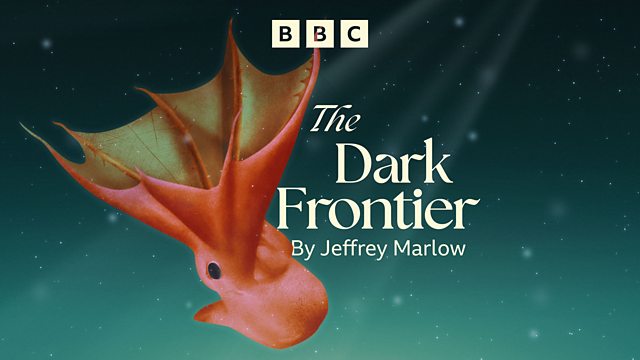
Episode 4: Rosebud
The deep sea is one of our last frontiers. Marine microbiologist Professor Jeffrey Marlow explores the deep ocean.
The deep sea is one of our last frontiers. For most of human history, it was a vast, dark, and unknown realm that invoked awe and terror. Now, one thing we do know is that it is critically important and central to the future of life on this planet.
In The Dark Frontier, marine microbiologist and deep-sea explorer Jeffrey Marlow reveals how life can thrive in even the most remote, unforgiving landscapes. Professor Marlow’s research focuses on understanding the microbes that inhabit the rocks and sediments of the seafloor.
In his lab in Boston, he works with a team of scientists to discover how these communities of microbes perform feats of metabolic ingenuity that shape the global carbon cycle and push the boundaries of life’s limits in extreme environments.
In this fourth episode, Jeffrey tells the story of a whale named Rosebud. Rosebud had swum in the waters off California since the early 2000s, but in 2011 she was killed by a ship’s steel hull. She lay washed up on the beach, until marine biologist Greg Rouse decided to begin the experiment of a lifetime - he towed her out to sea and buried her a thousand metres deep. He wanted to discover what kind of ecosystem would come to life around her, fed by her carcass.
Three years later, Jeffrey Marlow joins a research ship to find out.
“As we descended to 844 metres, the haze of marine snow gave way revealing Rosebud’s splayed skeleton. It was monumental. The rib cage looked like a ruined cathedral, with crabs and snails huddled beneath its buttresses. It was then that I realised that Rosebud was nurturing her own bespoke community…”
Reader: Adam Sims
Abridged and produced by Elizabeth Burke
Executive producer: Sara Davies
Sound design: Jon Calver
A Loftus Media production for BBC Radio 4
Last on

Broadcast
- Thu 7 May 202611:45BBC Radio 4
