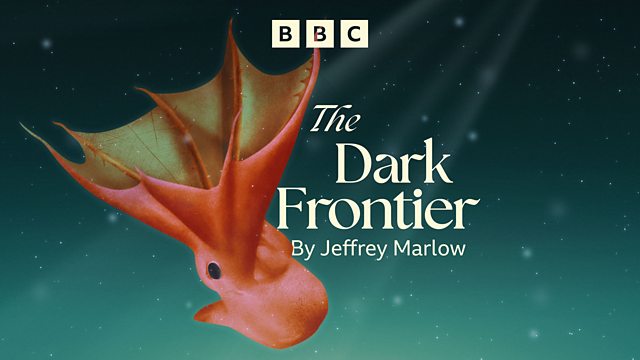
Episode 3: Diving to the Bottom of the Pacific
The deep sea is one of our last frontiers. Marine microbiologist Professor Jeffrey Marlow explores the deep ocean.
The deep sea is one of our last frontiers. For most of human history, it was a vast, dark, and unknown realm that invoked awe and terror. Now, one thing we do know is that it is critically important and central to the future of life on this planet.
In The Dark Frontier, marine microbiologist and deep-sea explorer Jeffrey Marlow reveals how life can thrive in even the most remote, unforgiving landscapes. Professor Marlow’s research focuses on understanding the microbes that inhabit the rocks and sediments of the seafloor.
In his lab in Boston, he works with a team of scientists to discover how these communities of microbes perform feats of metabolic ingenuity that shape the global carbon cycle and push the boundaries of life’s limits in extreme environments.
In this third episode, he is diving deep in the Pacific Ocean, at the Cascadia subduction zone, where two tectonic plates are edging towards each other.
“I saw multitudes of life coating every surface, and the biological richness was astounding. The sheer improbability of the whole thing – an overflowing oasis within a sea-floor desert – was hard to comprehend. Rich profusions of life can be sustained without sunlight or the importation of sun-built food. It made me wonder if something similar could be happening elsewhere in the solar system…”
Reader: Adam Sims
Abridged and produced by Elizabeth Burke
Executive producer: Sara Davies
Sound design: Jon Calver
A Loftus Media production for BBC Radio 4
Last on

More episodes
Previous
Broadcasts
- Wed 6 May 202611:45BBC Radio 4
- Thu 7 May 202600:30BBC Radio 4
