Could scammers use your address for dodgy returns?

You’ve bought an item online, only to realise that it’s nothing like the description.
You decide to mail it back to the company's address to try and claw back a refund.
If you think this story sounds familiar, this is where the similarity ends.
Because your "returned" item is actually being received by another scammed customer, who is being inundated with dodgy items in the post...
The Scam Secrets team investigate a new type of fraud – which could be coming to a street near you.
A ‘London’ returns address

Scam Secrets listener Francis contacted the show after attempting to buy a pair of shoes online.
As the victim of a previous online purchase scam, she feared the worst when then the shoes failed to arrive.
But when she visited the retailer’s website, she was delighted to see a London address and phone number to use for any order issues.
“I rang that number to say, look, can we please cancel this order?” she said.
But rather than contacting a customer service representative, she found herself talking to an electrician called Scott.
50 parcels a day

“I started getting a couple of phone calls here and there,” says Scott. “It's escalated as the weeks have gone on.”
It wasn’t only phone calls that Scott was receiving.
Parcels began to arrive at his home address, up to 50 a day, until he had to ask Royal Mail to block all deliveries to his house.
After some snooping, he discovered that it was his personal address and phone number that was being used on the website where Francis made her purchase.
Hundreds of calls

Another Scam Secrets listener, Rachel, told the show that she had suffered a similar fate.
“I couldn't understand why people were ringing me"Fraud victim Rachel
“I couldn't understand why people were ringing me,” she told the show. “I would explain to them that this is my private number, I can't help you.”
She began receiving hundreds of calls every day, to the point where she stopped listening to her voicemails, as her inbox was filled with irate people attempting to return shoddy items or ask where their orders were.
As a doctor, it seriously disrupted her life and work.
Eventually she asked one of the callers why they happened to have her number.
“They gave me the name of a website, she explained. “I looked it up and I was very shocked to discover that on this website my phone number was down as the contact number.”
Why are criminals doing this?
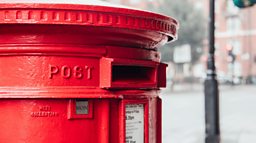
For Scott and Rachel, the scam actually started much earlier: when they inputted their details to purchase shoes from a fake business.
“There's a much bigger game at play here"Alex Wood, ex-criminal turned Scam Secrets podcaster
Because it wasn't just the cash for dodgy items that criminals were after.
“The sale of any of these goods is literally, as we say, the sprat to catch the mackerel,” says Scam Secret’s Alex Wood – a former fraudster who now helps police catch criminals by exposing their techniques.
“There's a much bigger game at play here" he says: harvesting your personal data.
In Scott and Rachel's case, after stealing their data, the criminals used their real home addresses to make their fake online shopping websites look more realistic.
“It lends local credibility,” says Alex. “If you had an address in China, it wouldn’t reassure local [British] customers.”
![]()
More on this type of fraud: 'The Knitted Cardigan Scam'
Is this the worst ‘what I ordered vs what I got’ ever?
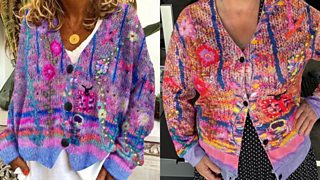
Alex explains that there is an additional benefit of using real addresses: it is far quicker than spending time inventing fake ones.
“These sites will pop up and they’ll immediately be shut down,” Alex says, so the criminals have to act quickly.
“I think sometimes these addresses and phone numbers are populated automatically by a bot… pulling genuine data from another customer on another site that they own.”
How to protect yourself

The Scam Secrets team have some advice for avoiding being caught up in similar situations:
- Check the advertising ‘story’: Does the website have sob story attached explaining how the store is about to close? Or is there time pressure? If so, it should instantly make you wary. These are the tactics scammers use to lure you in.
- Do a web search: If a deal seems slightly unbelievable, type the name of the company or business into a search engine, plus the word ‘scam’ or similar, and see if any negative results pop up.
- Review the reviews: Fake reviews from sites such as Trustpilot can easily be created on a fraudster’s website. Even if they provide an external link to their reviews, this might also be to a spoof site. Always open a new tab in a browser and go to the actual reviews website to check on a company.
- Reverse image search: Before clicking on that ‘buy’ button, take the picture of the item you desire, run it through a reverse image search to see if it pops up elsewhere. If the item’s image has been swiped from a different provider, it should set alarm bells ringing.
- Consider a ‘bin’ email: Using an email with your name as part of the address (joe.bloggs@myemail.com for example) can provide additional valuable information to the scammer. Consider using a ‘bin’ email address with no personal information contained for online purchases and sign-ups.
- Picture things IRL: Does it all feel a bit "off?" Imagine of this interaction were taking place in real life. If someone knocked on your door and tried to sell you the item you’re considering, using the same sort of information, would you hand over the money there and then?
Scam Secrets is here to help

In each episode of Scam Secrets, fraud investigator Shari Vahl, criminologist Dr Elisabeth Carter and ex-criminal Alex Wood (pictured above) dissect new and evolving techniques criminals use - so you can stop them trying it on you.
If you or someone you know might have lost money in a scam, our article '5 Steps To Get Your Money Back' has some simple steps on how to take control back of the situation.
You can hear the full episode, ‘The Customer Service Returns Scam; and more stories like it on Scam Secrets. Listen on BBC Sounds.
More from Scam Secrets
![]()
Booking a holiday? Watch out for this hard-to-spot scam
Holiday planning can be stressful - but for two Booking.com users, it became a nightmare when they were left hundreds of pounds out of pocket by a sophisticated scam.
![]()
5 communication tricks scammers use to lure you in
Forensic linguist Dr Elisabeth Carter drills down into the top five language tricks and techniques that fraudsters deploy to steal your cash.
![]()
Scammers tricked me with fake podcast offer
Dog groomer and influencer Caroline was offered a guest slot on a top US podcast - with a large sum of money for an appearance fee. But all was not as it seemed...
![]()
Scam Secrets
Dissecting the techniques criminals use to steal your money - with fraud investigator Shari Vahl, criminologist Dr Elisabeth Carter and ex-criminal Alex Wood.