

Wednesday 24 Sep 2014
Programme Information
Network Radio BBC Week 2: Tuesday 12 January 2010
BBC RADIO 2 Tuesday 12 January 2010
www.bbc.co.uk/radio2
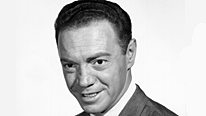
BBC Radio 2 tells the fascinating story of one of the most influential DJs in pop history, Alan Freed.
At a time when Frank Sinatra and Pat Boone dominated the airwaves, Alan Freed would spend his weekends at his local record store, Record Rendezvous. It was there that he was introduced to rhythm and blues and witnessed first hand its popularity with teenagers.
Working as a late-night sports reporter on his local radio station, Freed's lucky break came when one of the disc jockeys called in sick. Whilst filling in, Freed played some of the rhythm and blues records he'd collected at Record Rendezvous but was fired for playing black artists on a "white" radio station. However, due to an overwhelming response by listeners, he was later reinstated and given his own show.
Freed's Moondog Show became extremely popular due to his passion and enthusiasm for the music he was playing. He moved to New York and became a huge star but, although he was popular with his teenage audience, he was also making enemies. At a time when there was still racial segregation in the US, the authorities didn't approve of the effect that "black music" was having on society.
In 1958, when violence occurred outside the Boston Arena after a Freed stage show, local authorities charged him with inciting to riot. The charges were eventually dropped but his radio station employers declined to renew Freed's contract and he moved on to WABC, in New York, where he hosted a radio programme and a locally televised dance show.
Freed's downfall came following an investigation into disc jockeys receiving payment for playing records, which later became known as "payola". WABC asked Freed to sign a statement confirming that he had never accepted payment for playing records. Freed claimed payments he'd received from record companies were given to express their gratitude for his support not as an inducement to play their records. He was promptly fired from both his radio show and the TV programme.
When his court case came to trial in 1962, Freed pleaded guilty to two counts of commercial bribery and received a suspended sentence and a $300 fine. However, he insisted that he had never played a record that he didn't like. His arrest has since been queried as the charges stemmed from 1959 but payola wasn't illegal until 1960.
The side effects of this negative publicity were such that no prestigious station would employ him. He moved to California, a broken man, and turned to alcohol. He died in 1965 from liver disease at the age of 43. However, Freed's legacy lives on and, in 1986, the part he played in shaping musical history was recognised when he was among the original inductees to the Rock 'n' Roll Hall of Fame in his hometown of Cleveland.
The programme features contributions from people close to Alan, including his son, Lance. It also includes fascinating archive clips of Freed's original shows and an interview with Buddy Holly.
Producer/Nan Davies
BBC Radio 2 Publicity
BBC RADIO 4 Tuesday 12 January 2010
www.bbc.co.uk/radio4
Famous Footsteps Ep 1/5

Fiona Neill looks at the experience of growing up in a creatively successful family and aims to find out what pressures are faced by children born to parents who are successful writers, comics or musicians and how difficult it is for them to live up to the perceived expectations.
The series features five families – Jennifer Saunders, Adrian Edmondson and their daughters, Ella and Beattie; Lady Tessa Montogomery, daughter of Daphne Du Maurier; William Miller, son of Sir Jonathan Miller; songwriter Guy Chambers, his nine-year-old daughter and Guy's father, who was lead flautist in the Liverpool Philharmonic Orchestra; and Orange Prize-winning novelist Kamila Shamsie and her mother, literary critic Muneeza Shamsie.
The series explores how creative people cope with doing their day job while also trying to look after young children; looks into the advantages for children born into a creative family; examines the downside of having famous and successful parents; finds out how families cope when things go wrong; and uncovers the reality behind the "bohemian" lifestyle.
Presenter/Fiona Neill, Producer/Sarah Harrison
BBC Radio 4 Publicity
Ken Clarke's Jazz Greats Ep 1/4
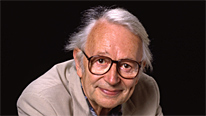
In his eighth series of Jazz Greats for BBC Radio 4, Ken Clarke MP shares his enthusiasm for some of the great names in jazz, beginning with Humphrey Lyttelton.
Many Radio 4 listeners knew "Humph" as the hilariously deadpan chairman of I'm Sorry I Haven't A Clue. But the much-loved broadcaster was also an exemplary and influential jazz musician.
Louis Armstrong dubbed him "the top trumpet man in England today". A master of the trumpet, he spearheaded the post-war traditional jazz revival in Britain, later forming his own band that set the standard for British jazz for several decades. Friend and fellow BBC presenter Alyn Shipton joins Ken in the studio to discuss one of Britain's most important and best-loved jazz musicians.
Other greats featured in the series include Cannonball Adderley, Chet Baker and Sonny Rollins.
Presenter/Ken Clarke, Producer/James Hale
BBC Radio 4 Publicity
Charlie and Amy are both in their early thirties, both single and both working in the same dead-end job. They then begin a relationship, but it's a bit of a disaster. Nevertheless, it continues. They both dream of their first loves – the loves that have never really been bettered.
Then Amy falls pregnant and the lives they're leading, and the dreams they're dreaming, are forced into very clear focus. Are their memories all rose-tinted and are their presents both compromised by an idealised past?
Sandy Grierson plays Charlie and Cora Bissett plays Amy.
Writer/DC Jackson, Producer/Kirsty Williams
BBC Radio 4 Publicity
The Curiosities Of The Egyptian Hall Ep 1/3
Award-winning radio actress Miriam Margolyes reads the first of three stories inspired by London's Egyptian Hall.
London's Egyptian Hall was originally built in 1812 to house collections of curiosities brought back from the most remote and mysterious parts of the globe. However, it soon became the venue for extraordinary spectaculars, panoramas and pseudo-scientific demonstrations – such as Britain's first ever films, illusions, magic and freak shows. By the end of the 19th century, it had become known as England's Home of Mystery and Many Illusions, under the management of renowned magician Maskelyne. It became the centre of magic and spiritualism where new acts were demonstrated and charlatans exposed.
The first story, Between Isis And Osiris, by John Peacock, tells the sad tale of Benjamin Robert Haydon, the prolific painter who exhibited at the Egyptian Hall in the 1840s. Unfortunately for Haydon, audiences preferred to go and see an American midget, also appearing at the Hall, called General Tom Thumb.
The second tale, The Great Mephisto!, written by Tony Lidington and read by Madhav Sharma, is about a young Indian illusionist who took revenge on his cruel employer when he appeared at the Egyptian Hall in the 1880s.
The final story is Curious Shadows, written by Jerome Vincent and read by Gunnar Cauthery. A young man investigates the murder of his sister – a young actress who appeared in films shown at the Egyptian Hall in the final decade of the 19th century, when there was great rivalry between film-makers who guarded their technical secrets closely.
Readers/Miriam Margoyles, Madhav Sharma and Gunnar Cauthery, Producer/David Blount
BBC Radio 4 Publicity
BBC RADIO 5 LIVE Tuesday 12 January 2010
www.bbc.co.uk/5live
Mark Pougatch presents all the day's sports news and commentary from an FA Cup third-round replay match.
Presenter/Mark Pougatch, Producer/Adrian Williams
BBC Radio 5 Live Publicity
BBC 6 MUSIC Tuesday 12 January 2010
www.bbc.co.uk/6music
Gideon Coe introduces a vintage Cure concert from 1985 and Laura Veirs live at Summer Sundae. Archive session tracks include sets from Radiohead, recorded in 1994, grungy North Carolinan quartet Superchunk and folkish vibes from Smoke Fairies.
Presenter/Gideon Coe, Producer/Frank Wilson
BBC 6 Music Publicity

Marc Riley travels back to 1973 tonight – the year that President Nixon ordered a ceasefire in Vietnam, the Stock Exchange admitted women for the first time and Princess Anne married Lieutenant Mark Phillips.
It was also the year in which BBC Radio 1 broadcast interviews with Pete Townshend in a series called The Story Of Pop. Presented by Alan Freeman, the 26-part show featured a mix of musicians talking about the history of popular music.
At a time when The Who were just about to release Quadrophenia, Marc revisits Townshend's take on the industry, Woodstock, The Kinks and the Mods.
Presenter/Marc Riley, Producer/Frank Wilson
BBC 6 Music Publicity
BBC ASIAN NETWORK Tuesday 12 January 2010
www.bbc.co.uk/asiannetwork
Simran tells Jaggy to ring the Santorini letting agents, in today's visit to Silver Street. Later, Simran is furious with Jaggy after getting a call from Kesar's nursery. But what has Jaggy done?
Chunky tells Jungli that he overheard Bibi on the phone and, if she gets her way, it will mean bad news for one of them.
Meanwhile, Jungli gets a cab booking to pick Kenny up from Rangers. Kenny is shocked and confused when Jungli reveals who he picked up earlier in the day...
Simran is played by Balvinder Sopal, Jaggy by Jay Kiyani, Chunky by Shahid Ahmed, Jungli by Adil Ray, Bibi by Indira Joshi and Kenny by Brian Croucher.
BBC Asian Network Publicity
Programme information
Network Radio
Network Radio – Days
Key
- New

- Live event/outside broadcast

- Interactive programme

- Picture available
BBC iD
BBC iDBBC navigation
BBC links

BBC © 2014The BBC is not responsible for the content of external sites. Read more.
This page is best viewed in an up-to-date web browser with style sheets (CSS) enabled. While you will be able to view the content of this page in your current browser, you will not be able to get the full visual experience. Please consider upgrading your browser software or enabling style sheets (CSS) if you are able to do so.
