

Wednesday 24 Sep 2014
Programme Information
Network Radio BBC Week 1: Monday 4 January 2010
BBC RADIO 1 Monday 4 January 2010
www.bbc.co.uk/radio1
In a new series of International Radio 1, four more DJs check out the music scenes of the cities they love.
Judge Jules kicks off the run in Helsinki, Finland, where he discovers what the country's dance music scene has to offer.
The next three Mondays see Huw Stephens, Gilles Peterson and Bobby Friction head to other exciting destinations.
International Radio 1 is part of a line-up of documentaries that have so far included Radio 1's Stories – The Story Of The Noughties. Alongside Nihal's Review show and In New DJs We Trust, they sit at the heart of the weeknight schedule at 9pm.
BBC Radio 1 Publicity
BBC RADIO 2 Monday 4 January 2010
www.bbc.co.uk/radio2
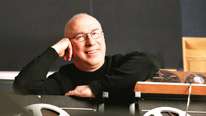
Queen drummer Roger Taylor joins Ken Bruce to discuss his Tracks Of My Years and picks a selection which includes music by Elvis Presley, Bruce Springsteen, The Who and David Bowie.
Presenter/Ken Bruce, Producer/Gary Bones
BBC Radio 2 Publicity
BBC RADIO 2'S ELVIS SEASON
Elvis, The Brand Ep 1/2

In what would have been the week of Elvis Presley's 75th birthday, Paul Gambaccini tells the story of the singer's undiminished fame and his power as an American icon.
It's a story of brilliant reinvention, as Paul examines the way in which Elvis evolved through many guises and identities – Hillbilly Cat Elvis, Elvis The Pelvis, Army Elvis, Hollywood Elvis, Comeback Special Elvis, Las Vegas Elvis, Black Leather Elvis, Black Velvet Elvis and Reincarnated Elvis – making him the most influential celebrity brand in history.
The series concludes tomorrow at the same time.
Presenter/Paul Gambaccini, Producer/Susan Marling
BBC Radio 2 Publicity
BBC RADIO 3 Monday 4 January 2010
www.bbc.co.uk/radio3
Dan is the globe-trotting architectural historian best known for his dynamic television appearances in series such as Around The World In 80 Treasures and Britain's Best Buildings. He argues that the aesthetic and emotional consequences of this conservation are underestimated and that we need to restore architecture to a prominent place in our understanding of ourselves, our history and our society.
Presenter/Rana Mitter, Producer/Fiona McLean
BBC Radio 3 Publicity
The Essay – The Path And The Poem Ep 1/5

In the first Essay series of the New Year, poet Andrew Motion explores the connections between walking and writing in five talks about poems that follow paths. The poets under discussion are Edward Thomas, Norman MacCaig, Frank O'Hara, Elizabeth Bishop and Alice Oswald: two Americans, a Scot and two English writers.
The walking poem has a long history – Chaucer's Canterbury Tales are told along a walk – but Andrew Motion has selected five poets from the last hundred years, the century when walking ceased being the universal form of transport. One poem covers only a few feet but reaches back many years; another takes a walk across Manhattan; and another down a river, but all have things to say about how human movement and journeys of the imagination are entwined.
Presenter/Andrew Motion, Producer/Tim Dee
BBC Radio 3 Publicity
Jez Nelson welcomes in the New Year with a special edition of Jazz On 3 celebrating some of the best live acts to have grown up on British soil. Recorded earlier this evening at Ronnie Scott's jazz club, the show features performances from some of the finest current bands, both established and new.
The programme features a rare appearance from Django Bates's Human Chain, with their trademark spontaneity and rejuvenating spirit, plus BBC Radio 3 New Generation Artist trumpeter Tom Arthurs performing in duo with pianist Richard Fairhurst. Elder statesman of brass, Kenny Wheeler, showcases his innovative compositions and beautiful tone with his quintet and, following a performance marking his 50th birthday at the 2009 London Jazz Festival, Cleveland Watkiss brings his mesmerising voice along for a true celebration of the best of British.
Presenter/Jez Nelson, Producer/Peggy Sutton
BBC Radio 3 Publicity
BBC RADIO 4 Monday 4 January 2010
www.bbc.co.uk/radio4
In Our Time –
The Royal Society And British Science Ep 1/4
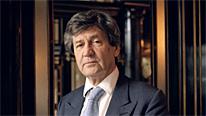
To mark the Royal Society's 350th anniversary, Melvyn Bragg presents a new series about its leading role in the development of modern science.
Melvyn explores how the Royal Society has adapted to social, political, economic and scientific change. He asks whether it can be seen as a barometer of British science and explores how other institutions of British science, such as the Royal Institution, copied, challenged and partially eclipsed the Royal Society itself.
In the first programme, Melvyn travels to Wadham College, Oxford, where the young Christopher Wren and friends experimented in the garden of their inspirational college warden, John Wilkins. In London, as Charles II returns to the throne from exile, the Society is formally founded one night in Gresham College. When London burns six years later, two of its key Fellows are charged with rebuilding the city – it is science which adds seasoning to their plans.
Tuesday's programme begins in the coffee house frequented by Isaac Newton and the Fellows of the early 18th century. In an age of exploration, senior Fellows of the Royal Society accompany naval expeditions, such as Cook's expedition to Tahiti and subsequent discovery of Australia. By the end of that century, the President, Sir Joseph Banks, successfully embeds the Royal Society in the imperial bureaucratic hub of the new Somerset House.
In Wednesday's programme, Melvyn explores how the 19th century blooms scientifically with numerous alternative, specialist learned societies and associations all threatening the Royal Society's pre-eminence. Attempts to reform the membership criteria – marking scientific leadership's painful transition from patronage to expertise – are troubled, and organisations such as the British Association For The Advancement Of Science excite and enliven scientific discourse outside London.
The final programme, on Thursday, takes a look at the more subtle, discreet role the Society played in the 20th century, such as secretly arranging for refugee scientists to flee Nazi Germany; co-ordinating international scientific missions during the Cold War; and quietly distributing government grant money to fund the brightest young researchers in the land.
Presenter/Melvyn Bragg, Producers/John Watkins, James Cook and Alex Mansfield
BBC Radio 4 Publicity
Book Of The Week – The Last Matchmaker Ep 1/5
For centuries, Irish matchmakers have performed a vital service, bringing people together in love and marriage.
It is a mysterious art, and the very best matchmakers have an almost magical quality to them. Willie Daly, whose father and grandfather were matchmakers before him, is the most celebrated of them all.
Each year, his tiny home town of Lisdoonvarna, which boasts a population of 800, hosts a matchmaking festival that attracts 40,000 visitors from around the world. They all hope to meet Willie, "the horse whisperer of matchmaking". With his unique blend of intuition, quiet wisdom and a small drop of cunning, Willie has brought together hundreds of couples over the years.
The Matchmaker offers listeners an intimate glimpse into the culture and traditions of rural Ireland.
Reader/Dermot Crowley, Producer/Kirsteen Cameron
BBC Radio 4 Publicity
Woman's Hour Drama – Six Suspects Ep 1/10
Vicky Rai, notorious playboy son of a prominent Indian politician, shoots dead a waitress at a trendy Delhi restaurant. But at a lavish society party to celebrate his acquittal, he is himself murdered.
The big question in Six Suspects, written by Ayeesha Menon, is: who did it? The suspects include: a Bollywood actress with a guilty secret; an American who came to India to marry his mail-order bride; a mobile phone thief with big dreams; a tribesman on a quest to recover a stolen relic; and Rai's own mother, a corrupt politician who will do anything to cling to power.
The police investigation gets nowhere and the murder promises to be yet another unsolved mystery in a country full of unsolved crimes – until India's leading investigative journalist, Arun Advani, steps in to tell the world the shocking truth. It's a story that takes listeners on an extraordinary journey into the heart of modern-day India.
Six Suspects was recorded on location on the streets of Mumbai with an Indian cast.
Rajit Kapur plays Arun Advani, Zafar Karachiwala plays Vicky Rai and Radhika Mital plays his mother, Mumta Rai. Anand Tiwari is the mobile phone thief, Shernaz Patel plays Bollywood actress Shabnam Sxena, Gary Richardson plays American tourist Larry Page and Rohit Malkani is Eketi, the tribesman.
Producer/John Dryden
BBC Radio 4 Publicity
In 1914, Norah Elam was put in a Holloway prison cell with Emmeline Pankhurst for her involvement with the suffragette movement, fighting for women's rights. In 1940, Norah returned to the same prison with Diana Mosley, this time for her involvement with the fascist movement.
In Mother Was A Blackshirt, James Maw explores how Norah Elam's fascist philosophy grew directly out of her involvement with the suffragettes, and how subsequently the British fascist movement was largely driven by women. He discovers how the first British fascist movement was founded by a woman, and that it was the leading lights of the suffragettes, along with Oswald Mosley, who founded the British Union of Fascists.
Blackshirts targeted young women from an early age, says James, who begins with the story of his own mother, who was targeted by recruiters in 1937 when she was just 16 and working in an ink factory.
Francis Beckett reveals how his mother was recruited when she was sent by the Pitman's secretarial agency to work at Mosley's headquarters. He talks about how he has been vehemently anti-fascist all his life and has worked tirelessly to clear the family name of the stigma he feels.
Angela McPherson had no idea until recently of the role her grandmother played at the very centre of the fascist movement. She had subconsciously blocked out disturbing memories of the events and stories her grandmother told her as a child, which continue to affect her family today.
In a very personal and revealing story, James learns how powerful fascist women became and explores the long-term effects their right-wing beliefs had on their children and grandchildren.
Presenter/James Maw, Producer/Neil George
BBC Radio 4 Publicity
The Beatrix Potter Guide To Business Ep 1/5
Richard Collins presents The Beatrix Potter Guide To Business, looking, in the first programme, at Potter's Jemima Puddleduck – where he finds money. It turns out not to be a heart-warming bedtime story for children at all. With an unflinchingly brutal telling of the tale, the programme combines vivid drama with passionate, well-informed commentary and solid business advice from leading entrepreneur Dharmesh Shah, investor and businessman Sanjiv Menezes and private equity director Janet Brooks.
Tomorrow, Richard looks at The Tale Of Ginger & Pickles, which was once described by Margaret Thatcher as "the only business book a young entrepreneur needs to read". Featuring a sharp dramatisation of this harsh story of two incompetent grocers, Richard talks to supermarket chairman Edwin Booth and BBC Chief Economics Editor Stephanie Flanders.
On Wednesday, Richard explores the menacing Tale Of Samuel Whiskers and finds a cautionary tale of things going missing and the importance of auditing a growing business. He hears from Potter authority Judy Taylor and CEO of the Eddie Stobart transport group, Andrew Tinkler.
Thursday's programme looks at The Tale Of Timmy Tiptoes, one written especially for the booming American market. It features commentary and reflections on the resonance of the tale from businessman Gerald Ratner, biographer Judy Taylor and cultural commentator Cory Doctorow.
In the final programme, Richard learns the best way to deal with management consultants exploring The Tale Of Mrs Tittlemouse. It features contributions from management consultant David Craig, former BBC Director-General Greg Dyke and Janet Brooks, alumnus of Arthur Andersen.
Presenter and Producer/Richard Collins
BBC Radio 4 Publicity
Just A Minute Ep 1/12
The grandfather of all panel games ushers in the New Year with a return to the airwaves this evening.
Chairman Nicholas Parsons takes control of a loquacious and rebellious bunch of players whose task it is to speak on a subject he gives them for one minute without hesitation, repetition or deviation.
Panellists featured in this series include: Paul Merton, Graham Norton, Charles Collingwood, Josie Lawrence, Julian Clary, Tony Hawks, Dave Gorman, Justin Moorhouse, Chris Neill, Gyles Brandreth, Jenny Eclair, David Mitchell, Lisa Tarbuck and Sue Perkins.
Presenter/Nicholas Parsons, Producer/Claire Jones
BBC Radio 4 Publicity
In Search Of The British Work Ethic Ep 1/2
Journalist Melanie Phillips embarks upon a personal journey to explore what work means to some of the most vulnerable and socially excluded people in Britain.
Melanie is known for her uncompromising views on the "work shy" beneficiaries of the welfare state but will her theories stand up in the face of the complex and difficult lives of the people she meets?
In the opening programme, she travels to the North East to meet young NEETs – the Government's acronym for people who are not in employment, education or training – who are struggling to find their way into the labour market, and a married couple who are desperate to get into work and away from dependency.
In next week's programme, Melanie looks at the kinds of jobs which offer the only realistic alternative to benefits for many people. She spends time with cleaners and catering staff working on the minimum wage and asks what motivates them to work. She also questions whether her own assiduous work ethic would survive night shifts, low pay and cleaning lavatories.
Presenter/Melanie Phillips, Producer/Charlotte Simpson
BBC Radio 4 Publicity
The Vox Project Ep 1/3
Most people take speaking, and the sounds that come out of their mouths, for granted but this belies the considerable complexity of the physical act of speaking and the consequent detail of the sounds each voice makes.
The Vox Project, a new series presented by Clare Balding, reflects new research into the way the human voice works, bringing it to life in a series of listener experiments which aim to push forward understanding of how the brain and voice interact and shed new light on the nature of the voice and people's speech patterns.
Professor Sophie Scott from University College London, and impressionist Duncan Wisbey have recently been collaborating on a project which takes understanding of the human voice to new levels. In this interactive series, listeners are invited to contribute to the experiment in various forms.
Among the themes tackled are: the construction of the voice; training and application of it for people such as actors and sports commentators; family voices; how environments affect people's voices; the way in which health changes speech patterns; conditioning by surrounding; and the way voices change.
Presenter/Clare Balding, Producer/Dilly Barlow
BBC Radio 4 Publicity
BBC RADIO 5 LIVE Monday 4 January 2010
www.bbc.co.uk/5live
5 Live Sport

Arlo White presents all the day's sports news and is joined by special guests for the Monday Night Club, discussing the latest big issues in football.
At 8pm, there's live commentary on the night's FA Cup third-round match.
Presenter/Arlo White, Producer/Francesca Bent
BBC Radio 5 Live Publicity
BBC RADIO 5 LIVE SPORTS EXTRA
Monday 4 January 2010
www.bbc.co.uk/5livesportsextra
Test Match Special
Ball-by-ball commentary of the second day's play of the third Test between South Africa and England comes live from Newlands, Cape Town. Jonathan Agnew leads the commentary team, alongside Simon Mann and Gerald de Kock, with expert summary from Ashes-winning former England captain Michael Vaughan, Geoffrey Boycott and Duncan Fletcher.
Presenter/Jonathan Agnew, Producer/Jen McAllister
BBC Radio 5 Live Sports Extra Publicity
BBC 6 MUSIC Monday 4 January 2010
www.bbc.co.uk/6music
Last year's BBC Sound Of 2009 poll revealed Little Boots, La Roux and Florence And The Machine to be the big tips for 2009 – and the voters seem to have got it spot on.
As the new year kicks off, BBC 6 Music's Lauren Laverne reveals the top five artists in the BBC's Sound Of 2010 poll, starting today with number five and finishing on Friday with the announcement of the artist that has been tipped for the top spot.
Lauren talks to each band as they are revealed and introduces live sessions from some of them.
Presenter/Lauren Laverne, Producer/Gary Bales
BBC 6 Music Publicity
Andrew Collins chats to experimental Brooklyn band Yeasayer about their new single, Ambling Alp, which is his Video Of The Week. The track is taken from the band's second full-length album, Odd Blood.
Directed by Radical Friend and shot over the course of five days in the Californian desert and Hollywood studios, the video features unidentifiable human-like objects, wild horses and naked people worshipping foil.
Presenter/Andrew Collins, Producer/Jax Coombes
BBC 6 Music Publicity
Gideon Coe's archive concert tracks come courtesy of Suede and The Specials. Sessions from the vaults include tracks from wistful Americana-tinged Galaxie 500, Swedish collective I'm From Barcelona, Diblo Dibala and The Kissaway Trail.
Presenter/Gideon Coe, Producer/Frank Wilson
BBC 6 Music Publicity
BBC ASIAN NETWORK Monday 4 January 2010
www.bbc.co.uk/asiannetwork
Jaggy is hiding something, in the first of this week's visits to Silver Street. He calls Darren at 3am to borrow money for a cab. He later repays him, but Darren wonders why Jaggy's being so jumpy.
Elsewhere, Deepika gets a shock when she barges into Sean's bedroom. She later goes to the newsagents to buy a pad of raffle tickets for her forthcoming event. When she leaves, Mary gossips to Shazia about who Deepika was getting cosy with on New Year's Eve.
Jaggy is played by Jay Kiyani, Darren by Samuel Kindred, Deepika by Babita Pohoomull, Sean by Lloyd Thomas, Mary by Carole Nimmons and Shazia by Shobu Kapoor.
BBC Asian Network Publicity
Programme information
Network Radio
Network Radio – Days
Key
- New
- Live event/outside broadcast

- Interactive programme

- Picture available
BBC iD
BBC iDBBC navigation
BBC links

BBC © 2014The BBC is not responsible for the content of external sites. Read more.
This page is best viewed in an up-to-date web browser with style sheets (CSS) enabled. While you will be able to view the content of this page in your current browser, you will not be able to get the full visual experience. Please consider upgrading your browser software or enabling style sheets (CSS) if you are able to do so.
