

Wednesday 29 Oct 2014
Programme Information
Network Radio BBC Week 50: Tuesday 15 December 2009
BBC RADIO 2 Tuesday 15 December 2009
Hard Times –
The Short, Sad Life Of Stephen Foster Ep 1/2

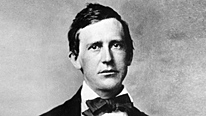
Beth Nielson Chapman, Nanci Griffith, Roger McGuinn and Thomas Hampson are among the artists paying tribute to the first great American songwriter Stephen Foster, in this new two-part series, presented by Michael Feinstein.
Stephen Foster (1826-1864) was the first songwriter to earn his living solely through his music rather than subsisting, as other songwriters did at the time, by teaching or performing. His life marks the start of popular music as it is recognised today.
It was the whirlwind success of Oh Susanna, written when Foster was 21, which led him to his chosen career. The song spread like wildfire from his native Pittsburgh to New York, then to California where it became the anthem for the Gold Prospectors – "the '49ers". Probably no single song had been so popular before but, despite that, Foster never saw a cent from the 30 arrangements which 16 different publishers copyrighted.
As well as Oh Susanna, Foster was the author of Camptown Races, Beautiful Dreamer, Jeannie With The Light Brown Hair, My Old Kentucky Home, The Old Folks At Home and Hard Times Come Again No More? He drew on African-American sources; European balladry; Italian opera; as well as utilizing polka, waltz and even blues in his melodies.
Foster was also determined to replace what he called "the trashy and really offensive words" of the ubiquitous black-faced minstrels. His 1850 Nelly Was A Lady was a breakthrough – no white songwriter had ever called a black woman "lady" before.
Personally, Foster's life was a tragedy – his marriage broke up, he became a drunk, roomed in poverty on the Bowery and ended up selling his original songs for the price of his next drink. And when the martial beat of the Civil War took hold, his beautiful but sentimental songs seemed out of step with the times.
Foster died at the age only 37, after a fall – in his wallet was 38 cents and a scrap of paper that read: "Dear friends and gentle hearts." But his real legacy was the foundation of American popular song.
Artists such as Nanci Griffith, Beth Nielson Chapman and Roger McGuinn have all done versions of Foster songs and reveal what they personally love in his music and why they feel it's still so relevant today. Biographer Ken Emerson talks about the key aspects of Foster's personal life and Deane L Root, musicologist and director of the Centre for American Music, explains the musical context of the time and why what Foster was attempting to do was so ground-breaking.
Presenter/Michael Feinstein,
Producers/Katrina Fallon and Patrick Humphries
BBC Radio 2 Publicity
BBC RADIO 4 Tuesday 15 December 2009
Defining The Decade – A Googling We Go Ep 1/3
Edward Stourton looks back over the defining themes of the decade: Who would have thought when the millennium dawned that it would end with both British and American troops dying in Afghanistan? Would you have believed that millions would be communicating and doing business over the internet? And would you have agreed that climate change was a greater threat than terrorism?
This has been a decade when history has been on fast forward. Now, as we near the end of the decade, Edward looks at the big picture, charting the revolutions in science, technology and politics. How significant was 9/11, what are the underlying themes of the past 10 years and what does it all add up to?
Ten years ago the internet was in the cyber equivalent of the Stone Age. Then along came Google. The internet search engine has revolutionised what it means to go online and now accounts for 70 per cent of all information searches in the world. Its story parallels that of the internet itself, imagined by visionaries, embraced by the public and harnessed – not always successfully – by enterprise. But some of the promise has faded, leaving us with a complex world with both moral and legal pitfalls.
This programme features contributions from Eric Schmidt, chief executive of Google; Martha Lane Fox, government digital inclusion champion; and Internet guru Cory Doctorow.
Presenter/Edward Stourton, Producer/Mark Savage
BBC News PublicityOne hundred miles east of Nova Scotia lies a 30-mile long sand dune, Sable Island, which has a population of two people (who work in the weather and research station) and 300 wild horses. Sean Street reveals how this remote place, a dune adrift in the Atlantic, is providing vital information and has gained a powerful presence in the imagination.
In the middle of the world's worst weather systems, held tentatively in place by ocean currents, Sable Island is the perfect place to monitor climate change, as well as air and sea pollution.
Sean examines wreckage from some of the 500 plus ships that have come to grief on the island. At the Natural History Museum, in Halifax, he witnesses the unpacking of the latest consignment of bones and specimens – extraordinary ancient walrus skulls – collected by Zoe Lucas, who has been on the island for decades. He meets artist Roger Savage who had to tie his easel down, clamp his paper and battle with the scouring sand as he captured the landscape of the place in his paintings. And he meets a man who dedicated years to studying the rare Ipswich Sparrow which only nests on the island.
However, getting to and from Sable is quite difficult – with access restricted by the Canadian government, no harbour or regular air service, the wind blowing almost constantly and recurrent thick fog – will Sean actually manage to reach Sable Island?
Presenter/Sean Street, Producer/Julian May
BBC Radio 4 Publicity
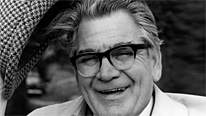
Comedy historian Glenn Mitchell profiles Harry Worth, whose comedy performances as a genial, bumbling middle-class man in series such as Here's Harry are still revered today.
This year sees the 20th anniversary of Worth's passing at the age of 71. Two years earlier, he'd recorded a lengthy interview with Glenn talking about his career, influences and hopes for the future. This interview forms the centre of this tribute and includes contributions from producers William G Stewart, John Ammonds and actor Jonathan Cecil, as well as classic comedy moments from the Harry Worth archive.
Originally a miner, Yorkshire-born Harry Illingsworth – latterly "Worth" to fit on theatre billings – sought escape by moonlighting as a ventriloquist in amateur dramatic societies and concert parties. During the Second World War he served in the RAF as a fitter, eventually joining a gang show in India. On his demob, Harry preferred to remain a ventriloquist rather than return to the pits or continue as a fitter, and auditioned successfully for the Windmill Theatre. Work in variety, summer season and pantomime included two years on tour with Laurel And Hardy.
The programme charts Worth's early career; his latter success on television and radio success in series such as Here's Harry, My Name Is Harry Worth and Oh Happy Band; and examines the origin and impact of his famous window-reflection routine.
Presenter/Glenn Mitchell, Producer/Stephen Garner
BBC Radio 4 Publicity
Lorraine Ashbourne and Rosie Cavaliero star in today's Afternoon Play, written by Steve Chambers and Phil Nodding, set in and around Bev's hairdressing salon, Highlites, where a little lie spreads through the village like wildfire.
Most people hope to leave a hair salon feeling better about themselves – not at Highlites. Chief stylist Beverley, the most evil and motiveless agent of destruction since Lex Luther, makes everyone she meets feel just a little bit worse.
Lorraine Ashbourne (The Street) stars as Beverley with Rosie Cavaliero (Jam And Jerusalem) as her teflon sidekick, Shirley, in this story of a little lie that grows wildly out of hand.
Producer/Jessica Dromgoole
BBC Radio 4 Publicity
Too Much Happiness Ep 1/3
Too Much Happiness presents three powerful stories from the new collection by Alice Munro, the superlative Canadian Short Story Writer who was awarded this year's Mann Booker International Prize.
Alice Munro is a past master of the art of the short story; a writer who focuses on small details and yet encompasses the whole of a life in a glance.
Tuesday's story, Free Radicals, tells of a newly widowed woman who is herself dying, alone in the home she and her husband made their own after she had played the role of "home wrecker" and replaced his first wife. But it is the first wife that she must look to when a stranger threatens her at her own kitchen table.
Wednesday's story is Some Women. At the Crozier house a man lies dying. When his wife is at work, his stepmother lays on a form of distraction and the young girl brought in to help care for him begins to understand the complexities of adult life.
On Thursday, Wood is the story of a marriage and a moment in time when what was lost is regained – and the mixed emotions that this engenders. A late afternoon in a snowy wood and a casual, careless slip are all it takes.
This series is abridged by Sally Marmion.
Reader/Barbara Barnes, Producer/Di Spiers
BBC Radio 4 Publicity
Matthew Parris invites Rich Hall to talk about his hero, Tennessee Williams, as BBC Radio 4's acclaimed biographical series continues.
Presenter/Matthew Parris, Producer/Beth O'Dea
BBC Radio 4 Publicity
The New Art Of Diplomacy Ep 1/2

James Naughtie asks if the British Foreign Office is fit for purpose in a changing world, in this new, two-part series.
Long into the 20th century, large parts of the world map were coloured pink. The British Empire stretched from the Caribbean to the Far East and diplomacy – on famous occasions – was carried out at the point of a gun. Needless to say, the UK no longer has its empire and its diplomats have had to alter their tune. But even in just the last decade the enormous changes around the world have had not only an impact on British foreign policy but also on those who are responsible for putting much of that policy into practice, the diplomats.
We now have a world where borders are being rubbed out. Terrorism, climate change and financial crises are clear indicators of the growing inter-connectedness of the globe. At the same time we've seen a growth of national self interest. Negotiation and the power of diplomacy is, arguably, as important as ever.
How are British diplomats facing up to a changed world, where world leaders and governments can – and do – talk directly to each other, and where government departments have developed their own foreign policy units, circumventing the Foreign Office? Other bodies, too, like non-governmental organisations and pressure groups, have moved into the foreign policy sphere. So where does that leave traditional diplomacy, carried out by career diplomats? Or is there, in fact, a greater need than ever for experienced diplomats to negotiate the deals that preserve British interests in this complicated world of instant communication?
In this two-part series for BBC Radio 4, James Naughtie goes into the Foreign and Commonwealth Office headquarters in King Charles Street in London and visits one of its most important outposts, in the Indian capital, Delhi, to watch diplomacy in action. He asks if British diplomats can ensure (as the former Foreign Secretary Lord Hurd once said) that Britain continues to "punch above its weight." Is the Foreign Office fleet of foot enough to transform itself to confront new global challenges or is the art of good diplomacy the same as it's ever been? And what of the impact of financial constraints imposed on the Foreign Office by the Treasury? Have these undermined British diplomacy? If so, at what cost?
Presenter/James Naughtie, Producer/John Murphy
BBC News Publicity
BBC RADIO 5 LIVE Tuesday 15 December 2009
5 Live Sport

Arlo White presents all the day's sports news and live coverage of the night's Premier League matches, including Manchester United versus Wolves and Birmingham versus Blackburn.
Presenter/Arlo White
BBC Radio 5 Live Publicity
BBC RADIO 5 LIVE SPORTS EXTRA
Tuesday 15 December 2009
Football
Listeners can enjoy live commentary from one of the night's top matches in the Premier League.
Producer/Jen McAllister
BBC Radio 5 Live Sports Extra Publicity
BBC 6 MUSIC Tuesday 15 December 2009
Adopted Mancunian Jesca Hoop is live in session tonight. Her new single, Four Dreams, is out next week and is being championed by both Marc Riley and Guy Garvey. It is taken from her current album, Hunting My Dress, which was released in November.
Jesca has received notable endorsements from Tom Waits (she was his nanny) and Guy, who became so enchanted by her music that he invited her onto his radio show. They got on like a house on fire, so he continued his open-house policy by extending an invite to join the Elbow US tour in April 2008, which led to a UK tour in October 2008, followed by another US tour in August this year. He also lends his subtle yet inimitable vocal strength to a track on the album Murder Of Birds.
Presenter/Marc Riley, Producer/Michelle Choudhry
BBC 6 Music Publicity
Gideon Coe's archive gem comes from Elvis Costello, recorded live at the Hammersmith Palais in 1982. Among the archive session tracks are recent guest Jah Wobble and the Invaders Of The Heart, Sarah Records stalwarts Heavenly, Pop Group offshoot Maximum Joy from 1982 and Sheffield's sadly defunct Long Blondes.
Presenter/Gideon Coe, Producer/Frank Wilson
BBC 6 Music Publicity
BBC ASIAN NETWORK Tuesday 15 December 2009
Nadia angrily confronts Jodie about "stealing" her man, as the drama continues. Sway tells Jodie he feels bad about hurting Nadia but is that the only thing he regrets? Later, Rozena checks on Nadia, who insists she is fine.
Elsewhere, Jaggy wants to go to an exclusive poker game but Darren worries the stakes are too high. Jaggy insists Darren put in a call at least. Darren later returns with an update but is it what Jaggy wants to hear?
Nadia is played by Sohm Kapila, Jodie by Vineeta Rishi, Sway by Nicholas Bailey, Rozena by Pooja Ghai, Jaggy by Jay Kiyani and Darren by Samuel Kindred.
BBC Asian Network Publicity
Programme information
Network Radio
Network Radio – Days
Key
- New
- Live event/outside broadcast

- Interactive programme

- Picture available
BBC iD
BBC iDBBC navigation
BBC links

BBC © 2014The BBC is not responsible for the content of external sites. Read more.
This page is best viewed in an up-to-date web browser with style sheets (CSS) enabled. While you will be able to view the content of this page in your current browser, you will not be able to get the full visual experience. Please consider upgrading your browser software or enabling style sheets (CSS) if you are able to do so.
