

Wednesday 24 Sep 2014
Programme Information
Network Radio BBC Week 49: Wednesday 9 December 2009
BBC RADIO 2 Wednesday 9 December 2009
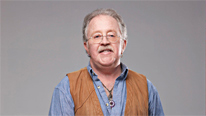
Mike Harding brings listeners highlights from the final of the 2010 BBC Radio 2 Young Folk Award, held at the BBC Radio Theatre in London on Friday 4 December.
Highlights include performances by each of the six finalists as well as the announcement of the winner and presentation of the trophy by special guest musician and singer Jon Boden.
The finalists this year are Cinnte, a six-piece group from County Derry, Northern Ireland; Niamh Boadle, a singer-songwriter and guitarist from Lancashire, aged 15; the Carrivick Sisters, twins Charlotte and Laura, aged 20, from Devon, who sing and play the fiddle, mandolin, guitar and dobro; sisters Mairi (15) and Steaphanaidh (16) Chaimbeul from the Isle of Skye, who play clarsach, saxophone and who sing; Chris Keatinge, a button accordion player, aged 20, from the Scottish Borders; and 20-year-old James Findlay, a singer, guitarist and fiddle player from Dorset.
Please note: Tonight's programme details were originally billed in BBC week 46 Radio Programme Information.
Presenter/Mike Harding, Producer/Kellie While
BBC Radio 2 Publicity
In the year that Pete Seeger celebrates his 90th birthday, singer-songwriter Billy Bragg tells the story of a remarkable life in folk music and politics.
Pete Seeger was born during the great depression and, in the 90 years since, he has become an influential and iconic figure. His forthright lyrics about civil rights, unions and ordinary Americans, sung with the aid of a banjo, ensured that he was blacklisted for decades. Never able to play on mainstream TV or radio, he took to the road, bringing his message to the very people he was writing and singing about.
Billy helps explain the importance of Seeger, and examines many different versions of his classic songs. The programme includes interviews with singers who have joined him on stage, or taken to the stage because of him, as well as those who have sung his songs.
Contributors include: Grammy Award-winning singer-songwriter Nanci Griffith; Roger McGuinn of The Byrds; and Tom Paxton, who was part of the Greenwich Village scene in the Sixties, and who explains how important We Shall Overcome was to the whole civil rights movement.
Presenter/Billy Bragg, Producer/Richard McIlroy
BBC Radio 2 Publicity
BBC RADIO 3 Wednesday 9 December 2009
The Minnesota Orchestra give their second concert this week, recorded in Minneapolis, USA. The Orchestra has a long history of commissioning and performing new music and the central work in the concert is a world première by British composer Sally Beamish – the second cello concerto she's written for tonight's soloist Robert Cohen – entitled The Song Gatherer. The cello is cast as a traveller in a piece that draws on folk tunes from several continents – it is a journey of lament, meditation and joyful reflection.
The concert opens with Sibelius's incidental music based on Maeterlink's drama Pelleas And Melisande, which tells a tale of tragic lovers in nine short movements. It ends with Mendelssohn's Symphony No. 5, Reformation, written to mark an anniversary of the Protestant Reformation.
Presenter/Petroc Trelawny, Producer/Brian Jackson
BBC Radio 3 Publicity
BBC RADIO 4 Wednesday 9 December 2009
Peter Kesterton's drama is a fast-moving crime thriller about guilt, mathematical proof and statistics.
The accused is Jonathan, a maths lecturer, who is arrested for an attempted assault on a young woman. The case against him is overwhelming: the attacker's DNA has been found on the victim and the forensic scientists show that there is a million-to-one chance that the DNA is not Jonathan's.
Jonathan uses his statistical knowledge to argue that the case against him is weaker than it looks. He urges the investigating police officers to look into Bayes's Theorem – a statistical method which he thinks will exonerate him. But, as the police learn more about maths, the case against Jonathan seems to get stronger, rather than weaker, until it appears to be a near certainty. Jonathan is backed into a corner.
Jonathan is played by Andy Morton and Robinson by Christian Rodska.
Producer/Jolyon Jenkins
BBC Radio 4 Publicity
BBC RADIO 5 LIVE Wednesday 9 December 2009
5 Live Sport

Mark Pougatch presents all the day's sports news and live Champions League group-stage coverage of Liverpool versus Fiorentina, Olympiacos versus Arsenal and Seville versus Rangers. There are also regular updates from the night's Championship games including Coventry City versus Newcastle United.
Presenter/Mark Pougatch
BBC Radio 5 Live Publicity
BBC ASIAN NETWORK Wednesday 9 December 2009
Kuljit approaches Jodie and tells her he knows what's going on, in today's visit to Silver Street. Jodie is relieved but upset – she and Sway were just waiting for the best time to tell him about them. Kuljit's stunned silence, however, tells Jodie that he knew nothing.
Sway, meanwhile, arrives and Kuljit gets angrier as the truth sinks in. Roopa ushers customers out of the cafe as Kuljit attacks Sway, who doesn't defend himself.
Kuljit is played by Sartaj Garewal, Jodie by Vineeta Rishi, Sway by Nicholas Bailey and Roopa by Rakhee Thakrar.
BBC Asian Network Publicity
BBC WORLD SERVICE Wednesday 9 December 2009
Exploring the frontiers of science and their impact on society, philosopher AC Grayling questions the world's leading scientists about their work, as Exchanges At The Frontier, recorded as part of a unique series of events created by BBC World Service and the Wellcome Collection, continues.
The subjects of climate change, the origin of the universe, life on other planets, the nature of consciousness and Earth's most ambitious and expensive science project, the Hadron Collider at Cern, are all explored with the world's leading authorities in the relevant fields.
US cosmologist Lawrence Krauss, Ghanaian-British nuclear physicist Tejinder Virdee, Canadian neurophilosopher Patricia Churchland, Indian economist and Nobel Prize-winner Rajendra Pachuri and American astronomer Seth Shostak complete a truly international line-up for exploring the frontiers of science.
Tonight, Lawrence Krauss, leading astro-physicist and world specialist in the mysterious force of dark energy, tells AC Grayling and his audience about how the universe began.
Presenter/Anthony Grayling, Producer/Charlie Taylor
BBC World Service Publicity
Programme information
Network Radio
Network Radio – Days
Key

- New
- Live event/outside broadcast

- Interactive programme

- Picture available
BBC iD
BBC iDBBC navigation
BBC links

BBC © 2014The BBC is not responsible for the content of external sites. Read more.
This page is best viewed in an up-to-date web browser with style sheets (CSS) enabled. While you will be able to view the content of this page in your current browser, you will not be able to get the full visual experience. Please consider upgrading your browser software or enabling style sheets (CSS) if you are able to do so.
