

Wednesday 24 Sep 2014
Programme Information
Network Radio BBC Week 47:
Wednesday 25 November 2009
BBC RADIO 2 Wednesday 25 November 2009
Isaac Hayes's Hot Buttered Soul is Trevor Nelson's Album Of The Week, as he brings listeners another hour of soulful music.
Released in 1969 on the Stax subsidiary record label Enterprise, Hot Buttered Soul remains an undeniably seminal record. Its songs stretched far beyond the traditional three to four-minute industry norm and included long instrumental sections, in which session group Bar-Kays steal the spotlight.
It also introduced an iconic new persona for soul, with Hayes's tough, yet sensual, image and marked his transformation from a session musician and songwriter to a veritable soul star.
Presenter/Trevor Nelson, Producer/Dan Cocker
BBC Radio 2 Publicity
BBC RADIO 4 Wednesday 25 November 2009
Ballylenon Ep 1/6

The parish of Ballylenon is happily described as sleepy, but behind the facades and net curtains is a world of envy, intrigue and comeuppance.
Ballylenon is a battleground and the town's most formidable combatants, the Maconchys, are two sisters bent on parochial, if not world, domination.
Miss Vera Maconchy, operator of the 10-line manual telephone exchange, is proud to be known as the ears and tongue of Ballylenon. Her sister, Muriel, postmistress and owner of the corner shop, knows the news before it happens – and often makes it happen. If communication is power, the Maconchys, together with their close confidant, Phonsie Doherty, have it all.
But while these three would dominate reactionary thinking, a dangerous liberal tendency is championed by Vivienne Boal, Rev Samuel Hawthorne and ex-local policeman, Guard Gallagher. The antagonism between these camps is only ever thinly veiled.
Vera Maconchy is played by Stella McCusker, Muriel Maconchy by Margaret D'Arcy, Phonsie Doherty by Gerard Murphy, Vivienne Hawthorne by Annie McCartney, Rev Samuel Hawthorne by Miche Doherty and Stumpy Bonner by Gerard McSorley. The pianist is played by Michael Harrison.
Ballylenon is written by Christopher Fitz-Simon.
Producer/Eoin O'Callaghan
BBC Radio 4 Publicity
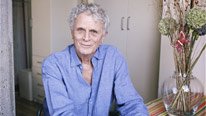
Laurie Taylor discusses and questions whether new technologies and techniques can influence party politics, in this week's edition of Thinking Allowed.
Barack Obama famously used new technologies with great success in his 2008 election campaign. From MySpace and Facebook, text messages to email, Laurie discusses with Rachel Gibson, professor of political science at the University of Manchester, if new media will reinvigorate next year's UK General Election in the same way it did for Obama's web 2.0 campaign.
Other matters discussed in the programme are thinking on the spot and under the spotlight and how performing musicians can give new insights into negotiation, learning and decision-making.
Howard S Becker is a professional jazz player and an acclaimed sociologist and joins Laurie to discuss what jazz and music can teach the rest of the world.
Presenter/Laurie Taylor, Producer/Pam Rutherford
BBC Radio 4 Publicity
BBC RADIO 5 LIVE Wednesday 25 November 2009
5 Live Sport

Mark Pougatch brings listeners all the day's sports news and has live coverage of Manchester United versus Besiktas and FC Porto versus Chelsea in the Champions League group stage and Hull versus Everton and Fulham versus Blackburn in the Premier League.
Presenter/Mark Pougatch, Producer/Mark Williams
BBC Radio 5 Live Publicity
BBC RADIO 5 LIVE SPORTS EXTRA
Wednesday 25 November 2009
Tennis
Listeners can enjoy uninterrupted commentary of the ATP World Tour finals, live from London's 02 Arena.
The commentary team is led by Jonathan Overend, alongside David Law, Alastair Eykyn, Vassos Alexander and Russell Fuller. Expert analysis comes from David Felgate and Annabel Croft, among other special guests.
Producer/Jen McAllister
BBC Radio 5 Live Sports Extra Publicity
BBC 6 MUSIC Wednesday 25 November 2009
Laura Gibson makes a return to the Manchester studios to play live for Marc Riley this evening. Only a couple of months ago, Laura played a solo session for Marc. He was so impressed he invited her back to perform with her full band.
Laura is a US folk singer and songwriter, born and bred in Coquille, Oregon. She currently records for the independent US label Hush Records. In 2008, she toured the United States as the opening act for Colin Meloy and also contributed vocal harmonies to his Colin Meloy Sings Sam Cooke EP.
Laura performs tracks from her new album, Beasts Of Season.
Presenter/Marc Riley, Producer/Michelle Choudhry
BBC 6 Music Publicity
Gideon Coe presents live archive from Grant Lee Buffalo and a 1984 session from Everything But The Girl, in tonight's show.
Also featured in session are Teenage Fanclub's Norman Blake and Washington post-rock trio Trans Am, recorded in 2000.
Presenter/Gideon Coe, Producer/Frank Wilson
BBC 6 Music Publicity
BBC ASIAN NETWORK
Wednesday 25 November 2009
Simran helps Jaggy practice for a poker game, in today's midweek visit to Silver Street, and is impressed he knows to quit while he is ahead.
Bibi, meanwhile, has some responses to the matrimonial profiles she posted for Jungli and Chunky – but will she like them? Later, Zenab and Bibi get competitive about Eid.
Elsewhere, Nadia phones Sway to say she'll book a flight soon. Zenab later asks Sway if it is enough that Nadia's parents are just "OK" about his relationship with her.
Simran is played by Balvinder Sopal, Jaggy by Jay Kiyani, Bibi by Indira Joshi, Zenab by Sudha Buchar, Nadia by Sohm Kapila and Sway by Nicholas Bailey.
BBC Asian Network Publicity
BBC WORLD SERVICE
Wednesday 25 November 2009
The story of Romanian agriculture is the focus of this week's edition of Discovery. Before the Second World War, Romania was primarily an agricultural nation. In 1948, a Communist government came to power and nationalised land and livestock. At the same time, scientific and technological resources were made available to the new state and collective farms.
By the time the Communist regime fell in 1989, the government had built a comprehensive network of 120 agricultural research institutes. Spread across the country, these institutes provided the collective farms with scientific advice about all aspects of farming – from animal nutrition to cereals and from wine to mechanisation.
Following the Revolution in December 1989, the government had to unpick the intertwined political and scientific legacies of Communist agriculture. Co-operative farms were dissolved and most of the collectivised land returned to its original owners. The network of research institutes no longer receives any money directly from central government.
While Romanians understand the political need to return land to its original owners, there's now a growing realisation that large-scale farming, backed up by scientific advice, is a good model for efficient and productive farming.
This edition of Discovery is part of BBC World Service's 1989 – Europe's Revolution coverage, marking the 20th anniversary of the fall of the Berlin Wall.
Reporter/Tim Whewell, Producer/John Watkins
BBC World Service Publicity
Programme information
Network Radio
Network Radio – Days
Key
- New
- Live event/outside broadcast

- Interactive programme

- Picture available
BBC iD
BBC iDBBC navigation
BBC links

BBC © 2014The BBC is not responsible for the content of external sites. Read more.
This page is best viewed in an up-to-date web browser with style sheets (CSS) enabled. While you will be able to view the content of this page in your current browser, you will not be able to get the full visual experience. Please consider upgrading your browser software or enabling style sheets (CSS) if you are able to do so.
