Nigeria confam case of Ebola virus for FCT

Wia dis foto come from, Getty Images
Nigeria govment don confam one case of Ebola virus for di Federal Capital Territory (FCT).
Di Minister of Health and Social Welfare Ali Pate confam di informate for statement on Tuesday, 20 October, afta laboratory confirmation.
Di health minister say dem confam di case for di body of one woman wey recently land Nigeria from Uganda.
"Dem admit one woman wey recently land Nigeria on one international flight from Uganda, for one private hospital for di FCT, wia she bin dey received treatment for several days bifor dem confam di diagnosis," di statement tok.
Di woman currently dey in isolation and she dey receive medical care, di statement add.
Di health minister say authorities don start contact tracing, as dem don identify 44 close contacts so far, wey include healthcare workers, patients, caregivers and travel contacts.
Public-health teams dey work to identify and monitor odas wey fit don dey exposed to di virus, Oga Pate tok.
E say di Ministry of Health, NCDC and FCT health authorities don intensify surveillance and dem dey support di hospital to strengthen infection prevention and control measures.
Di govment don also ask healthcare facilities nationwide to dey on high alert and make dem dey vigilant. Dem say make healthcare workers quickly isolate suspected cases and report dem to public health authorities.

Wia dis foto come from, Getty Images
Dis confirmation don make Nigeria di first West African country to report case wey dey linked to di current outbreak, wey di Democratic Republic of Congo (DRC) and Uganda declare for May.
Di virus don since spread beyond di DRC, as Kenya don report nine infections as at Tuesday, according to dia health ministry.
Di current Ebola Bundibugyo outbreak for di kontri now na di deadliest of di 17 outbreaks di West Africa kontri don face as e continue to spread.
United Nations experts describe am as di fastest growing outbreak on record in terms of new infections.
On Monday, di US State Department bin advise Americans to reconsider travel to Kenya becos of health risks as dem raise dia travel advisory level for di kontri to level three, although no travel ban dey in place.
Di DRC remain di epicentre of di outbreak. By mid-October, di kontri don record more dan 9,400 cases and ova 4,500 deaths, according to health authorities.
Di outbreak don spread to eight provinces, as officials warn say di transmission don continue to challenge efforts to contain di virus.
Uganda, wey earlier report cases of di outbreak, tok say dem don dey free of di disease for August, afta dem discharge dia last patient for July.
For Somalia, authorities say di one suspected Ebola case dem get still dey under quarantine for Mogadishu. Dem don send samples for testing and health authorities say di pesin currently dey stable.
Since di current outbreak, Nigeria don step up disease surveillance, as di Nigeria Centre for Disease Control (NCDC) dey regularly issue public health advice to travellers.
Di agency say make travellers from countries wit active or relevant Ebola transmission dey required to complete one health declaration form.
Dem also ask travellers to remain vigilant and seek medical attention quickly if dem develop symptoms of Ebola.
Wit dis new case, di minister of health don advise kontri pipo say make dem no panic. "Stay calm, stay vigilant and cooperate wit public health authorities."
Wetin be Ebola and wetin be di symptoms?

Wia dis foto come from, Getty Images
Ebola na rare but deadly disease wey virus dey cause.
Ebola viruses normally dey infect animals, typically fruit bats, but outbreaks among humans dey sometimes start wen pipo eat or handle infected animals.
E dey take two to 21 days for symptoms to appear. E dey come suddenly and start like flu or malaria, wit fever, headache and tiredness.
Di symptoms include:
Sudden high fever:
- Fever
- Aches and pains for di muscles and joints
- Serious headache
- Weakness and fatigue
- Sore throat
- Loss of appetite
As di disease progress, di pesin go start to dey vomit and develop diarrhoea and e fit lead to organ failure. Some, no be all, patients dey develop internal and external bleeding.
Di virus dey spread from one pesin to anoda by contact wit infected bodily fluids like blood or vomit.
How you fit prevent Ebola virus
Di Ebola outbreak on record na for 2014 for West Africa wit ova 11,000 pipo wey die. Dat epidemic kill five times more dan all oda known Ebola outbreaks wey don happun.
Di current Ebola outbreak for di Democratic Republic of Congo now na di deadliest of di 17 outbreaks di kontri don face and e don continue to spread.
Now, how you fit keep yourself safe and prevent di virus:
- Wash your hands evri time wit soap and water - Health pipo say make we wash hands wit soap and water and clean surfaces wit chlorinated water.
- No dey touch pipo wey don dey infected - To prevent more of di infection, health professionals advise make pipo avoid contact wit pipo wey dey infected, including for dem to stop to shake hands.
- Avoid dead bodies.
- No dey kill, touch or chop bush meat.
E get vaccine for di Zaire strain of Ebola, wey dey common for di past for Democratic Republic of Congo. And currently no approved vaccine dey for di Sudan strain of Ebola.
Howeva, early treatment of specific symptoms, fit improve survival of di pesin wey get am.
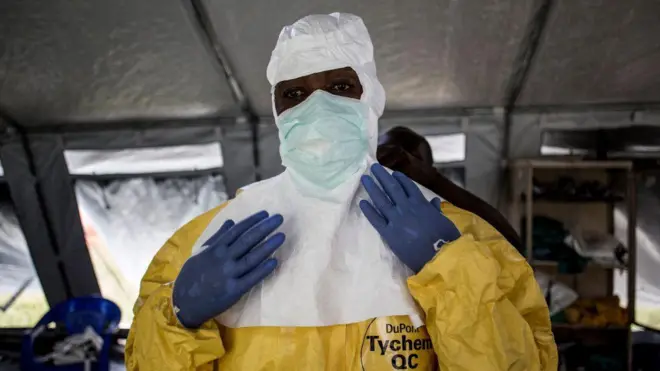
For medical teams, dem must wear full Personal Protective Equipment, PPE, wen dem dey attend to cases to prevent infection. Deadi bodi dem, for any body bag, must dey buried by pipo wey dey wear proper PPE.
Why Ebola dey always come back
Ebola dey quick spread. Small sweat or spit from pesin or animal wey get di disease fit infect pesin.
According to di WHO, new Ebola outbreak go ever dey happun for Dr Congo because di virus dey live for animal reservoir wey dey for many parts of di kontri.
Fruit bats na di main carrier of di disease, but pipo fit dey infected if dem come in close contact wit blood, organs or bodily fluids of animals wey get di virus like chimpanzees, gorillas, monkeys, antelope and porcupines.
Di disease dey very rampant for dis area and e no go dey possible to destroy all di animals wey fit dey carry Ebola.
As long as pipo dey touch and eat dem, possibility dey say Ebola go always return.