Writers in Residence Season 2003 - University Radio Nottingham
Time Of Call by Rachel Fletcher | |
|  | | Time Of Call by Rachel Fletcher |
| |
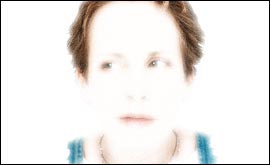
Is that your phone ringing? Time of Call is a Hitchcock inspired thriller about a woman who can be heard but not seen.
- Listen to Time Of Call (28k) |
| | | About the play
Writing for URN1350's student soap made me realise that the waters of radio were deeper than I had previously imagined. As I wrote and edited scripts in my role as writer and team co-ordinator for Lenton Boulevard I realised that radio has a quality all of its own. It was not simply a blank screen for a stage or screen play, with everything the same minus the view. Rather something heard but not seen could be powerful in so many ways.
With this in mind I began to plan a play exclusively for radio, one that I felt would not be done proper justice in any other medium. As it happened, I had not written science fiction for quite some time and was really missing it. I have always loved science fiction. As a definite 'arts' person anything is possible in the infinite potential of time, matter and the cosmos, mainly because I don't know any better. To me it seemed appropriate to marry together the potential of the great unknown of the physical world with the 'great unknowns' of radio - mainly, what one cannot see. The result is Time of Call, a story of a story told to its characters who cannot see what they can hear, rather like the play's listener.
Though I was prepared to change the plot considerably it was the concept of the unknown that made me stand by the last few lines of the play. Several people have asked me whether the Elise referred to by the desk sergeant on the phone is the same woman trapped in the barn. They seemed slightly puzzled when I said I did not know and suggested that they be omitted. Their reason for thinking the lines ought to be taken out may be because they pose unanswerable questions to the listener. Uncertainty is not easily resolved and I thought that this was an extremely fitting ending for the play as a whole.
There is a brief exchange before the two detectives, constable Oliver Murray (Euan Lawrence), and detective constable Anna Lawson (Laura Westwood), who save the day (it is presumed) in which they discuss the concept of fate, free choice and causality. A lot is left unsaid at this point. This was deliberate. For a start, in real life, crises don't allow time for lengthy philosophical debates about metaphysics. Even more importantly it drove home the idea about the unknown and unseen. Maybe fate does exist, maybe not but as Anna explains, we can only go from our temporary vantage point in time and take what appears to us, from where we are, to be our best possible course of action.
The writing process
After their first reading the founder of the Writers in Residence season and Chitra Nagarjan, URN drama editor for 2003, expressed concern about the ending of the play, which made reference to the existence of a time machine. They did not think that it fitted in with the rest of the plot. After lengthy discussions I realised this was right, and set about rewriting the ending. Rewriting, redrafting and discarding what doesn't work are all familiar processes to me as a writer. I am good at 'killing my babies' and cutting out something for the good of the whole.
I must confess to not really liking the music from the soundtrack of the Children of the Corn, but this was a minor concern to me. I do believe the play lost something fundamental by the decision to omit the shouting voices of the men pursuing the central character. It was felt that it would be more frightening just hearing the screams of Elise being pursued. I thought that the sound of the pursuers would be as frightening and in accordance with the feel of the play as a whole.
After I heard the fully-fledged, screaming and 'telephonised' Time of Call my only disappointment was having not been able to co-direct the play and advise on its technical production, as I had academic and writing commitments at the time.
One of the aims of the Writers in Residence season was to focus on writing for radio, but the production of Time of Call was certainly not all about the writer. My concept of writing as a solitary pursuit took a real beating because this play would have been dust without the rest of the cast and crew who worked on it, and I mean that most sincerely. It was assisted on at every level from scripting and acting through to technical production and publicity. It was the first professionally produced dramatic work to come from my stores of written drama, finished (in so far as any piece of writing is complete) or in embryo. Taking part in the season has certainly inspired me to put more energy into my scriptwriting, and I hope to submit work to Radio 4 in the near future. So you may hear from me again, although you won't see me...
| Credits | Time of Call starred - Martina Heron as Elise Lester; Chris Halliday as Jack Olsen; Euan Lawrence as Detective constable Oliver Murray; Laura Westwood as Detective constable Anna Lawson; Mary-Ann Silcock as telephone operator and police officers 2 and 6; Nick Doaran as Police officers 1 and 4; J.P as police officer 5. Executive producers were Wayne j Widdowson and Chitra Nagarajan, with assistant producers Naomi Clarke and Natasha Dhumma. Time of Call was directed by Chitra Nagarajan and Natasha Dhumma, and co-directed by Naomi Clarke. Music from the film Children of the Corn (1984) was used in the production of this play.
The Writers in Residence season is an exclusive production of URN1350 and was conceived by Wayne j Widdowson and realised with the assistance of Chitra Nagarajan, URN Drama editor 2003. The soundtrack was written and performed exclusively by Richard Latimer, the lead singer of the Amateurs. Alp Arat took publicity photos for the season. If you'd like to get involved in drama at URN for the new academic year then e-mail: join@urn1350.net |
| | | |
|
|