 | 13 November 2014 |

| |
| BBC Homepage | | |
| |||
| Contact Us | | |
Places featuresYou are in: Nottingham > Places > Places features > The five ghosts of Newstead Abbey 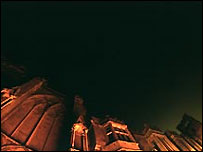 The five ghosts of Newstead AbbeyNewstead Abbey, the ancestral home of Lord Byron, is the setting for a collection of ghost stories. Black FriarThere are many stories about appearances of the Black Friar or Monk. In the 1930s the wife of a houseowner in Newstead village was due to give birth. Her husband telephoned the doctor to come to the house as soon as possible. It was some time before the medic finally appeared and the husband remarked that he was only just in time. "Where have you been – you're so late" he chided. The doctor replied that he would have been later still if he hadn't stopped by a waterfall in the grounds of Newstead Abbey and asked the way of a monk who was standing there. The black robed figure said nothing but pointed in the right direction. There had been no monks at the Abbey for hundreds of years. Goblin FriarShortly before his disastrous marriage to Anne Milbanke, Byron encountered the Goblin Friar. The Goblin Friar was said to appear to the head of the Byron family before any unhappy event. When sleeping in his bedchamber, the Rook Cell, at Newstead the poet was woken by the sensation of something mounting the bed. On sitting up he was confronted by a shapeless black mass, featureless apart from two red glowing eyes. The apparition rolled from the bed onto the floor and disappeared. Rose LadyAt one certain place in Newstead, where a passageway crosses the bottom of a staircase there is often a strong, heavy, Victorian scent of roses and lavender. No-one has actually been seen but there are numerous stories of people smelling the perfume. The staff at Newstead often put on Ghost Tours and one night were doing just that with various members of staff dressing up to re-enact some of the ghostly goings on at the Abbey. The Rose Lady was not on the schedule – but she had other ideas. All of a sudden the whole group of people who were being shown round on the tour became aware of a very strong scent of roses and lavender. They were convinced it was just another one of the staged effects and would not believe there was anything out of the ordinary, but the staff knew otherwise! Since then the Rose Lady has been included in the itinerary. White LadyAfter Byron left Newstead Abbey he sold it to an old school friend, Thomas Wildman. A devoted fan of the poet and his work, Sophie Hyatt came to live at a nearby farm. When the Wildmans learned how fond she was of Byron's work they kindly allowed her to wander around the grounds whenever she wanted. Sophie lived on an income provided by a relative. In 1825 the relative died and the money dried up. However, Sophie had another relative in America and decided that she must try to make contact to ask for help. She left a note for the Wildmans to let them know what she was doing and set off. When Mrs Wildman read the note she dispatched a rider to catch Sophie and offer her accommodation in the grounds of Newstead for the rest of her life. The horse and rider set off in hot pursuit and reaching the Market Square found a great crowd gathered around a horse and cart outside the Black Boy pub. Intrigued, the rider dismounted and pushed through the people to find Sophie lying on the ground – dead. She had been run over by a cart, not hearing the drayman's warning. She can now be seen wandering through her beloved gardens, especially along one path now known as White Lady’s Walk The RooksWashington Irving, the author of the famous American ghost story 'Legend of Sleepy Hollow' stayed at Newstead in the 1800s. He noted with interest that each morning the rooks would fly away, en mass, to sweep the countryside for food. They would return in a similar manner in the evening, where their discussion of the days events would echo around the estate. Irving was told that the rooks observed the Sabbath; they set out every day except Sunday, when they stayed in the abbey grounds. He didn't believe this until he saw it for himself. Indeed it appeared that the rooks visited their neighbours and friends, devoting Sunday to their nearest and dearest, but didn't leave the estate. Irving tells us that the local tradition had it that the rooks at Newstead were the souls of the 'Black Monks' reborn as birds, still occupying their old abbey. Indeed so strongly was this belief held that, contrary to common country practice, the Newstead rooks were not shot, and were generally left unhindered. last updated: 08/10/2008 at 14:19 SEE ALSOYou are in: Nottingham > Places > Places features > The five ghosts of Newstead Abbey
 | ||||||||||||||||||||
| | About the BBC | Help | Terms of Use | Privacy & Cookies Policy |

