Summary

  1. What do these latest strikes mean for the wider conflict and ceasefire?published at 01:30 BST

    The US today carried out what they describe as retaliatory strikes on Iranian defence systems after an American helicopter was downed over the Strait of Hormuz.

    Firas Maksad, managing director of the Middle East and North Africa, Eurasia Group, told the BBC earlier that today's events represent a tit-for-tat between the US and Iran - and likely not a backsliding into all-out war.

    "I don't think that there is an immediate risk of this war really starting up again," he said, describing US actions today as "carefully choreographed".

    "[The US] struck radar targets. Military facilities along the Iranian coastline, around the Strait of Hormuz, nothing beyond that," Maksad said. "This is a managed conflict. Both sides don't want to see the return to all-out hostilities as we had last month."

    Maksad said the sentiment among Iranian leaders is that Trump doesn't have many appealing military options on the table. Trump, on the other hand, has been insisting to the American people that a deal is only days away.

    "What's clear is that President Trump is not in a hurry as he pursues this strategy of economic strangulation, letting the blockade set in," he said. "The Iranians are playing the long game as they always do, hoping to test American patience and that the Americans will make concessions along the way."

    We're going to end our live coverage now, but you can find more details of today's events in the Gulf here: US striking Iran in response to downing of helicopter, military says

  2. Iranian state media reports more strikes in southern Iranpublished at 01:27 BST

    Military officials say US strikes on Iran are ongoing and harsher than previous retaliatory strikes that have happened during the ceasefire, the BBC's US partner CBS News reports.

    US Central Command hasn't released any more information about the location of the strikes, which they say are being carried out in "self-defence".

    Iranian media is reporting the sound of explosions in the southern cities of Bandar Abbas and Sirik.

  3. Top House Republican says he was in the Situation Room when strikes on Iran were agreedpublished at 00:31 BST 10 June

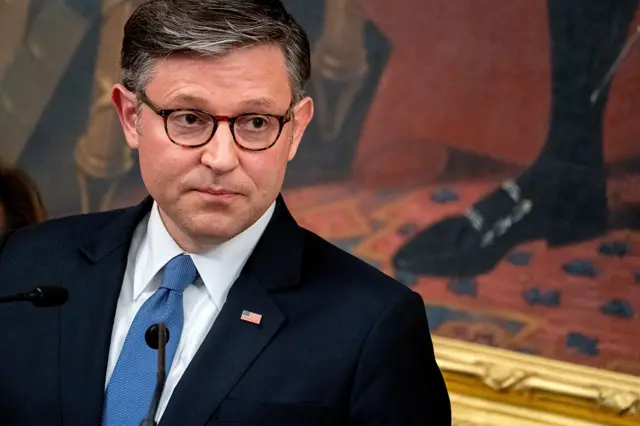
    Speaker of the House Mike Johnson wearing glasses, a suit and a blue tieImage source, Getty Images
    Image caption,

    Speaker of the House Mike Johnson

    US House Speaker Mike Johnson says he was with President Donald Trump and other top officials when the strikes on Iran were agreed.

    Speaking to press on Capitol Hill he called the strikes “proportional and limited" against "unjustified Iranian aggression".

    "We lament that it became necessary," he said, adding that "we're gonna have to take care of this business".

    Johnson said the president, vice-president, secretary of state, and defence secretary were all present in the Situation Room this morning when the strikes were decided on.

  4. Trump and Netanyahu are risking a permacrisispublished at 00:14 BST 10 June

    Jeremy Bowen
    International editor

    Donald Trump and Benjamin Netanyahu believed that victory over Iran would reshape the Middle East.

    The region is being reshaped. But not in the way they expected. The Islamic Republic of Iran has not been defeated. The risk now is of a long, attritional permacrisis that will lurch in and out of outright conflict.

    The Iranian regime has proved to be a much harder nut to crack than Trump and Netanyahu had assumed. Their judgement was wrong, and they have lost control of the consequences.

    The downing of the US helicopter is another reminder that Iran's rulers can still hurt the Americans and will not budge in their determination to come out of this war on top. For them, victory equals survival and enhanced deterrence, in the shape of acknowledgement of their control of the Strait of Hormuz, one of the world's most strategic waterways.

    Read more of Jeremy Bowen's analysis on the war here: Trump and Netanyahu wanted to reshape the Middle East - now they risk a permacrisis

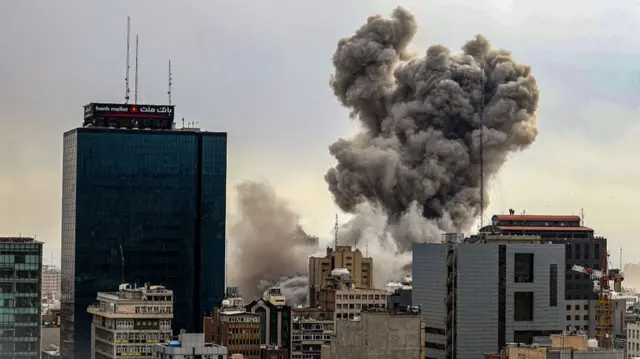
    explosion in tehranImage source, Getty Images
    Image caption,

    The US and Israel launched strikes against Iran on Feb 28

  5. Recap: US helicopter downed over the Strait of Hormuzpublished at 23:50 BST 9 June

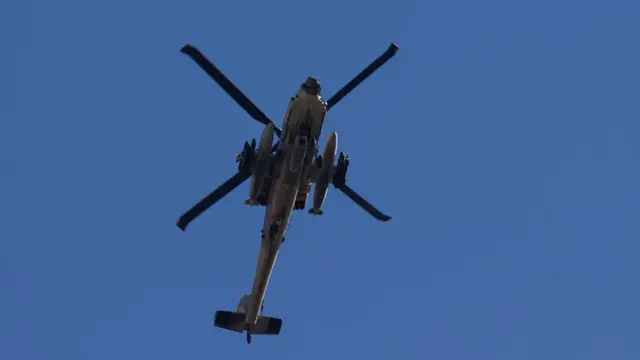
    Apache helicopterImage source, AFP

    These strikes come after the US military said one of its helicopters was downed by an Iranian drone near the Strait of Hormuz on Monday. Here's a quick recap:

    • After the helicopter was downed, its two crew members were rescued by an American sea drone, the military said
    • US Central Command (Centcom) said the two "soldiers were safely rescued within approximately two hours and are in stable condition" after their AH-64 Apache helicopter went down "near the coast of Oman while patrolling regional waters"
    • The drone rescued the soldiers and transported them to another location on the water where they were then hoisted up to a helicopter for further transport, a US official told the BBC's US media partner, CBS News
    • President Donald Trump accused Iran of shooting down the aircraft while it was patrolling the Strait of Hormuz and directed strikes in response to "unjustified Iranian aggression"
    • One US official told CBS that it's not clear if the drone deliberately attacked the helicopter
    • Iranian media appeared to acknowledge the incident, with the semi-official Mehr News Agency reporting that Iran had not claimed responsibility

  6. 'Leave our region if you want to be safe,' Iranian foreign minister sayspublished at 23:48 BST 9 June

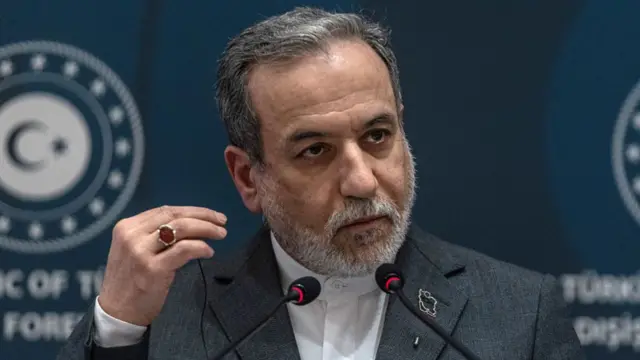
    Abbas AraghchiImage source, Getty Images

    Iran's Foreign Minister Abbas Araghchi has just commented on the new strikes in a post on X.

    "Despite its defeats on the battlefield, the U.S. opted to test our determination. Our Powerful Armed Forces will leave no attack or threat unanswered," he writes.

    He added: "Leave our region if you want to be safe."

  7. US response to be 'very powerful', Trump sayspublished at 23:35 BST 9 June

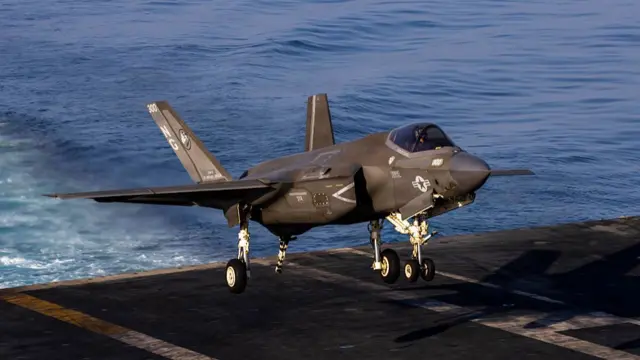
    A planeImage source, US Navy
    Image caption,

    Trump spoke to ABC News, reportedly as the latest strikes were being launched

    President Donald Trump told ABC News earlier that retaliatory strikes on Iran would be "very strong, very powerful" after the country downed a US helicopter last night.

    During the phone interview, Trump reportedly said it was "important" for the US to respond to the helicopter downing.

    "We are responding as we speak," he is quoted as saying.

    The president added: "This is a response to what they did, they did with our helicopter last night, and I believe the response should be very strong, very powerful, and that’s what this one is."

  8. Explosions reported along Gulf - Iranian state mediapublished at 23:19 BST 9 June

    Iranian state television says some are reporting explosions and air defence activity along the coast of the Persian Gulf, including in Bandar Abbas, Qeshm and Sirik.

  9. US struck Iranian defence and radar systems, Axios sayspublished at 23:16 BST 9 June

    The US has reportedly hit several Iranian defence and radar systems, according to US oulet Axios, citing a US official.

  10. US launches retaliatory strikes on Iran, military sayspublished at 23:10 BST 9 June

    The US has launched strikes on Iran after President Donald Trump accused the country of shooting down a US helicopter over the Strait of Hormuz.

    American forces began strikes at 17:00 EST (22:00 BST) on Tuesday in response to the helicopter downing, US Central Command (Centcom) said.

    "The mission is a proportional response to unjustified Iranian aggression," Centcom said in a statement.

    The two crew members of the downed US Apache helicopter were rescued by an American sea drone, Centcom said earlier.

    "There were two pilots involved, both are safe and uninjured," Trump wrote on Truth Social earlier today. "Nevertheless, the United States must, of necessity, respond to this attack."