Summary

  • Britain is "at risk of a lost generation", the author of a report into 16-24 year-olds not in work or education warns

  • Alan Milburn, a former minister, says the education, health and welfare systems are "no longer fit for purpose" in preparing young people for adult life

  • One in six young people will not be in education, employment or training within five years unless "urgent" action is taken, the review says - more findings from the report will be published at 11:00 BST

  • This is only the initial report - recommendations for potential reform and solutions won't come until the full report is released later this year

  • According to the latest figures, there were 957,000 young people not in employment, education or training - known as Neets - from October to December 2025

  1. What are your thoughts on today's findings?published at 09:07 BST

    One in six young people will not be in education, employment or training in the next five years unless urgent action is taken, a major review has warned.

    We want to hear your thoughts on the findings and whether you have been personally affected.

    You can get in touch in the following ways:

    · Send us your stories and images

    · Email: yourvoice@bbc.co.uk

    Please read our terms & conditions and privacy policy.

    In some cases a selection of your comments and questions will be published, displaying your name and location as you provide it unless you state otherwise. Your contact details will never be published.

    White 'Your Voice' text against a purple banner
  2. 'Hard' and 'humiliating': Young people on their experiences of trying to get a jobpublished at 08:53 BST

    Zoe Conway
    Employment correspondent

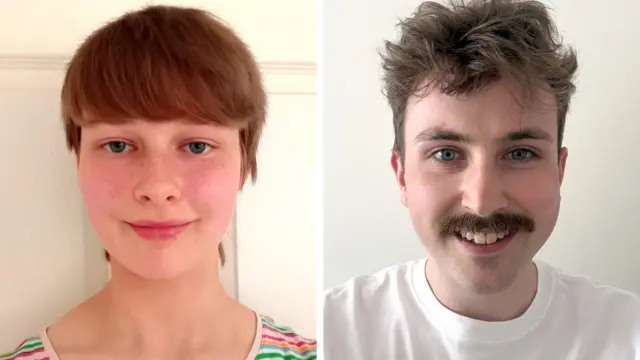
    Zaynah, 24, has suffered from physical ill health and has not had a job since leaving college. Over the last year, she's applied for more than 200 jobs and says she's never heard back from any of the employers.

    "Getting a job is very hard because with my issues, I haven't got that much experience, I've never worked before," she says.

    "So I feel like it's restricting me and I'm not getting jobs.'' She says she's planning to start doing some volunteering so she can improve her CV.

    Zaynah wearing a burgandy headscarf and black topImage source, Spear

    Luke, who studied product design at the prestigious Central St Martin's University, cannot find a job despite trying hard.

    The 23-year-old has applied for more than 400 positions and has only ever had one interview as a cleaner which he did not get.

    ''It's humiliating," he said. "You think 'okay I've got all the knowledge, I've got all the skills, all I'm waiting for is a job to put it in practice."

    "It makes you depressed especially the amount of rejections." He said he had no choice but to claim benefits.

  3. Decline of entry-level jobs is a 'long-term structural problem,' says Milburnpublished at 08:35 BST

    Milburn is asked next about recent changes to taxes and national insurance.

    He says there is "no doubt" the changes made a couple of years ago have had an impact - he adds however that no one should pretend the decline in entry-level jobs began two years ago.

    It's a "long-term structural problem" with young people on the frontline, he says.

    Turning then to benefits, Milburn says he thinks the government should be paying out less in the benefits bill overall "but the way to do that is not by some arbitrary cut".

    "The way to do it is to get young people into work," he says, citing a statistic revealed within his report that the government spends 25 times as much on benefits for young people than it does on supporting them into work.

  4. Biggest complaint from employers is whether young people are ready for work, says Milburnpublished at 08:29 BST

    Milburn says "too often in our country work experience is an afterthought".

    "For perfectly good reasons, schools are focused on qualifications," he tells the Today programme.

    "Qualifications are necessary to get people into the labour market," he says, but from talking to employers, "the biggest complaint that people have is about work readiness".

    He says that firms know people have got qualifications, but "what they worry more about is whether school has gifted them the attributes for the work place" such as communication and adaptability skills.

  5. Young people not in work or education is 'chronic problem' that's getting worse - Milburnpublished at 08:22 BST

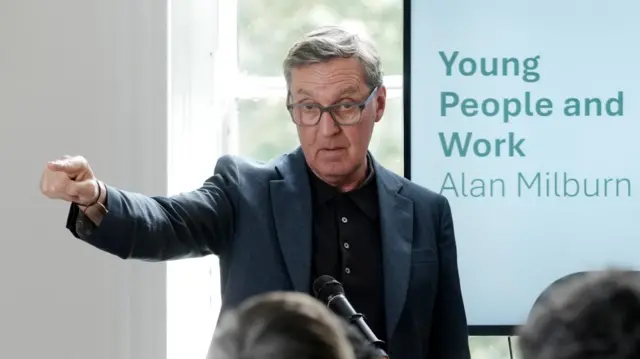
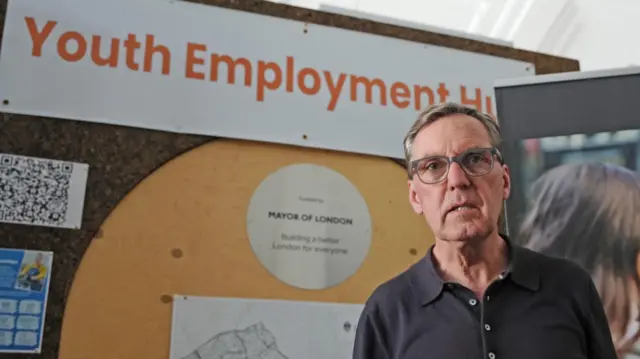
    Following his comments to BBC Breakfast earlier this morning, author of today's report Alan Milburn is now speaking with Radio 4's Today programme.

    He is asked whether the problem with the number of people not in education, work or training in the UK is worse than in other countries, to which he says it is and it's "getting worse".

    The UK's Neet rate is three times that of Holland and twice that of Ireland, he says, adding that the UK is moving down the international league table while other countries have moved up.

    Milburn describes it as a "chronic problem" that's "getting worse not better," and there currently isn't a plan to deal with it.

  6. Out-of-work graduate says he's applied to hundreds of jobspublished at 08:16 BST

    Man wearing a yellow t-shirt smiles as he looks towards the cameraImage source, Michael Owen

    Michael Owen, from Leeds, says he has been out of work since December 2024, despite applying to hundreds of jobs in recent years.

    Prior to this, the 27-year-old computer science games development graduate, was working one day a week developing a video game on a four-month contract.

    Living at home with his mum, dad and niece, he receives around £300-£400 in Universal Credit each month, which he has been claiming for the last three years. He says this is manageable because he is not the type to spend money dining out.

    However, Michael, who has epilepsy, says this restricts his ability to continue to learn to drive, and public transport links hold back his job search.

    He lives 25 minutes away from his nearest train station and it's about 30-45 minutes to Leeds city centre on the bus.

    White 'Your Voice' text against a purple background
  7. Report 'lays bare the scale of the challenge' - Pat McFaddenpublished at 08:14 BST

    Pat McFadden holds a red folderImage source, Reuters

    Work and Pensions Secretary Pat McFadden says he commissioned Alan Milburn's report because the UK "cannot afford to lose a generation of young people".

    He says it "lays bare the scale of the challenge and the root causes of youth unemployment we now need to confront".

    McFadden pledges the government will work with employers, charities and young people "to drive real change, so more young people are earning or learning, not left behind".

  8. 'You have to back businesses to create jobs' - shadow work and pensions secretarypublished at 08:13 BST

    A headshot of Helen WhatelyImage source, Getty Images

    Shadow work and pensions secretary Helen Whately says she is "very concerned" by the number of young people not in work, education or training across the country.

    Whately tells Radio 4's Today programme that the Conservatives would tackle this issue in two ways - rolling back "some of the red tape" in the Employments Rights Bill and "backing businesses" to create new jobs.

    Pushed specifically on what the Tories would do differently if in power, Whately explains: "To the extent that [Labour has] tried to do something to help young people, it's been things like paid for work experience programmes.

    "What people really want is jobs - you've got to back businesses to create jobs."

  9. Government needs to minimise risk for businesses to employ young people, says Milburnpublished at 08:13 BST

    Milburn is asked about the recommendations he will make, which are expected later this summer.

    He says that when employers take on young people they are always taking a risk, and ministers need to minimise the risk and maximise the incentives for businesses to make those choices.

    He adds that there needs to be a "reset" of the system.

    "All too often [...] it's transporting young people into a world of benefits, not into a world of work."

  10. 'This is a generation that is trying' to get jobs - Milburnpublished at 08:13 BST

    Alan Milburn speaking to BBC Breakfast

    Milburn is next asked whether there is a danger that older generations think younger people are work shy.

    He acknowledges that you hear those sort of remarks sometimes, but emphasises that the evidence he has seen points to the fact "this is a generation that is trying".

    He says young people are putting in dozens, "sometimes hundreds" of job applications - and then at times not even hearing back.

    "I've never known anything like this," he says, adding that there is a sort of "contract" in society where if you put in effort, you get reward but that contract is being "broken".

    "This is a moment in time where we have got to act," Milburn adds - directing this at the government but also at employers.

  11. Young people out of work are caught in 'perfect storm,' says Milburnpublished at 08:12 BST

    Former health secretary and author of today's report Alan Milburn says that young people are "caught in a perfect storm".

    He tells BBC Breakfast the "first rung" on the career ladder is "more out of reach" for this generation of young people.

    He says it is not a shortage of effort but a "shortage of opportunity".

  12. Media interviews, new stats, and the report's release - how today will unfoldpublished at 08:11 BST

    There's lots going on this morning - here's a rundown of what to expect:

    We know some of what will be in this interim report already because late last night a few details were released ahead of its publication.

    We've already heard directly from the report's author, Alan Milburn, who has just spoken to BBC Breakfast and will be on the Today programme any minute. More from him in our next post.

    After that - at 09:30 BST - we're expecting the latest figures on the number of young people who are not in education, employment or training (Neet) to be released by the Office for National Statistics.

    Then around 90 minutes later - at 11:00 - the report will be released, which will coincide with Milburn holding a news conference.

    We'll be covering all of these moments throughout the morning, and we'll also bring you reaction and analysis throughout.

  13. 'We are at risk of a lost generation,' report author to saypublished at 08:09 BST

    A file photo of Alan Milburn - he is standing in front of a wall with graffiti on itImage source, PA Media

    The first rung of the career ladder "has thinned" and for too many young people is now "out of reach", Alan Milburn is expected to say in a short address as the report is published.

    The situation places young people in a "hopeless catch-22 where employers ask for work experience but the opportunities for young people to gain it have narrowed or gone", he will say.

    "Six in 10 have never had a job. Twenty years ago, that figure was closer to four in 10," he will say, with a warning that "detachment" is becoming permanent and "we are at risk of a lost generation".

    Milburn is also expected to say that this situation is "not a failure of young people", but "a failure of a system stuck in the past".

    Fixing this "should be the priority for the government" and "for all of us", he will say.

  14. What does Neet mean?published at 08:08 BST

    Today's report is all about young people not in education, employment or training (Neet).

    The specific age range is between 16 and 24.

    So to be considered Neet, a person must be that age and:

    • Be unemployed - looking for work
    • Or economically inactive - not engaged in paid work, and not actively looking for work in the four weeks before being surveyed, not waiting to start a job, or caring for family
    • Not be in formal education, such as school or university, or on a vocational course
    • And not be participating in any training schemes, such as apprenticeships or internships

    There were 957,000 young people who were Neet in the UK in the period from October to December 2025. That's equivalent to 12.8% of all people aged 16 to 24.

    Read our deep dive on Neets.

  15. Risk of 'lost generation' unless urgent action taken, report warnspublished at 08:07 BST

    A young woman sits in the hallway of her home looking sad and lonelyImage source, Getty Images

    One in six young people will not be in education, employment or training in the next five years unless urgent action is taken, a new review has warned.

    Former Health Secretary Alan Milburn is due to release a report later this morning into so-called Neets, warning the number of 16 to 24-year-olds out of work, education or training could rise to 1.25 million by 2031.

    "We are at risk of a lost generation," Milburn is set to say in a speech later, with young people in a "hopeless catch-22".

    The latest unemployment rate for 16 to 24-year-olds is 16.2% - the highest since 2014.