Summary

  • Three people have died after a suspected hantavirus outbreak on a cruise ship travelling from Argentina to Cape Verde

  • It includes a 70 and 69-year-old Dutch husband and wife who became ill on board and were taken off the ship - the body of a third Dutch individual is still on board

  • A 69-year-old Brit is currently in intensive care in Johannesburg, South Africa - the only confirmed case of the virus. Two crew on board are also sick and require urgent care, operator Oceanwide Expeditions says

  • The ship appears to have been stationary off the coast of Cape Verde for at least 24 hours - local media reports that passengers won't disembark on the archipelago; the operator says "no authorization" has been given

  • Hantavirus refers to a strain of viruses carried by rodents - what is it and how can it be treated?

  • Are you on the ship or know someone who is? Get in touch

  1. Three die and another three sick in suspected hantavirus outbreak on cruise shippublished at 10:13 BST

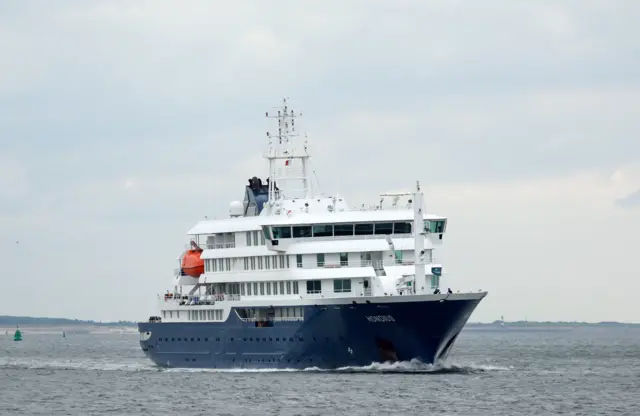
    Small cruise ship sailing in waterImage source, Henk Noevers

    Three people have died following a suspected hantavirus outbreak on a cruise ship travelling from Argentina to Cape Verde - and another three people are reported ill.

    There's been little fresh information on Monday - here's what we know so far:

    Three Dutch nationals have died

    A Dutch couple - a man aged 70, and a woman aged 69 - are known to have died.

    The man died on arrival on the island of St Helena, a British territory in the South Atlantic.

    The woman also became ill on board and was evacuated to South Africa, where she died in a Johannesburg hospital.

    The third person who has died is also Dutch, and their body remains on board.

    British national in hospital in South Africa

    A 69-year-old UK national is in intensive care - also in Johannesburg - and local officials have told the BBC that he has a confirmed case of the virus.

    A spokesperson from the South African Department of Health says he "became ill while the ship was travelling from St Helena to Ascension Island, and was transferred from a hospital in Ascension to a South African private health facility in Sandton for medical attention".

    Two sick crew on board near Cape Verde

    Cruise operator Oceanwide Expeditions has confirmed two crew members on board are sick and require medical care.

    The ship is currently off the coast of Cape Verde - and appears to have been there for at least 24 hours - but the operator says authorities there have not given authorisation for them to disembark
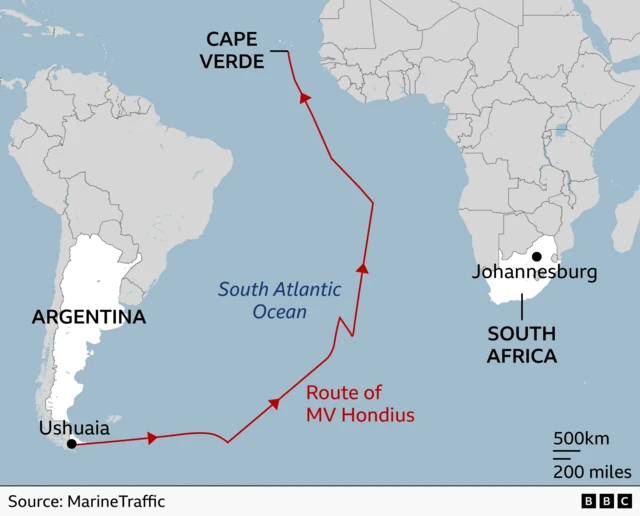
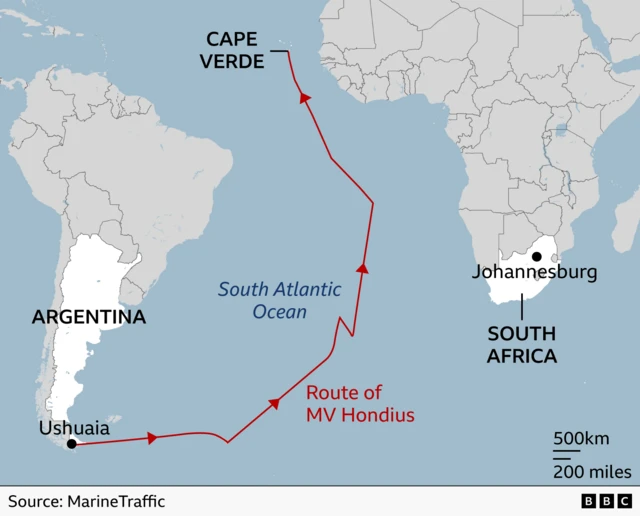
    Map of the South Atlantic showing the route of the ship MV Hondius in red, travelling north from Ushuaia in southern Argentina across the ocean toward Cape Verde. South America and Africa are shown on either side, with South Africa and Johannesburg labelled. Arrows indicate the ship’s direction of travel.

    We're now ending our live coverage. Read more:
  2. What we know about the ship and its journeypublished at 09:34 BST

    The MV Hondius is currently off the port of Praia, Cape Verde - an archipelago in the Atlantic, west of Africa.

    The cruise is run by Oceanwide Expeditions, and according to an itinerary on its website, appears to have departed from Ushuaia in Argentina on 20 March - and was expected to complete its journey on 4 May in Cape Verde.

    The ship is 107.6m long, with a breadth of 17.6m. There are 80 cabins on board, in which up to 170 passengers and 57 crew, 13 guides and one doctor can stay, according to the cruise firm.

    Last night, the South African Department of Health said the ship was carrying around 150 tourists.

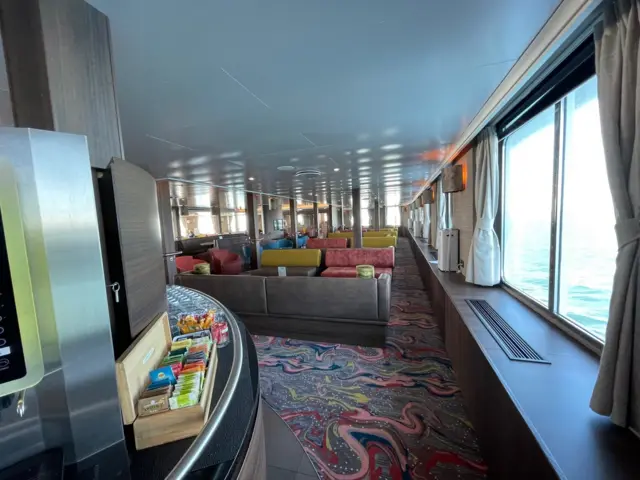
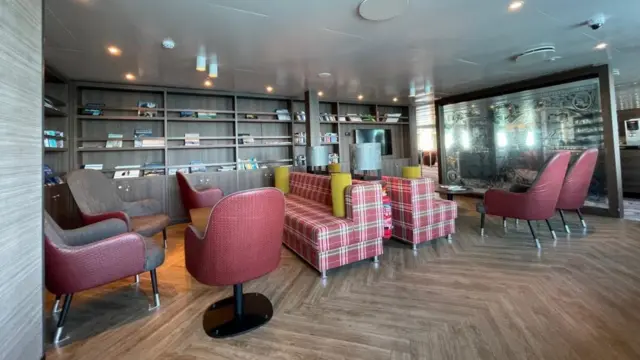
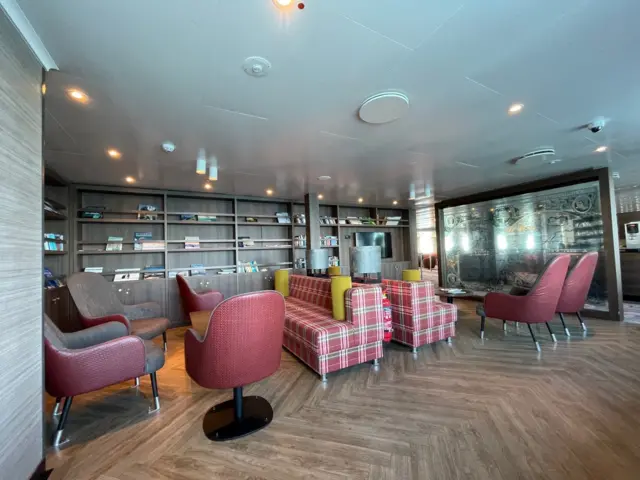
    Interior of ship showing lounge area with lots of chairs and two sofas
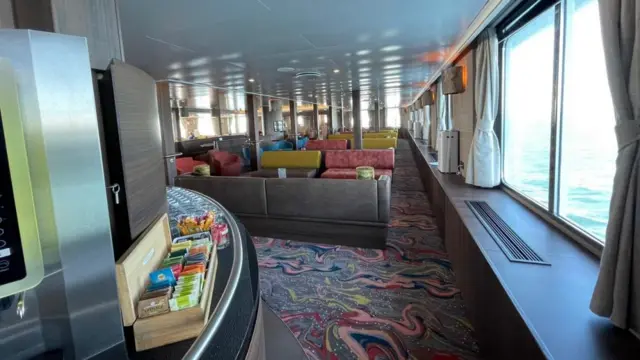
    Interior of ship showing lounge area with lots of sofas
  3. Passengers won't disembark at Cape Verde, local media reportspublished at 09:01 BST

    According to local outlet A Nacao, the president of the Cape Verdean Public Health Institute (INSP), Maria da Luz has said that the ship should "continue its route" and passengers will not be disembarking in Cape Verde.

    It's in order to protect the local population, she says.

    The paper reports that the ship is currently near Praia, and contact with local authorities about the ship was made yesterday.

  4. Are you on the ship or know someone who is? Get in touchpublished at 08:37 BST

    If you feel able to do so, please get in touch. You can do so in the following ways:

    Please read our terms &conditions and privacy policy.

    In some cases a selection of your comments and questions will be published, displaying your name and location as you provide it unless you state otherwise. Your contact details will never be published.

    Your Voice banner
  5. Hantavirus treatment 'primarily supportive care', says researcherpublished at 08:24 BST

    Chief of special pathogens at Canada's National Microbiology Laboratory, David Safronetz tells the BBC that there are no "specific medical interventions" to tackle the illness.

    Asked whether there there are any vaccines or antibiotics that would treat it, he says: "There are no specific vaccines for hantaviral diseases, there are no specific antivirals to treat the disease in humans with.

    "Treatment primarily is supportive care, so early identification of cases, seeking medical attention, and getting into facilities that are capable of assisting."

    He adds that when it comes to "specific medical interventions, just nothing exists at this time."

  6. 'Important' to work out if sick are suffering from same disease, infectious disease expert sayspublished at 07:47 BST

    An infectious diseases specialist at the Australian National University tells the BBC that the Andes strain of hantavirus - the most common form in South America, where the cruise began - is not easily spread from person to person, but it can do.

    Prof Sanjaya Senanayake says that illness from the strain commonly associated with the Americas leads to a rapid build-up of fluid in the lungs, which can be fatal in around 45% of cases.

    "That's the one we'd be thinking about in terms of this cruise because it came from Argentina," he says.

    Senanayake says to detect hantavirus, people with symptoms would probably be given PCR tests, like the nasal swabs common during the Covid pandemic, or blood tests - and it's important anyone infected with hantavirus is given medical treatment as soon as possible.

    "People get really sick and die within a few days," he tells the BBC.

    He adds that it's unusual for people to be exposed to hantavirus on a ship. "But does that mean that that's the same disease that's going on in all six people?...that's an important thing to work out first," he says.

  7. Ship appears to have been stationary off Cape Verde for at least 24 hours - ship tracking websitepublished at 07:19 BST

    As we've been reporting, the cruise ship is currently off the coast off Cape Verde, in the Atlantic Ocean.

    Ship tracking website Marine Traffic appears to show that the MV Hondius has been stationed there for at least the last 24 hours.

    According to a statement from cruise operator Oceanwide Expeditions issued on Sunday night, "no authorization" has been granted from Cape Verdean authorities to allow those requiring medical care to disembark.

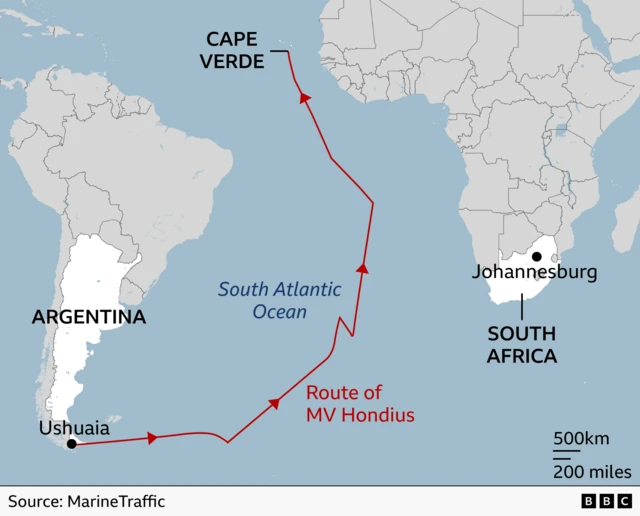
    Map of the South Atlantic showing the route of the ship MV Hondius in red, travelling north from Ushuaia in southern Argentina across the ocean toward Cape Verde. South America and Africa are shown on either side, with South Africa and Johannesburg labelled. Arrows indicate the ship’s direction of travel.
  8. What is hantavirus and how is it treated?published at 06:37 BST

    Hantavirus refers to a strain of viruses carried by rodents, primarily transmitted to humans through inhalation of airborne particles from dried rodent droppings.

    Infections typically occur when the virus becomes airborne from a rodent's urine, droppings, or saliva, according to the US Centers for Disease Control and Prevention (CDC).

    Though rare, it can also spread through rodent bites or scratches.

    There is no specific treatment for hantavirus infections. The CDC recommends supportive care to treat symptoms that could include oxygen therapy, mechanical ventilation, antiviral medications and dialysis.

    Patients with severe symptoms may need to be admitted to hospitals in intensive care units. In severe cases, some may need to be intubated.

  9. What we know about the suspected hantavirus outbreakpublished at 06:00 BST

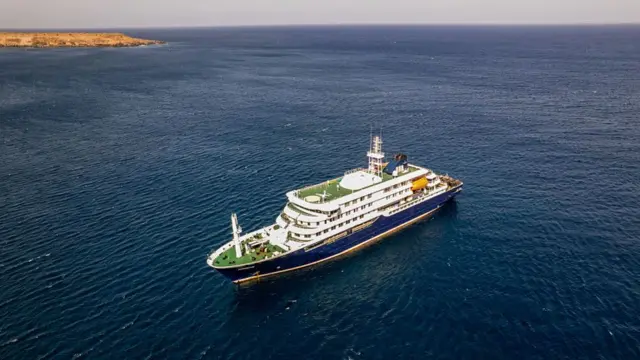
    This aerial picture shows a general view of the cruise ship MV Hondius stationary off the port of Praia, the capital of Cape Verde, on May 3, 2026.Image source, Getty Images

    Three people have died after a suspected hantavirus outbreak on a cruise ship. Here's what we know - and don't know - so far:

    What we know

    • Three fatalities: Three people have died, the World Health Organization (WHO) says. This includes a 70 and 69-year-old Dutch husband and wife. Repatriation efforts are under way. The body of the third individual is still on board the ship
    • British national in hospital: One British national aged 69 is in intensive care in Johannesburg, South Africa - the only confirmed case of hantavirus
    • Two others sick on board: Cruise ship operator Oceanwide Expeditions says two crew members require urgent medical care but have not been allowed to disembark in Cape Verde for treatment
    • Name of cruise ship: The outbreak took place on the MV Hondius cruise ship, which was travelling with about 150 passengers from Argentina and is now anchored at port off the capital of Cape Verde

    What we don't know

    • Total number of cases: One case has been confirmed in a laboratory, with five more suspected cases under investigation, WHO tells the BBC
    • How the outbreak started: Infections occur when the virus becomes airborne from a rodent's urine, droppings, or saliva, and less commonly spread through rodent bites or scratches - transmission between people is rare
    • More cases could emerge: A microbiologist tells the BBC it takes symptoms anywhere from one to eight weeks to emerge and asks "are we going to see more people coming down with the disease in the next days and weeks?"
  10. Passengers would have been infected before getting on cruise, says epidemiologistpublished at 05:26 BST

    Epidemiologist Michael Baker tells the BBC passengers who had the suspected hantavirus would have been infected before they got on board the cruise ship due to the virus's long incubation period.

    He added that it was rare for humans to get the hantavirus and "very unusual" for people to develop the disease on a cruise ship.

    "That's the worst possible place to get seriously ill," Professor Baker says.

    He says anyone with symptoms on board should be "rapidly evacuated" and taken to hospital with intensive care to increase their chances of survival.

    When asked what steps should be taken next, Professor Baker says the outbreak needs to be "investigated throughly" to see if there were any preventable factors, including traveller itineraries to see if they were exposed to high risk environments.

  11. Hantavirus on cruise ship 'extremely unusual'published at 04:43 BST

    Hantavirus is not a common virus but is severe, Prof Paul Griffin, the Director of Infectious Diseases at Mater Health Services in Australia, told the Australian Broadcasting Corporation.

    He said there were around 150,000-200,000 cases around the world every year.

    It is "exceedingly rare" for the virus to be transmitted from person to person, and usually spreads from a common source, like rodent droppings or urine.

    But he added "what we're seeing on this cruise ship - is a bit suspicious that there might be some transmission".

    Cruise ships, he said, are "an environment that's very conducive to the transmission of infections" due to having lots of people in a confined space for a prolonged period of time.

    Since Covid, hygiene practices have improved and it is "extremely unusual" for hantavirus to have infected passengers, Griffin said.

  12. Incubation time means more cases could emerge, microbiologist tells BBCpublished at 03:55 BST

    Microbiologist Siouxsie Wiles told the BBC hantavirus is detected in lots of different places and outbreaks are often sporadic and "little", tending to "fizzle out".

    She said it was unclear how people were exposed to the virus.

    "Human to human transmission is very rare, in fact in the medical literature people have argued whether it's real or not," she said.

    "The question is - is this a group of people who have been exposed to infected rodents, or has one person been exposed and then is transmitting to others?"

    Wiles said food could have been contaminated with hantavirus.

    She said the time between people being exposed to hantavirus and showing symptoms could be anywhere from one to eight weeks.

    "With this incubation period are we going to see more people coming down with the disease in the next days and weeks?"

  13. Where is the MV Hondius?published at 03:05 BST

    The MV Hondius is at anchor off the port of Praia, the capital of Cape Verde, ship tracking sites show.

    Footage shows it anchored in the sea, with the coast in the background.

    Media caption,

    Watch: Cruise ship stationary off the coast of Cape Verde

  14. Gene Hackman's wife died from illness linked to hantaviruspublished at 02:23 BST

    Gene Hackman and his wife walk a red carpet wearing black formal outfits.Image source, Getty Images

    As a reminder, hantavirus hit the headlines last year.

    The wife of Oscar-winning actor Gene Hackman died from a respiratory illness linked to hantavirus in March 2025.

    Medical investigators said Betsy Arakawa contracted Hantavirus Pulmonary Syndrome (HPS), a life-threatening lung condition.

    It is one of two severe illnesses that can be caused by hantavirus and, according to the Centers for Disease Control and Prevention (CDC), has a mortality rate of about 38%.

    The second illness, Haemorrhagic Fever with Renal syndrome, is more severe and primarily affects the kidneys.

    There is no specific treatment for hantavirus infections.

    Hackman died of natural causes about a week after his wife. He passed away at his Santa Fe home from coronary artery disease, with advanced Alzheimer's disease a contributing factor.

  15. Investigations continue into cause of deathpublished at 01:34 BST

    In a statement to the BBC, Oceanwide Expeditions says it is investigating if hantavirus is linked to the three deaths on the cruise.

    "A strain of hantavirus has been identified in one passenger who was previously medically evacuated from the vessel and is currently being treated in intensive care in Johannesburg," it says, referring to the 69-year-old Briton.

    "Hantavirus has not been confirmed in the two symptomatic individuals currently on board."

    It says it is looking into the "exact cause" of the deaths and "any possible connection".

    "We are currently establishing the full facts and working on appropriate medical care, screening and next steps," it says.

    Oceanwide Expeditions tells the BBC it expects to provide further updates as soon as more information becomes available.

  16. What do we know about the ship?published at 01:26 BST

    A four berth cabin on a cruise ship, with four porthole windowsImage source, Oceanwide Expeditions

    The MV Hondius is 107.6m long, with a breadth of 17.6m and a draft - how deep the vessel sits in the water - of 5.3m.

    There are 80 cabins on board, in which up to 170 passengers and 57 crew, 13 guides and one doctor can stay, according to cruise operator Oceanwide Expeditions.

    Two passengers sleep in most of the classes of cabins available but some have three and four berths in a space measuring 15.3 sq m.

    Chairs and sofas near bookshelves in a lounge area inside the MV Honius
    Rows of sofas near a snack bar and widows on board the MV Hondius.
  17. What we know about the cruisepublished at 00:40 BST 4 May

    Map of the South Atlantic showing the route of the ship MV Hondius in red, travelling north from Ushuaia in southern Argentina across the ocean toward Cape Verde. South America and Africa are shown on either side, with South Africa and Johannesburg labelled. Arrows indicate the ship’s direction of travel.

    The outbreak was reported aboard the MV Hondius cruise ship, which was travelling from Argentina to Cape Verde.

    The MV Hondius is run by tour company Oceanwide Expeditions.

    According to an itinerary on its website, MV Hondius departed from Ushuaia in Argentina on 20 March and was expected to complete its journey on 4 May in Cape Verde, an island nation in the Atlantic west of Africa.

    It is described as a 107.6m (353ft) polar cruise ship, with space for 170 passengers in 80 cabins, along with 57 crew members, 13 guides and one doctor.

    A separate statement from the South African Department of Health says the ship was carrying around 150 tourists.

  18. Dutch authorities leading efforts to repatriate symptomatic individualspublished at 23:54 BST 3 May
    Breaking

    Dutch authorities are leading efforts to repatriate two symptomatic people aboard the ship, Oceanwide Expeditions says.

    "The body of the deceased individual is also planned to be included in this repatriation, along with a guest closely associated with the deceased," it says, adding the guest is not symptomatic.

    To help the sick people return home to the Netherlands, Oceanwide Expeditions says it needs authorisation and support from authorities in Cape Verde, an island nation in the Atlantic west of Africa.

    "We are in close contact with those directly affected and their families and are providing support where possible," it says.

  19. Cape Verde yet to authorise transfer of sick crew for treatmentpublished at 23:37 BST 3 May
    Breaking

    In an update on the situation on board the MV Hondius, cruise operator Oceanwide Expeditions says it has not been authorised by Cape Verde to allow crew members needing urgent medical assistance to disembark.

    It says health officials have visited the ship, located off the coast of Cape Verde, and assessed "the two symptomatic individuals".

    They are yet to make a decision regarding the transfer of these individuals into medical care in Cape Verde," Oceanwide Expeditions says in its statement.

    It adds its priority is to ensure the two crew members checked by Cape Verde health officials "receive adequate and expedited medical care".

  20. Ship carrying around 150 tourists, according to South African officialspublished at 23:05 BST 3 May

    A spokesperson from South Africa's Department of Health says the ship was carrying about 150 tourists from various countries, and left Ushuaia in Southern Argentina about three weeks ago.

    They say it was heading to the Canary Islands with multiple stops in between, including mainland Antarctica, the Falklands, South Georgia, Nightingale Island, Tristan, St Helena, Ascension, and Cape Verde.