Summary

  1. Judge discourages jurors of letting 'unpleasant' and 'graphic' images of the children influence their verdictpublished at 17:26 BST

    Judge Sullivan has just told the jury that graphic photographs of victims will be provided to jurors during their deliberations, discouraging from letting the unpleasantness impact their decision.

    He notes that the "the images depicted are not pleasant", which he noted when they were introduced earlier in the trial.

    "Your verdict must not, in any way, be influenced by the fact that these images are unpleasant or graphic," he says.

    He adds that Clancy is "entitled to a verdict based solely on the evidence, and not one based on pity or sympathy for the decedents", which he says "might be occasioned by the images depicted".

    Sullivan advises the jurors to consider the images "only as they may draw attention to a clinical, medical status, or nature of the victim's injuries, the cause of their death, or to the nature of the incident itself".
  2. Jury receives further instructions from judgepublished at 17:05 BST

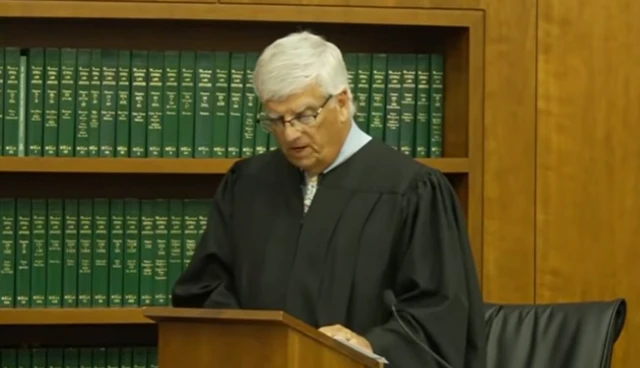
    A judge in black robes stands at a lectern in front of a bookcase filled with green bound booksImage source, AP
    Image caption,

    Judge William Sullivan

    Before the jury retires to deliberate on a verdict, Judge William Sullivan gives them further instructions.

    He reminds them the that burden of proof is on the government, and that the jury has to presume Clancy's innocence unless there is evidence that unanimously convinces them that she is guilty.

    In order to convict or acquit Clancy, all members of the jury have to make the same call. We're not sure how long the deliberations could take - it could be a while.

  3. 'You know to a moral certainty she is guilty', says prosecution in conclusionpublished at 17:01 BST

    As Lindsay Clancy strangled her three children, each likely felt extreme pain and confusion at why their mother would do this to them, Sprague says.

    "The indifference that she showed to their pain, to their struggle, to their suffering - leaving them there on the floor with the bands around their necks," Sprague says.

    Clancy did that, Sprague argues, because she had a plan and she was following it through.

    "She didn't see them in that moment as individual human beings with rights, with dreams, with futures, individually belonging to them. You heard about the three kids. Cora wanted to be a doctor and a mom. Dawson wanted to be a firefighter. Callan never got the chance to dream."

    Sprague concludes by telling they jury, "you know to a moral certainty, she is guilty".

    And with that, Sprague ends her closing arguments.

  4. Clancy 'making up the voice' she claims to have heard, prosecutor sayspublished at 16:59 BST

    Sprague is disputing the idea that Clancy heard a voice, telling her to kill her children.

    "She's making up the voice," she tells the jurors.

    Sprague says a red flag is that she "immediately obeyed" the voice, and claims that after the murders Clancy told different people three different versions of what the voice said.

    The prosecution also says the voice was "vague in its demand" and left Clancy with choice on what to do next.

  5. Prosecution lays out what Clancy's motive may have beenpublished at 16:58 BST

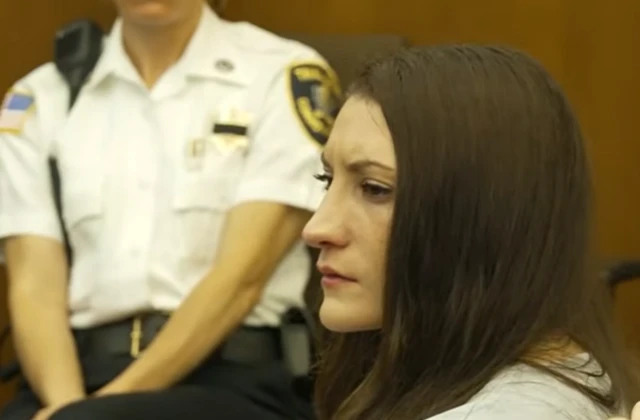
    A woman with long dark hair looks on in court as a law enforcement officer stands in the backgroundImage source, AP
    Image caption,

    Lindsay Clancy listens to closing arguments in her murder trial

    Sprague now moves on to Clancy's alleged motives for killing the children.

    Referring to the testimony of a doctor who spoke earlier on in the trial, Sprague says most women don't kill their children because of mental illness, they "do it through child abuse".

    Sprague says Clancy was "depressed" and wanted to die, but felt she had to stay alive for her children.

    Ultimately, Clancy decided to kill her children, Sprague says, as they were "keeping her from her from ending her misery".

    "I'm not saying she was happy about it," the prosecutor tells the jury, but says Clancy had other options.

    Sprague accuses Clancy of knowing she was doing something wrong. "She didn’t take advantage of this situation, she created this situation," Sprague says.

    When Clancy woke up in the hospital "still with a tube in her throat" she asked for a lawyer because she knew what she did was wrong, Sprague tells the jury.

  6. Husband's phone call came after killing of children, prosecutor allegespublished at 16:50 BST

    Sprague walks the jury through the timeline of the children's strangulation - including how much time it would take to kill each child while Clancy's husband was out running errands.

    Each alleged murder would take several minutes, the prosecutor alleges.

    "She killed those kids as soon as he left" and when he called her, they were already dead, Sprague argues.

    "She lied, she stayed calm, she presented herself as normal. She had complete control over he behaviours and emotions," Sprague argues.

    That's because, Sprague argues, Clancy "needed to finish her plan" and attempt to kill herself next.

  7. Prosecution questions timeline of when children's deaths occurredpublished at 16:47 BST

    Sprague says when Patrick Clancy gets home the house is quiet in a way that a house with three young children shouldn't be.

    She says he called out but got no answer, goes to the basement door but no answer, then goes upstairs, unlocks the door, sees blood and the window open, and goes down to Lindsay, where he asks her, "what did you do?"

    Sprague says she replies that she tried to kill herself, and asked where the children are, she says they're "in the basement".

    For everything to happen in such a short amount of time, Sprague says Clancy would've had to start killing her children immediately after Patrick left.

  8. Clancy demonstrated 'planning' ahead of killing children, says prosecutorpublished at 16:40 BST

    Sprague says Clancy was clear-minded about what she wanted to do - "kill the children and then kill herself".

    When Clancy sent her husband to get food and medication, she called the pharmacy ahead of time to check if the drugs were in stock because "she's adding to this errand that she's sending Patrick out on," Sprague says.

    "She has to make sure she's not interrupted, she doesn't want that call at 17:33," Sprague says, arguing Clancy wanted the pharmacy to have the medication waiting so her husband could then leave to collect the take-away.

    "So she has time to do what she needs to do," the prosecutor says.

    Sprague says this incident demonstrated a level of "planning" and "decision-making".

    If you are suffering distress or despair and need support, you could speak to a health professional, or an organisation that offers support.

    Details of help available in many countries can be found at Befrienders Worldwide. www.befrienders.org., external

    In the UK a list of organisations that can help is available at bbc.co.uk/actionline.

    In the US you can contact the national 988 Suicide and Crisis Lifeline, external for support.

  9. Prosecution says Clancy could control her behaviour on day of deathspublished at 16:35 BST

    Prosecutors are now taking the jury through the day of the murders.

    Everything she did that day shows she could conform her behaviour to the law.

    The paediatrician who saw her that morning did not have any concerns. She plays with the kids, takes them outside, and sends photos to her mother and husband Patrick.

    "You start to see the planning at about four in the afternoon," the prosecution alleges, laying out her google searches.

    The defence wanted the jury to believe Clancy was distressed, Sprague says.

    "If you're in distress, don't send him anywhere... Get DoorDash," she says, referencing Clancy sending her husband out for takeout for dinner that evening.

  10. What are postpartum depression and postpartum psychosis?published at 16:30 BST

    Ana Faguy
    US reporter

    Media caption,

    What is postpartum psychosis and why is it central in the Lindsay Clancy trial?

    People who have just given birth can experience a range of psychiatric conditions, the most serious and life-threatening of which is postpartum psychosis.

    The UK's National Health Service (NHS) defines postpartum psychosis as a rare, serious mental health illness that should be treated as a medical emergency.

    Patients can experience mania and depression as well as psychotic symptoms like delusions and a disconnection from reality. In rare, severe cases, they may harm or kill themselves or other people.

    In the US, a major barrier to awareness and treatment of postpartum psychosis is that it remains unclassified in American medicine's encyclopaedia of psychiatry.

    Postpartum psychosis is very different from the “baby blues”, or postpartum blues, which affects around 85% of people who give birth and typically involves difficulty controlling emotions like anxiety, sadness and anger, according to the Cleveland Clinic.

    Postpartum depression is more serious than the baby blues, with patients feeling many of the same symptoms but more intensely and for a longer period of time.

  11. Doctors found no signs of psychosis, 'so they were all wrong?'published at 16:28 BST

    Some of the medications the defence says were making Clancy unbalanced were not even in her system when she left the mental hospital the first time, prosecutor Jennifer Sprague says.

    She left the hospital because she wanted to go to her daughter Cora's birthday party, Sprague says.

    "She knew she needed help", yet she still chose to leave the hospital, she adds.

    None of the doctors she saw ever noticed any signs of psychosis, Sprague says, asking, "So they were all wrong?"

    Then, Sprague says, Clancy was acting normal throughout January, in the lead-up to her children's deaths.

    If you saw a video of Clancy at the science museum with her kids, you wouldn't be able to pick out the woman who is about to kill her kids, Sprague argues.

    That's because she was able to act normal and conform her behavior to the law, Sprague argues.

  12. Clancy was a 'functional adult' who knew right and wrong, prosecution arguespublished at 16:24 BST

    The prosecution says Clancy still knew the difference between right and wrong in the period leading up the murders in January 2023.

    Sprague describes Clancy operating as a "functional adult" and "functional mom" including interacting with friends and going to the gym.

    She says that proof of Clancy knowing the difference between right and wrong in that time, is how she told Patrick and her mother about her thoughts of harming her kids, but did not tell doctors in case her kids were taken away.

    "She knew it was a bad thought, a wrong thought," Sprague says.

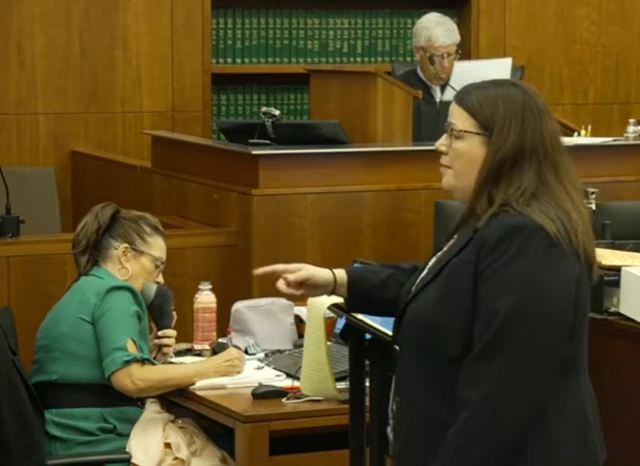
    A woman in suit points in a courtroom with a judge and stenographer seated behind herImage source, AP
  13. Prosecutor says Clancy knew her approach to getting better was not rightpublished at 16:20 BST

    Sprague says Clancy wanted help and "wanted to get better, but she wanted to get better on her own terms".

    "As a nurse, she knew that's not the right way to approach it," Sprague tells the jury.

    The prosecutor says Clancy was driven by a desire to "be herself again".

    "That's understandable, that's relatable... but she knew that's not how it works," she says.

  14. Clancy had 'abundance of care', prosecutor arguespublished at 16:13 BST

    Sprague argues that in raising her young children, Clancy had more support than most mothers have.

    The prosecutor says Clancy had help from doctors, both sides of the family and a nanny who helped with housework and food preparation.

    "This wasn't a woman suffering from a lack of care... she had an abundance of care," Sprague says.

    This support doesn't mean Clancy wasn't struggling, Sprague says, acknowledging that the defendant had depression.

    Sprague pushes back on the allegation that Clancy's doctors failed her, saying they "were doing to the best they could with the information she provided them".

    Sprague says Clancy wasn't always truthful about her medication dosages and that she would tell her husband and her doctors different things.

  15. Prosecution says no doubt Clancy had mental health issues, beginning closing argumentpublished at 16:10 BST

    The prosecution are now delivering their closing argument and we're hearing from Jennifer Sprague now.

    She says there is no doubt Clancy was mentally ill, the question is if the mother of three could tell the difference between right and wrong at the time of the killings.

    "It's not the system or the DSM that caused her to strangle her kids," Sprague tells the jury.

    The DSM - Diagnostic and Statistical Manual of Mental Disorders - is the standard guide for mental health experts to diagnose patients in the US.

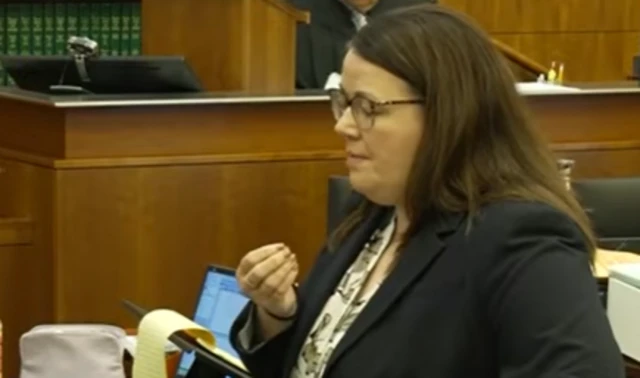
    A woman in glasses stands in a courtroom speaking to the juryImage source, AP
    Image caption,

    Jennifer Sprague

  16. Defence concludes closing argumentpublished at 16:09 BST

    Reddington says the prosecution has argued that Clancy was not happy being a mother and didn't want to live that life anymore so she planned to kill her kids and fake her own suicide.

    But, he says, we know what a mess her brain was in at the time.

    "'My brain is being damaged. I will never be better,'" he says, referencing messages Clancy sent.

    "That's the evidence."

    She is not guilty of killing her children because she was suffering from a disease, he argues, adding that the prosecution is not able to prove otherwise.

    And with that, his closing arguments end and the prosecution begins their own closing argument.

    We will continue to bring you live updates and you can watch proceedings in court via the link at the top of the page.

  17. Lawyer says message to mother shows Clancy's 'depths of despair'published at 16:01 BST

    Reddington shows the jury a poster board of a message Clancy sent her mother. It reads:

    "Mom will you please come up and stay with me for a bit I'm really sick. Something is wrong. I had horrible insomnia all night and I just don’t know how I'm going to get through the day. I started taking the medicine my doctor prescribed for anxiety and I think it made things worse. Its just really scary and I don’t want to be alone."

    Reddington says it shows the "depths of despair that this young kid was in, trying to raise three kids, trying to be a wife, trying to go back to work".

    Speaking about the prosecution's argument that Clancy intentionally sent her husband away so that she could commit the murders, including googling how long he would be gone, he calls it "not true".

    "She didn't want him out the house long, she was in distress, she wanted him home to help with the kids," Reddington says.

    He says she also looked into a constipation medication for one of the children. "Why would she do that?" he asks the jury.

  18. Clancy's journals track children's schedules and her declining mental state, lawyer sayspublished at 15:58 BST

    Reddington says the prosecutors have painted a picture of the defendant as "hard", "manipulating" and "controlling".

    He argues that Clancy's neurotic behaviours were evidence of her declining mental state.

    The jury is shown Clancy's journals, one of which contains detailed schedules for her children's mealtimes, naptimes and bedtimes.

    A separate journal contains accounts of her mental state. Here, Reddington says, she repeatedly wrote that she was having “horrible, intrusive thoughts” and “no motivation”.

    Clancy's handwriting devolved into "chicken scratch" as her mental state got worse, her lawyer says.

  19. Defence says prosecution is attacking Clancy, as a womanpublished at 15:56 BST

    Ana Faguy
    US Reporter

    We are hearing impassioned closing remarks from Kevin Reddington - like we have for the past few weeks - about Clancy and the killings.

    One point we're seeing Reddington centre in on is the personal attacks he says the prosecution has made about Clancy as an individual and a mother. He says they are attacking her personal character.

    He accuses the prosecution of "manipulation" when they talked about Clancy going to a place called the Kingsbury Club which Reddington says is just a swimming pool.

    Another point Reddington hones in on is how serious Clancy's suicide attempt was.

    He talks about how the prosecution tried to play that down but he details how difficult her recovery was and how ill the attempt means she was.

    "She was reaching out for help and she's not getting it," Reddington says at one point.

    All the while, Reddington continues to stress to the jury that it's the prosecution's responsibility to prove criminal responsibility.