Summary

Media caption,
Watch: What we know about the US-Saudi nuclear deal
  1. US signs landmark nuclear deal with Saudi Arabiapublished at 00:52 BST 23 July

    The US and Saudi Arabia have signed a deal that will reportedly allow the Gulf kingdom to develop a civilian nuclear programme.

    The exact details of the deal have not yet been shared and it must still be reviewed by Congress.

    What we do know from the joint statement issued by the US energy secretary and the Saudi energy minister is that it will be a decades-long, multi-billion-dollar partnership that involves American companies and experts working alongside the Saudi nuclear energy programme. A "bilateral safeguards agreement" was also signed.

    Earlier reports in US media suggested that, after undertaking a joint study with the US, Saudi Arabia may be allowed to enrich uranium on its soil to produce fuel at a US-built enrichment facility, instead of relying on imported fuel.

    Experts have told the BBC it could take at least a decade for Saudi Arabia to bring a nuclear power plant online.

    And some critics have voiced concerns that this deal could pave the way for Saudi Arabia to build its own nuclear weapons.

    We're closing our live coverage now. You can read more about the landmark nuclear deal here.

  2. Analysis

    Highly transactional relationships are part of global order under Trumppublished at 00:26 BST 23 July

    Tom Bateman
    US State Department correspondent

    President Donald Trump and his administration's foreign policy is based on self interest more than any desire to build an international system of values and its nuclear deal with Saudi Arabia should be seen in that context.

    Washington’s relationship with the Kingdom has traditionally been weighed against America's broader policy goals for the region. Saudi Arabia has long wanted American expertise and backing for a civilian nuclear programme as well as military equipment and a security pact.

    In return, Washington had a single major demand: recognise Israel, their key ally, and normalise diplomatic and economic relations. Saudi Arabia's long-standing policy is that it would recognise Israel only when it ended its military occupation of the Palestinian territories, allowing self-determination and an independent state.

    Over the years, Saudi Arabia eventually lowered its price, severing the link between its readiness to recognise Israel and its demand for the two state solution.

    The Biden administration was ready to do this deal by summer 2023. But the October 7 Hamas attacks and Israel's war on Gaza smashed any prospect of this.

    Trump's readiness to drop the Palestinians and Israelis, at least as far as the nuclear file is concerned, shows how far Washington’s position has evolved.

    Bilateral, highly transactional relations are the global order of the day under Trump. Alongside the US war with Iran, all this is further re-ordering the Middle East leaving its states and peoples even more suspicious and concerned for their security.

  3. US lawmaker calls deal a 'consequential mistake'published at 00:00 BST 23 July

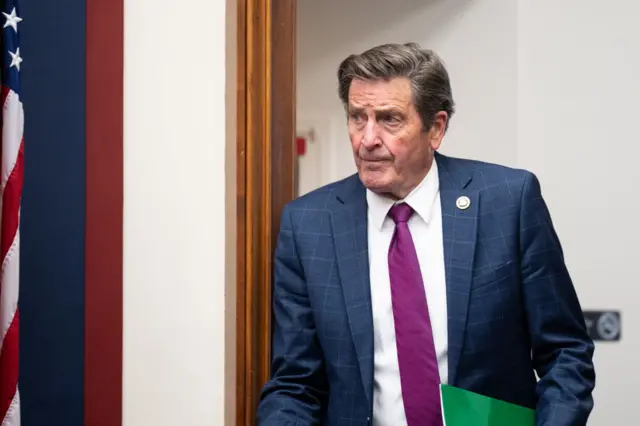
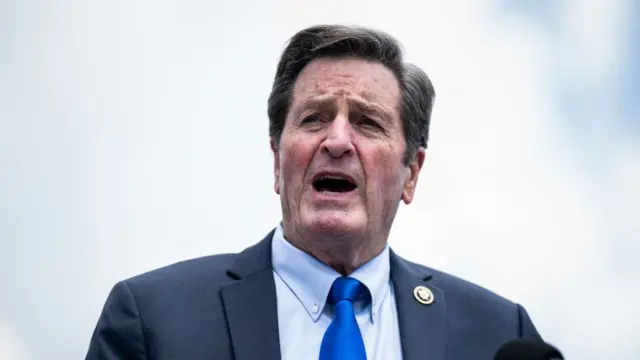
    Democratic US Rep John Garamendi of CaliforniaImage source, Getty Images
    Image caption,

    Democratic US Rep John Garamendi of California, pictured in 2024

    US congressman John Garamendi called today's deal a "consequential mistake", criticising the Trump administration for "leaving open the possibility that Saudi Arabia could build a nuclear weapons program".

    The Democrat, a senior member of the House Armed Services Committee, said in a statement that the agreement opens the door to providing Saudi Arabia with most sensitive nuclear technologies without requiring the most stringent safeguards.

    “The last thing the world needs is more nuclear weapons," he said. "And yet, today’s deal takes us one step closer to creating a terrifying world of further nuclear proliferation and an arm’s race in the Middle East."

    Garamendi, who is co-chair of the bicameral Nuclear Weapons and Arms Control Working Group, added, "We need less nuclear weapons, not more."

  4. Saudi Arabia says deal will lead to cooperation on nuclear security, safety and non-proliferationpublished at 23:22 BST 22 July

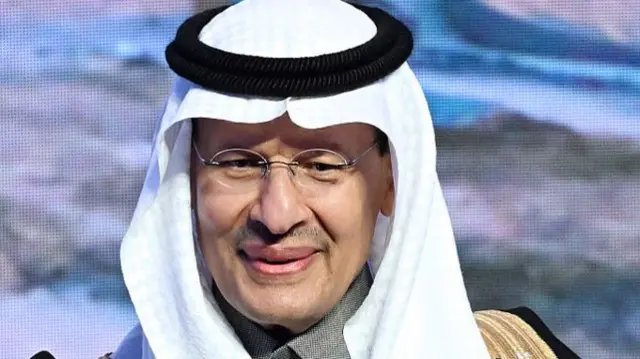
    Saudi Arabia's Minister of Energy Prince Abdulaziz bin Salman al-Saud speaks during the Kuwait Oil and Gas Show at Sheikh Jaber al-Ahmad cultural centre, in Kuwait City on February 3, 2026Image source, Getty Images
    Image caption,

    Saudi Arabia's Minister of Energy Prince Abdulaziz bin Salman al-Saud

    The Saudi Arabian government says in a statement that it has signed the agreement, finalising negotiations over the peaceful uses of nuclear energy.

    The agreement was signed by His Royal Highness Prince Abdulaziz bin Salman al-Saud, who serves as the Minister of Energy and as the Minister of Industry and Mineral Resources, and US Secretary of Energy Chris Wright.

    The deal will contribute to developing joint cooperation regarding nuclear security, safety and non-proliferation, Saudi Arabia says, adding that it reflects the shared vision of both countries to expand cooperation in the fields of energy and future technologies and support sustainable development.

  5. US firm Westinghouse reportedly involved in US-Saudi nuclear deal - CBSpublished at 22:57 BST 22 July

    US firm Westinghouse Electric Company will reportedly be one of the companies helping develop Saudi Arabia's nuclear sector following a potential deal with the US, according to CBS News, the BBC's US partner.

    When asked to confirm this, Westinghouse provided the BBC with the following statement from its CEO Dan Sumner:

    "The US Government’s announcement to launch a civil nuclear cooperation agreement with Saudi Arabia is a landmark step that strengthens energy security, expands opportunities for US industry and workers, and drives significant long-term economic growth and investment benefits for both countries."

  6. Analysis

    Critics in Congress don't appear to have the votes to block this dealpublished at 22:36 BST 22 July

    Daniel Bush
    Washington correspondent

    The deal has some short-term benefits for Saudi Arabia: closer ties to the US during a period of tension over the war in Iran, and a clear signal to the rest of the region that it remains a key power in the Middle East.

    For the US, the deal gives America a leg up in the competition with China and Russia to develop civilian nuclear infrastructure in the region.

    China had sought to reach a similar deal with Saudi Arabia. Russia has already built nuclear facilities in Egypt and Turkey.

    We've not seen the full detail yet, but Trump will face criticism at home if critics believe it has given Saudi Arabia access to nuclear technology without strict guardrails to prevent it from developing nuclear weapons down the line.

    The deal will likely face opposition in Congress, but it appears lawmakers don’t have the votes needed to block Trump from putting the agreement in place.

  7. Analysis

    This deal is a major victory for Saudi Arabiapublished at 22:32 BST 22 July

    Daniel Bush
    Washington correspondent

    The nuclear deal is a major victory for Saudi Arabia that has the potential to reshape power dynamics in the Middle East - though not immediately and perhaps not for several years, if not longer.

    Saudi Arabia has pushed for access to American nuclear technology since the George W Bush presidency.

    The effort intensified in recent years - led by Crown Prince Mohammed bin Salman, who has looked to diversify the kingdom’s economy while strengthening relations with the US under Trump.

    But it will likely take at least a decade for Saudi Arabia to bring civilian nuclear power plants online, according to energy experts.

    And while Israel and other critics have warned that the deal could pave the way for Saudi Arabia to develop nuclear weapons, analysts said if Saudi Arabia goes down that path it would also take years to make a military nuclear programme fully operational.

  8. Analysis

    Are fears Saudi could seek nuclear weapon justified?published at 22:26 BST 22 July

    Frank Gardner
    Security correspondent

    Will the Saudis now seek a nuclear bomb?

    No. At least, not as things stand today. But that is the fear that inevitably surrounds this deal. Iran enriched its own uranium and look what happened there.

    Deep below its desert mountains, out of sight of prying US satellites, the Islamic Republic went ahead and enriched 441kg of uranium to 60% purity, far beyond the 3.67% needed for civil nuclear power and only a short step away from the weapons-grade Highly Enriched Uranium (HEU) needed to build a bomb.

    That HEU is thought to be still down in the tunnels where it was bombed last year in the US Operation Midnight Hammer.

    There is nothing to suggest Saudi Arabia has any intention of doing the same as Iran, or of diverting its nascent civil nuclear programme towards a military purpose.

    But the Saudis live in a dangerous neighbourhood and if Iran were to acquire a nuclear weapon then they would want one of their own as a deterrent.

    Yet far more likely than going through the long, laborious and illegal process of enriching their uranium to 90% and then making that into a warhead they could, in theory, simply buy the bomb ‘off the shelf’ from their ally, Pakistan.

  9. Deal upholds 'highest standards' of nuclear safety - US energy secretarypublished at 22:01 BST 22 July

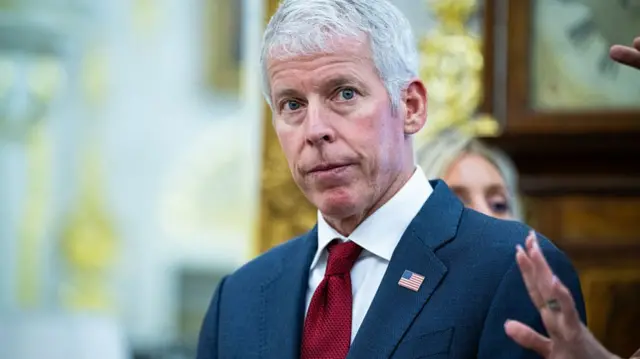
    Chris Wright, US energy secretary, in Oval office on Tuesday, July 14, 2026Image source, Getty Images

    US Energy Secretary Chris Wright says the two deals signed with Saudi Arabia uphold the "highest standards of nuclear safety and nonproliferation".

    "These agreements reflect our two nations' shared commitment to strengthening US-Saudi commercial relations, delivering prosperity at home and security to our allies abroad," he says in a statement released by the energy department.

    "Rest assured, these agreements uphold the highest standards of nuclear safety and nonproliferation, while relying on the world's best nuclear technology and scientists, designed right here in the United States.

    "Thanks to President Trump, the American nuclear renaissance is underway."

  10. Deal to provide 'great access' to Saudi nuclear energy programme for US firms - energy departmentpublished at 21:53 BST 22 July

    More now from the US Department of Energy announcement.

    It says the deals signed with Saudi Arabia lay the "legal foundation" for a "decades long, multi-billion dollar partnership".

    The department says a "peaceful nuclear co-operation agreement" will provide "great access" for US firms in the Saudi nuclear energy programme.

    The deal includes two agreements, it says, a "peaceful nuclear cooperation agreement" and a "bilateral safeguards agreement".

    It also says it will "reinforce global nonproliferation standards".

    "The agreement will now be transmitted to Congress for review," it adds.

  11. US and Saudi Arabia reach nuclear co-operation dealpublished at 21:44 BST 22 July
    Breaking

    The US has just announced a nuclear energy deal with Saudi Arabia.

    US Secretary of Energy Chris Wright and Saudi Minister of Energy His Royal Highness Prince Abdulaziz bin Salman signed a peaceful nuclear cooperation agreement alongside an accompanying bilateral safeguards agreement, the US Department of Energy says.

    We're reading through the announcement and will bring you more details shortly.

  12. A US deal for uranium enrichment within Saudi Arabia would be 'quite shocking' - expertpublished at 21:38 BST 22 July

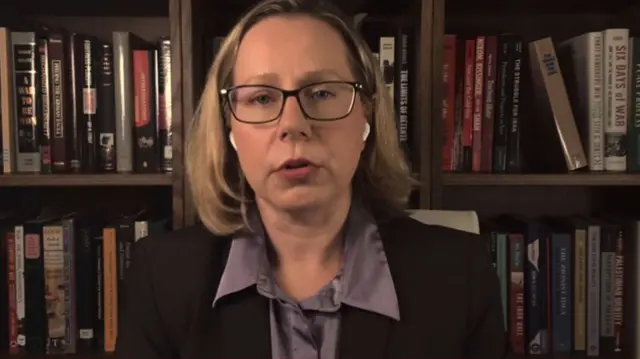
    Rosemary Kelanic is director of the Middle East Program at Defense Priorities think tank
    Image caption,

    Rosemary Kelanic is director of the Middle East programme at the US-based Defense Priorities think tank

    Middle East expert Rosemary Kelanic says it's "quite shocking" that the US is potentially signing a deal that will allow Saudi Arabia to have facilities to enrich uranium.

    She references reported details of the deal, including the prospects that it may contain "potential co-operation" in building uranium enrichment facilities within Saudi territory.

    "The US has never done that before, we have never helped another country enrich on their own soil," she tells the BBC.

    She says the reason for this is that "if you can produce your own nuclear fuel, you become a much bigger risk" for building nuclear weapons.

    A reminder: The deal has not been officially announced and any precise details are not yet confirmed, but there have been mutliple reports in US media about what it contains.

  13. Saudi nuclear deal 'not a great risk' to US - former Bush adviserpublished at 21:35 BST 22 July

    Bob McNally, President - Rapidan Energy Group during a Plenary Session 3: Energy Security, Reliability and Resilience of Supply and During the Transition, on the third day of the 24th World Petroleum Congress, on September 18, 2023Image source, Getty Images
    Image caption,

    Bob McNally, president of Rapidan Energy Group, was previously a member of George W Bush's National Security Council

    Energy sector expert Bob McNally says it is "always a win" when a "major country" like Saudi Arabia choses to partner with the US to develop its nuclear sector.

    The world needs "reliable, always on, ideally emissions-free" energy, especially in the "AI era", says McNally, who is also a former member of George W Bush's National Security Council.

    He's asked if there are security risks in helping a country on the other side of the world develop nuclear capabilities, and McNally tells the BBC: "I don’t think it’s a great one."

    "I think we have a good record of working with countries to responsibility develop their nuclear sectors," he adds.

    "I’m much more concerned about a regime like Tehran obtaining nuclear weapons… than I would be about the UAE or Saudi Arabia, responsible and friendly allies."

  14. Analysis

    Saudi-US deal different to US's typical nuclear energy agreementspublished at 20:59 BST 22 July

    Gary O'Donoghue
    Chief North America correspondent

    This looks set to be a 30-year deal between the US and Saudi Arabia, to build civil nuclear capacity, potentially bringing in tens of billions of dollars for US firms.

    But it's a different kind of deal to traditional US commercial nuclear agreements.

    What is being widely reported is that Saudi Arabia might not be subject to the normal "gold standards" the US has previously demanded of partner countries in terms of inspections and, in particular, the non-enrichment of uranium on the host country's soil.

    So, this is a different kind of deal that the US is proposing, and the reason they are pushing for it - particularly now - is that Russia and China have been knocking on the door and the US simply did not want to miss out.

    It's a deal that’s been in the offing for some time - the Biden administration had pursued something similar; though that deal had been tied to Saudi Arabia normalising relations with Israel.

    That link seems now to have been dropped by the Trump White House.

    There's been no formal announcement yet, but when it comes, expect Israel to express its displeasure.

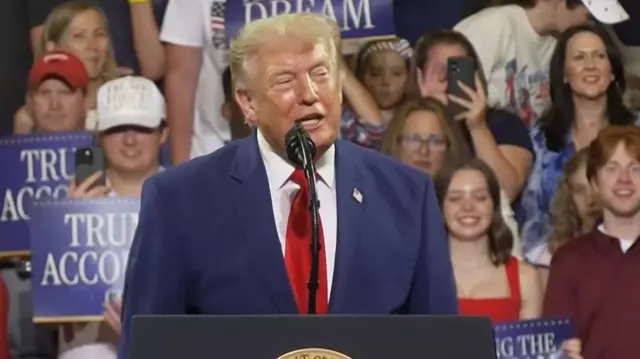
  15. US President Donald Trump speaking at unrelated eventpublished at 20:36 BST 22 July

    Headshot of Trump with lots of kids smiling behind himImage source, Reuters

    US President Donald Trump has just started speaking at a high school in Atlanta, Georgia.

    We're listening in to see if he is speaks about the reported US-Saudi Arabia nuclear deal, and will bring you any relevant updates.

  16. US-Saudi nuclear deal still expected but no official confirmation yetpublished at 20:28 BST 22 July

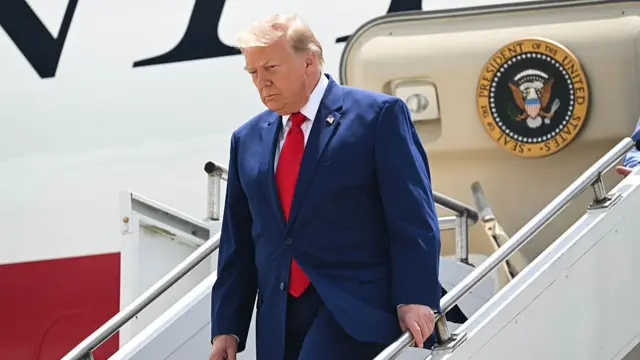
    S President Donald Trump disembarks from Air Force One upon arrival at Dobbins Air Reserve Base in Marietta, Georgia, July 22, 2026. Trump is travelling to Wheeler High School in Marietta, Georgia, to deliver remarksImage source, Getty Images
    Image caption,

    Trump attended Dover Air Force Base in Delaware earlier, before an appearance at a Georgia high school, this evening

    If you're just joining us, we're still expecting the US and Saudi Arabia to announce an nuclear power deal.

    US media has reported that the two countries have reached a commercial agreement for US companies to run nuclear power plants on Saudi Arabian soil, but we've not had anything yet on the matter from President Trump or Saudi officials.

    Reports suggest the deal will potentially allow Saudi Arabia to enrich uranium itself.

    It would be the latest milestone in a Saudi-US negotiations on nuclear that have been ongoing ever since the two nations signed an memorandum of understanding in 2008.

    Back in the US, Democrat representative John Garamendi described the deal as "terrible, terrible policy", while Republican Marlin Stutzman said he had no "initial" concerns over the agreement.

    The highly controversial agreement will need to be debated in congress but opponents are unlikely to be able to gather enough votes to defeat Trump's initiative, our North America editor Sarah Smith writes.

    We expect Trump to soon be speaking at a high school in Atlanta, Georgia, for an unrelated event, but we will bring you any relevant lines.

    Stick with us, and we'll provide updates on any breaking news as soon as it occurs.

  17. The war in the Middle East and Iran's nuclear programme: A reminderpublished at 20:06 BST 22 July

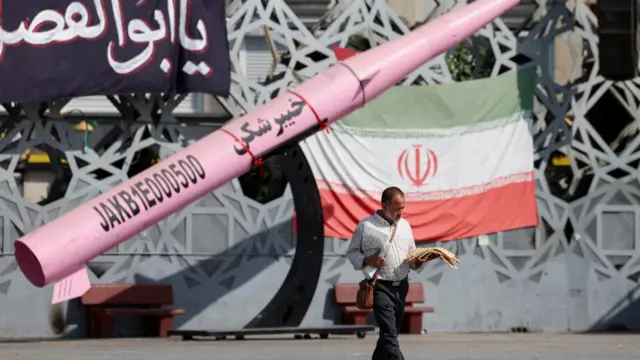
    A man walks next to a symbolic mockup of an Iranian missile and an Iranian flag at Imam Hussein Square in Tehran, reading a newspaper and looking downImage source, Reuters

    Nuclear is one of the key issues at stake between the US and Iran in the ongoing conflict in the Middle East.

    At the end of February, in the midst of ongoing US-Iran nuclear talks, the US and Israel launched a bombing campaign on Tehran, which responded by launching missiles and drones to American Gulf allies.

    The conflict resulted in Iran effectively closing the Strait of Hormuz, one of the world's busiest oil shipping channels, and the US blockading Iranian ports.

    US President Donald Trump has repeatedly said the US is seeking to destroy Iran's ballistic missile capabilities and its ability to develop nuclear weapons - Iran has consistently maintained its nuclear activities are entirely peaceful.

    The two countries signed a Memorandum of Understanding in June to halt military operations and reopen the Strait of Hormuz, including a commitment from both sides to further talks to reach a final agreement and a promise from Iran that it "shall not procure or develop nuclear weapons".

    But three weeks after it was signed, Trump declared the ceasefire "over" and the countries have since been exchanging strikes again.

    Today the president threatened that the US would destroy Iran's bridges and power plants if attacks on Hormuz persist while Tehran warned the US against targeting its nuclear facilities.

  18. Israel 'can manage' Saudi having nuclear power for peaceful purposes - ministerpublished at 19:38 BST 22 July

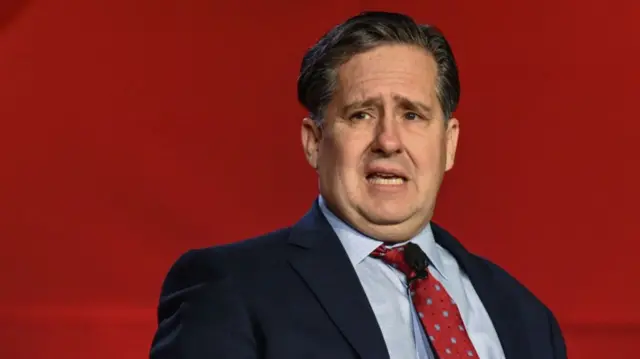
    Nir Barkat, Israel’s minister of economy, says Israel "can manage it" if Saudi Arabia has nuclear power for peaceful means.

    "If they want it for peaceful purposes - we can manage it. The Americans do not want to endanger Israel. Netanyahu and Trump know how to maneuver without taking risks," he tells Israeli military radio.

    Israeli heritage minister Amichay Eliyahu says Israel will do "as much as [it] can" to ensure no Middle Eastern country develops a nuclear weapon.

    "Saudi Arabia today is in a good direction, [but] tomorrow it could reverse on us," Eliyahu tells Israeli public broadcaster Kan.

    But former Israeli defence and foreign minister, Avigor Liberman, is urging the Israeli government to "act decisively" to halt the deal.

    "Saudi Arabia’s civilian nuclear program will ultimately result in nuclear weapons," Liberman wrote on X earlier today, adding that this would lead to a "mad arms race throughout the entire Middle East."

    For context: Israel is widely believed to have nuclear weapons, but it neither confirms nor denies whether this is the case.

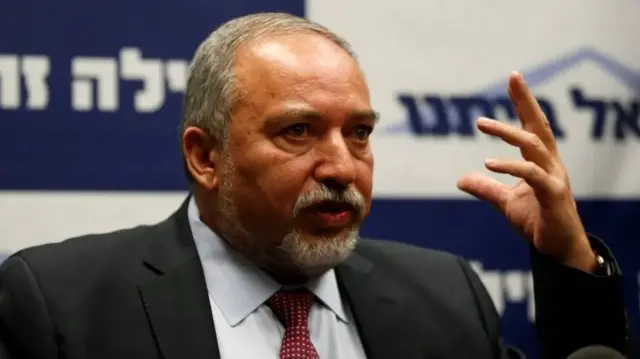
    Avigor Liberman in a suit holding up his left hand and looking to the rightImage source, Reuters
    Image caption,

    Former Israeli defence minister Avigor Liberman says Saudi Arabia's nuclear programme will lead to nuclear weapons

  19. Saudi Arabia has 'genuine need' for nuclear power - former British ambassadorpublished at 19:16 BST 22 July

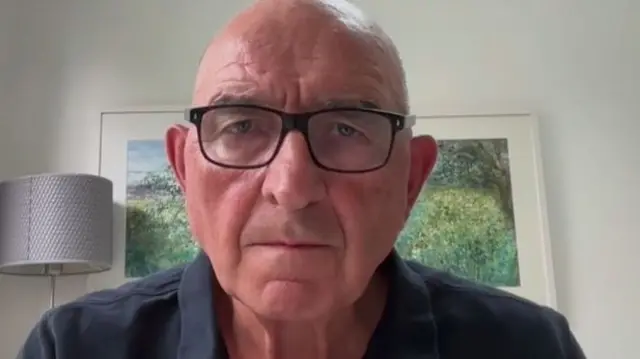
    Headshot of Patey who looks into the camera

    William Patey, former British ambassador to Saudi Arabia, says he thinks Saudi Arabia is not interested in nuclear weapons unless "Iran was to acquire them".

    Speaking to BBC News, he says the country has been clear "over the years" that were Iran to get nuclear weapons, it would "seek to do the same".

    "They have a genuine need for civilian nuclear power," he says, adding that Saudi Arabia uses a "tremendous" amount of its own oil and gas to generate electricity and they are seeking to reduce this dependence.

    "The US is their preferred source" for this nuclear technology, he adds.

    America appears to have "conceded quite a bit", Patey says, referencing reports the US could allow for the Saudis to enrich uranium themselves.

    Patey says he is not sure why any such concessions would have been made, but speculates it may be a commercial choice as the Saudi's could cut a deal with China or other countries instead.

  20. 'Terrible policy': Democratic lawmakers criticise dealpublished at 18:44 BST 22 July

    A file photo of Garamendi speakingImage source, The Washington Post via Getty Images
    Image caption,

    Democrat John Garamendi

    Brad Sherman, Democrat representative from California, says the US should only approve a deal if it has the the "same gold-standard safeguards as our deal with the UAE".

    Under that deal in 2009, the UAE does not produce its own uranium.

    "A President waging war to prevent nuclear proliferation in the Middle East should not facilitate proliferation just because US companies stand to make a profit," Sherman writes on X.

    Republican representative Marlin Stutzman tells CNN that he has no "initial" concerns with the agreement, but would want to "hear more intelligence".

    "You know, the Saudis are really the stable balance in the Middle East", he says, describing Saudi Crown Prince Mohammed bin Salmana a "friend" of the West and America.

    Also speaking to CNN, Democrat John Garamendi describes the deal as "terrible, terrible policy", adding that "we should never, ever do this".

    "Enriched uranium can be made into a nuclear weapon. This is really, really bad, bad policy," he says.