Summary

  • Keir Starmer says under-16s will be banned from social media by spring 2027 - key points from the announcement

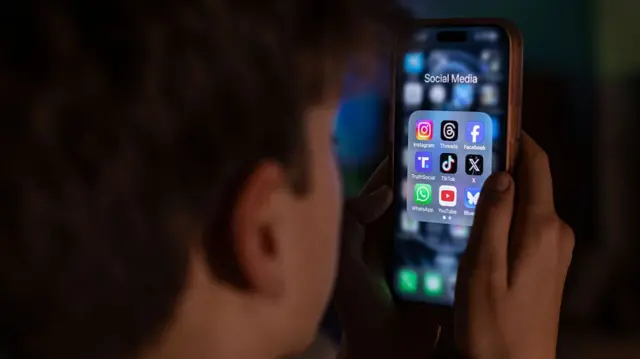
  • Snapchat, TikTok, YouTube, Instagram, Facebook and X are among the platforms affected - but not WhatsApp or Signal, the government says

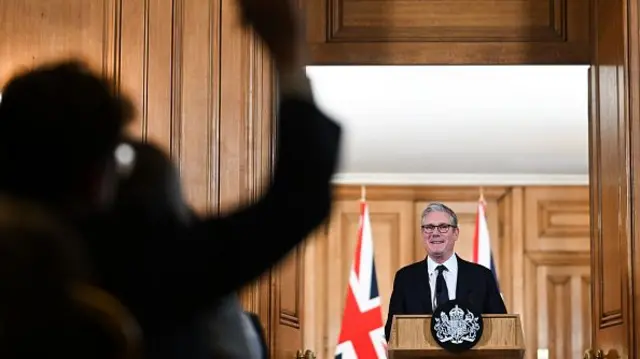
  • "A full ban is the right choice... I am not prepared to compromise on the safety and happiness of our children," Starmer says in a televised statement

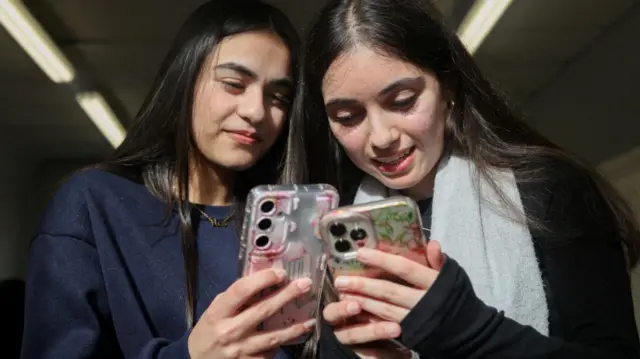
  • At a school in Wythenshawe, Manchester, Year 8 and 9 pupils have their say on social media: Sean, 13, says "it's a bad place" while Isaac, also 13, says he's "disappointed" ministers opted for a ban instead of trying to make platforms "safer"

  • Meanwhile, Louise Gibson, the mother of 11-year-old Noah who is alleged to have died after attempting an online challenge, says "this is right for children and it's right for parents" - here's what other bereaved families told the BBC

  • In Australia, which became the first country in the world to introduce a similar ban in December, our reporter says little has changed and teenagers are bypassing age restriction systems

  1. 'Better the government does something than nothing', but ban gets mixed reaction from schoolchildrenpublished at 12:43 BST

  2. Age checks an 'enormous privacy intrusion', says campaign grouppublished at 12:34 BST

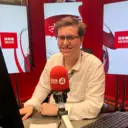
    A photo of Silkie Carlo speaking to her webcam in an office room

    Campaign group Big Brother Watch has raised privacy concerns about the ban, saying any age verification on platforms will "incur an enormous privacy intrusion".

    Director Silkie Carlo tells BBC News that checks will mean "anonymity is dead for the whole of the British public" - and that checks that require bank details, face scans, or identification are "really intrusive methods".

    "Effectively social media sites will become digital ID checkpoints," Carlo claims.

    She also claims it is "risky" to teach children to send photos of themselves for age verification checks when companies ask them to, and that rather the focus should be on teaching "healthy behaviours" online.

  3. Age verification for 16-year-olds - how will it work?published at 12:23 BST

    Graham Fraser
    Technology reporter

    Credit card checks, email-based age estimation and facial-age estimation. Just some of the methods of age verification which were suggested when the Online Safety Act determined that over 18s would have to prove their age to access adult material, including pornography.

    So how could it work for someone trying to prove they are over the age 16? The government said Ofcom will set this out in the coming months.

    What could be included? Iain Corby is from the Age Verification Providers Association, the trade body of companies who provide ways to prove your age.

    “Establishing a minimum age of 16 presents additional challenges because some younger people have fewer sources of authoritative age data available to them than adults.

    “Fewer minors hold passports, for example. However, other sources of age evidence are available, including bank accounts, electoral registration records and provisional driving licences.”

    The minimum voting age is already 16 for local council elections in Scotland and Wales, as well as elections to the Scottish Parliament and the Senedd.

    Legislation to allow 16 and 17-year-olds across the UK to vote at the next general election is currently going through Parliament.

  4. Greens say blanket ban could leave some people more isolatedpublished at 12:17 BST

    The Green Party has responded to the social media ban by saying that "stronger safeguards are clearly needed" for mental health and online safety, but highlights the risk of "potentially more dangerous platforms setting up".

    In a statement, the Greens reference warnings from groups such as the NSPCC and the Molly Rose Foundation that a blanket ban “could leave some young people, particularly disabled and LGBTQIA people, more isolated and cut off from support”.

    The party wants to see more investment in youth services and creative activities for young people “to fill the void that will be created by this ban”.

    It says “social media companies that profit from addictive algorithms targeted at children must not be let off the hook” and that their owners must be held accountable.

  5. Under-16 social media ban announced, as PM says he won't compromise on child safetypublished at 12:10 BST

    Katie Williams
    Live reporter

    Under-16s will be banned from social media platforms as soon as spring 2027, Keir Starmer announced this morning.

    Platforms like Snapchat, TikTok, YouTube, Instagram, Facebook and X are in scope, while messaging services like WhatsApp are not - here's a summary of key changes.

    The PM says he will not compromise on the "safety and happiness of our children", accusing platforms of being "designed to be addictive" with features that "lock you in for hours".

    Australia was the first country in the world to introduce a similar ban last December - Starmer says the government has learned from Australia and calls new UK measures "world leading".

    Australian PM Anthony Albanese congratulated the PM on an "important step".

    But six months on from the Australian ban, BBC reporter Tiffanie Turnbull says implementing it remains "incredibly difficult" with 70% of parents in a recent survey saying their children were still on banned platforms.

    YouTube, Meta and Snapchat have responded saying the ban could push young people towards "less safe" platforms.

    "If that's the best they've got, then I think they're in trouble," says bereaved father Mark Dowey in response.

  6. Analysis

    Starmer's delicate balancing actpublished at 11:58 BST

    Zoe Kleinman
    Technology editor

    On the one hand the prime minister must be tough on the tech giants and force them to comply with a ban on their own products.

    On the other, he continues to promote the UK as a great place for the tech and AI industry to grow and thrive - and spend money.

    The same US tech companies under the shadow of the ban have invested millions of dollars in their UK operations. Is there a tipping point at which they decide to cut back on their British commitments?

    And there’s another challenge ahead, in the form of US president Donald Trump, who is fiercely protective of those same firms - Keir Starmer admitted that he has not yet discussed the announcement with his fiery counterpart and will do so at the G7, his next destination.

  7. Children must be given more opportunities offline, says culture secretarypublished at 11:46 BST

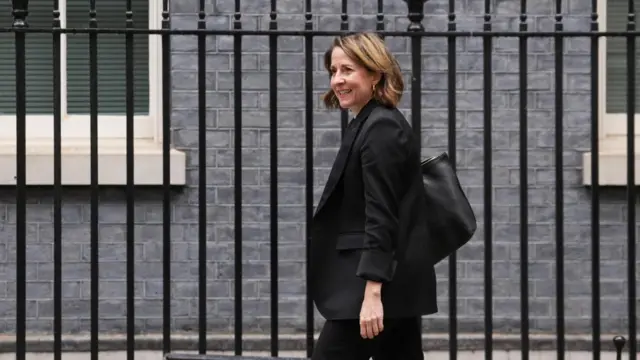
    Culture Secretary Lisa Nandy pictured outside Downing Street wearing black macintosh jacket earlier this yearImage source, EPA
    Image caption,

    Culture Secretary Lisa Nandy pictured earlier this year

    Culture Secretary Lisa Nandy says keeping children safe online "must go hand in hand with giving them more opportunities offline".

    Writing on X, she says the government is "investing in sport, music, culture and the arts" to give young people "the confidence and connections to thrive".

    It follows similar comments from PM Keir Starmer earlier, who said the social media ban "isn't just about taking something away".

  8. How are 8- to 14-year-olds spending time online? Ofcom data offers some insightpublished at 11:38 BST

    Children in the UK aged eight to 14 are online for an average of nearly three hours each day, at least two hours of which are spent using types of social media, survey data suggests.

    Media regulator Ofcom has been drilling down on the figures, external and has found that YouTube accounts for the largest share of time spent online by young people in the eight to 14 age group, at 23%.

    Snapchat is responsible for 18% of time online, with WhatsApp on 9%, TikTok accounting for 7%, Roblox also for 7% and other platforms accounting for 36%.

    The use of these services varies according to age, Ofcom found. It says it is ready to work with the government to help “"build on this progress with new measures to protect children".

    In its survey, Ofcom found that the youngest age group, eight to nine-year-olds, are likely to spend an average of 53 minutes each day using YouTube (45% of time online) and 10 to 12-year-olds spend 55 minutes (31%), but among 13 to 14-year-olds the average drops to 31 minutes (13%).

    The opposite pattern is true for Snapchat, which accounts for six minutes of time online spent by eight to nine-year-olds (5% of the total), rising to 36 minutes for 10 to 12-year-olds (20%) and one hour and 37 minutes for 13 to 14-year-olds (40%).

    And use of TikTok increases gradually, from an average of six minutes a day among eight to nine-year-olds (5% of time online) to 17 minutes for 10 to 12-year-olds (9%) and 21 minutes for 13 to 14-year-olds (9%).

  9. Teaching unions welcome ban after 'routinely seeing harm'published at 11:28 BST

    Nathan Standley
    Education reporter

    Support for the ban is coming in from the biggest teaching unions across the country. The general secretary for the Association of School and College Leaders, Pepe Di'Iasio says teachers "routinely see the harm caused" by social media platforms.

    He says Monday mornings are a time when teachers are "managing the aftermath of whatever has happened at the weekend".

    The National Education Union says teachers see "every day how social media is harming children - disrupting their learning, isolating them and exposing them to content they are simply not ready for".

    Similarly, the NASUWT says pupils' "wellbeing, behaviour and ability to learn" are all impacted by some of the more harmful aspects of social media.

    The National Association of Head Teachers says "a much wider package of measures" will be needed to properly address the risks posed by social media and the wider online world.

    They've welcomed the government's commitment to take action on gaming and streaming platforms too, saying a focus on social media alone "would risk letting [tech companies] off the hook".

  10. What happens next - and do you need to do anything?published at 11:20 BST

    Boy looks at mobile phone with orange case.Image source, Getty Images

    The under-16 ban announced this morning could kick in as early as next spring - we've taken a closer look at the implications for social media users between now and then.

    What do I need to do now?

    Nothing. The government says it will provide further details to families and children ahead of the changes in 2027.

    Will adults need to verify age?

    Most won't, according to the government, because:

    • Their account has already been open 16 years
    • They have a credit card connected to it
    • It's linked to an email that's age-verified in other ways
    • Or they've already done verification checks under the existing Online Safety Act

    How will age verification work?

    For those that do need to verify their age, it could be as simple as a facial recognition check. Ofcom will set out different options that are "accurate, robust, reliable, and fair" in the coming months, the government says.

  11. Meta says social media bans 'risk isolating teens from online communities'published at 11:17 BST

    A spokesperson for Facebook and Instagram-owner Meta says they don't think a ban will achieve the goal of keeping teens safe online.

    "As we've seen in Australia, bans risk isolating teens from online communities and information, and driving them to unregulated alternatives that lack built-in protections and parental controls," the spokesperson says.

    They add that restrictions should be "underpinned by an age verification system on devices" so that people aren't asked to "hand over ID to dozens of individual services".

    The company says it "share[s] the goal of keeping teens safe online", adding that its teen accounts automatically limit who can contact children and the content they see.

  12. Did Australia's under-16s social media ban work?published at 11:15 BST

    Three months after the social media ban came into effect, the BBC visited a school in Sydney to see how it was going.

    A hint: not quite as expected.

    Hit play below to hear what students had to say.

    Media caption,

    Did Australia's under-16s social media ban work?

  13. Australia thrilled - and relieved - to have an ally in social media crackdownpublished at 11:11 BST

    Tiffanie Turnbull
    BBC News

    Keir Starmer has made no secret of the fact his social media ban policy has been inspired by Australia's, which started in December.

    And Australia has been loudly advocating for other countries to follow in its footsteps.

    Having a bigger ally like the UK at its side strengthens Australia's position - and prime minister Anthony Albanese said as much when congratulating Keir Starmer on his announcement.

    "Social media giants operate across borders. By standing together, we can do more to hold them accountable and keep children safe online," he said on X.

    It may give Australia an extra degree of protection should the White House take issue with the ban's impact on the powerful US social media firms which oppose it.

    But Canberra will also be undoubtedly thrilled at the UK's announcement as it gives their policy an aura of success - when in reality the effectiveness of it is still unclear and the roll out has so far been chequered at best.

    Safety in numbers, as they say.

  14. Ban should extend to 18, says children's commissionerpublished at 11:07 BST

    England’s children’s commissioner has said a social media ban should be extended to all children – including those up to the age of 18 rather than stopping at 16.

    Dame Rachel de Souza said while the ban is “positive”, the debate must be reset “from banning children to banning the companies who fail to show that their services protect children’s safety and wellbeing”.

    She said today’s announcement was "positive" but the measures are only as strong as their enforcement, which she added she would be "watching closely."

    She said that any online service using harmful features - including gaming and other platforms - should be banned from being accessed by under-18s unless they can prove it's safe.

    “This is a decision that will define childhood – we must listen to young people and put their interests first. Children tell me that digital spaces are where they learn, connect and find community.

    “But they want an end to the harms: addictive design that keeps them scrolling, the explicit content they wish they’d never seen, and the strangers who should never be able to contact them.”

  15. From 'I'm not in North Korea' to 'brilliant' - mixed reactions to the banpublished at 11:02 BST

    Callers to Nicky Campbell's BBC Radio 5 Live have been reacting to the ban announcement.

    Max in Glasgow, 17, says the ban is "harmful" as he is in a band and says it will cause a decline in young bands being visible on social media and able to share music. He also says it removes another career path: "I was thinking about people being an influencer, the perks of that is that you can start at any age but now there will be less of that."

    Chris in Glasgow, father of two says he's "thankful" to hear the ban announced and feels like young people have been let down by the adults who haven't protected them. "This is a start for the government and there will be problems but it's about the change in culture."

    Stuart in Atherstone says, "I don't agree social media is the best thing on Earth, but equally as a parent I feel that I can make that decision myself. I don't need Keir Starmer to tell me... That's my choice, I'm not in North Korea."

    Manuel in London says: "This is such brilliant news this morning. It's not our children's fault and it's our responsibility to take care of this. When I speak to children in assemblies I do emphasise that they shouldn't be on social media for hours and hours scrolling through it. But we are the grownups and we have to make the decisions."

    Chinju in London, dad of two young girls, used to live in the US, and thinks the rest of the world should also introduce a ban. "I think the data here is infallible and I think these platforms are programmed by the best computer scientists in the world to keep them addicted and keep them coming back to the app. Engagement is the name of the game, that's what drives their profit books, safety is not."

  16. We want to hear from youpublished at 10:57 BST

    Purple BBC Your Voice banner with wording in white font on top of purple background with darker purple paint brush strokes

    We've been receiving your questions throughout this morning following the government's announcement of a social media ban for under 16s.

    How are teenagers meant to keep up with friends? It's not commonplace to have someone's number, we rely on social media to talk to our friends, asks Honey.

    Another person, who didn't want to share their name, asks: Will parents be fined if they do not do effective monitoring?

    Have a question? You can get in touch in the following ways:

    Please read ourterms & conditions andprivacy policy.

    In some cases a selection of your comments and questions will be published, displaying your name and location as you provide it unless you state otherwise. Your contact details will never be published.

  17. How will the government enforce the social media ban?published at 10:54 BST

    Liv McMahon
    Technology reporter

    The government says "highly effective age assurance" will be used to enforce its social media ban – something that firms typically use to accurately estimate or verify someone’s age, such as by using face scans or asking for ID.

    The regulator Ofcom will carry out a rapid study to identify the best ways to verify if someone is over 16, it adds.

    Some platforms, including porn sites, must already carry out similar checks to stop children accessing adult material in the UK.

    But such requirements have been criticised by civil and digital rights campaigners, who warn making people hand over ID or biometric data can put their privacy or security at risk.

    Concerns have also previously been raised about tools such as virtual private networks (VPNs) being used to circumvent UK blocks, and these will no doubt emerge again here.

    The prime minister seems well aware, though, that some teens will try to get around social media blocks.

    "We don’t say ‘oh look a teenager managed to get a drink somehow so let’s not bother banning alcohol sales to children'", he said earlier.

    "Laws are rules. But they’re also an expression of our values," he added.

  18. Ban is not proportionate, effective or enforceable - children's commissioner for Scotlandpublished at 10:48 BST

    Graham Fraser
    Technology reporter

    The children’s commissioner for Scotland has joined their equivalent in Wales by stating the social media ban for under 16s is not the answer.

    Nicola Killean said she was "disappointed" by the prime minister’s speech, which "spoke to adults only, not to the children and young people who will be most affected by these decisions".

    Killean added the ban was not a "proportionate, effective, or enforceable way to protect children’s rights".

    "The available evidence does not currently show a blanket ban would make children safer online, and it may inadvertently push children to less regulated or riskier parts of the internet."

  19. BBC Verify

    Do nine in 10 parents support a ban on social media for under-16s?published at 10:44 BST

    By Daniel Wainwright

    The government says “nine, external in 10 parents, external” support a social media ban for children under 16, citing responses to a consultation.

    But the figure does not mean 90% of all UK parents.

    It comes from the 9,499 parents and carers who chose to answer a government consultation question asking whether they supported a legal minimum age for social media access.

    Of those, 89% said yes.

    In a follow-up question to those who supported a minimum age, 88% strongly agreed it should be at least 16 while 8% somewhat agreed.

    The government’s own notes say the consultation, external was a “self-selecting sample” meaning it was open to anyone and reflects people motivated to respond rather than a representative national picture.

    Separate YouGov polling suggests broad support - but lower than the government’s headline figure: 77% of parents backed a ban.

    Parents were also split on whether it would work with 45% of those surveyed by YouGov saying it would be effective and 46% disagreeing.

  20. Ban could drive children to 'darker corners of the internet'published at 10:34 BST

    Emmet McElhatten
    BBC News Northern Ireland

    Jim Gamble, an older white man in a blue suit and white shirt speaking on stage.Image source, INEQE

    Jim Gamble, founding chief executive of the Child Exploitation and Online Protection Centre, says he does "not know any social media expert" who thinks "a blanket ban" is going to work.

    Gamble says the ban is "much more complex and nuanced than the prime minister is making out".

    Gamble tells BBC Radio Ulster Good Morning Ulster there are "easy workarounds" for young people set on staying on social media.

    "Many (Australians) bypassed restrictions using virtual private networks. They circumvented them by submitting fake IDs or altering their appearance to trick AI (artificial intelligence) age estimation," he adds.

    Gamble said the ban in Australia has driven young people to "darker corners" of the internet.

    "If you actually look at the statistics, it's a double-edged sword because the internet does as much good.

    "For isolated, alienated children, for children with neurodiversity, with children exploring different aspects of their young lives, it's a space and place where they can build positive networks."