

EXPLORE EPISODE FIVE - 24 to 21
Local Navigation

Bringing to life spectacles of natural wonder on our doorstep
No.22
Birds of prey
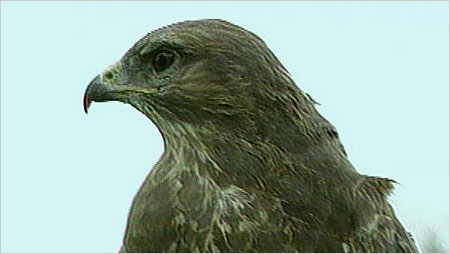
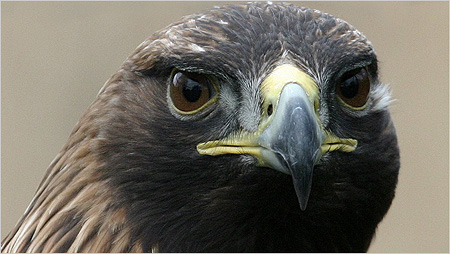
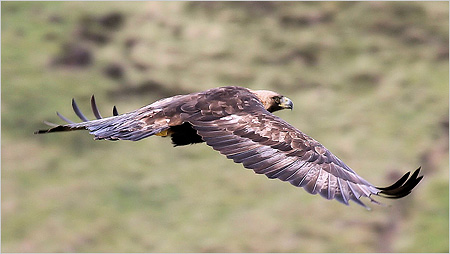
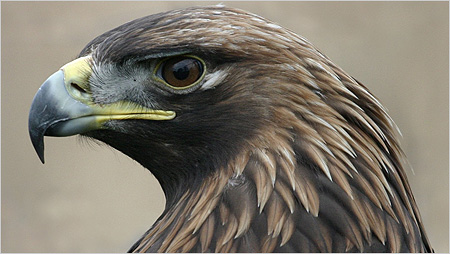
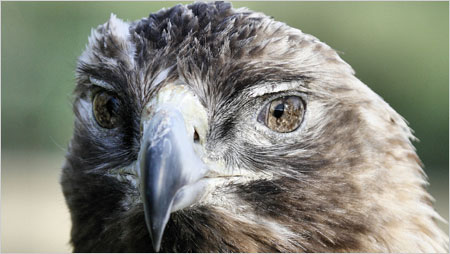
Birds of Prey, or raptors, cover a varied group of birds from the Golden Eagle (Aquila chrysaetos) to the Merlin (Falco columbarius). All birds of prey eat meat, many catch live prey but some feed on carrion. The largest Bird of Prey in the UK is the Sea Eagle (Haliaeetus albicilla).
Raptors have very good eyesight, sharp curved claws and hooked beaks.
The Golden Eagle has a seven foot wingspan and it’s claimed it has such good eyesight it can see a rabbit twitch two miles away. It flies majestically and can remain in the air for hours at a time just gliding - a master at using air currents and the wind. One flap of its wings can propel a Golden Eagle for miles. They mate for life.
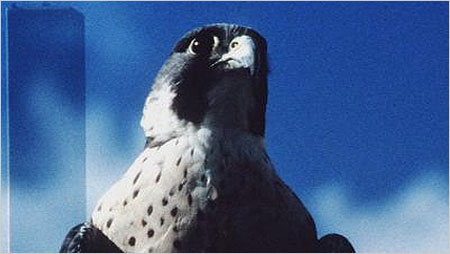
The Peregrine Falcon (Falco perigrinus) is the fastest animal on earth. Peregrines are reputed to reach speeds of up to 200 miles per hour when diving in a ‘stoop’, plummeting from the sky onto its prey. During the Second World War the British Air Ministry ordered that Peregrines should be destroyed because of the threat they posed to carrier pigeons. Six hundred were killed and hundreds of nests and eggs were destroyed.
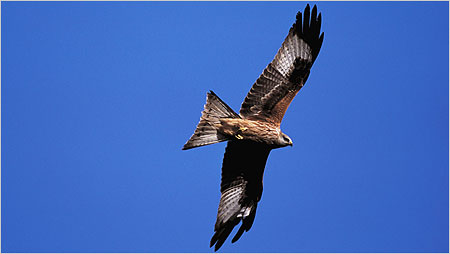
The Red Kite (Milvus milvus) is unmistakable with its deep v-shaped tail and reddish brown body. It was saved from extinction in the UK by a long running protection programme and has now been successfully re-introduced in a number of areas.
Find out more about Birds of Prey...
Weblinks
The BBC is not responsible for the content of external internet sites.
Photo gallery
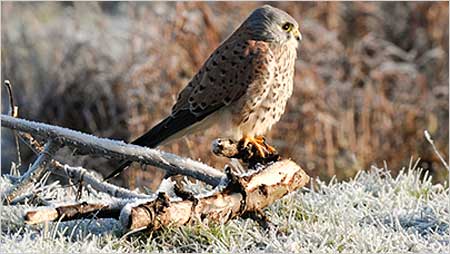
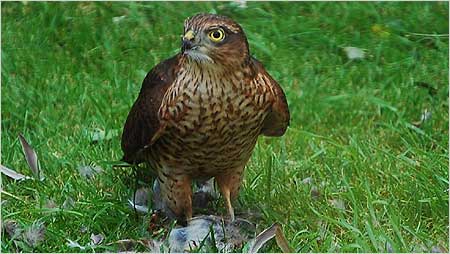
Watch and Listen
Janet Sumner experiences a Peregrine Falcon's impressive flying display including the high speed 'stoop':
Listen to the sound of various Birds of Prey on the RSPB website:
Listen to the Peregrine Falcon audio
Listen to the Golden Eagle audio
Help playing audio/video
Tips
Tips for viewing this species:
- Central England and central Scotland are two good places to see Red Kites. In the Chilterns, Argaty, and along the Galloway Kite Trail. They can also be seen in Rockingham Forest in the East Midlands, Yorkshire and North East England.
- Golden Eagles can be found on Skye and at Haweswater in the English Lake District..
- Peregrine falcons can been seen around the UK on rocky sea cliffs and uplands…for example at Malham Cove in North Yorkshire.
- Binoculars or a scope are useful to get a closer look at the birds.
Habitat
In the UK Golden Eagles are mainly found in Scotland. They nest in trees or on rock faces although they favour mountainous and moorland regions. There are about 30 pairs of Golden Eagles on Skye. The only place in England where the Golden Eagle nests is at Haweswater in the Lake District.
Peregrine Falcons are happy in a range of landscapes from open countryside to built up areas.
Red Kites were once quite common in the UK and could even be seen scavenging on the streets of London but they were driven to near extinction by the beginning of the 20th Century. Since 1989 young birds have been introduced from Europe to a number of locations and the number of birds is increasing. Gigrin Farm in mid-Wales has one of the UK’s largest populations of Red Kites.
Peregrines are most likely to be seen in the uplands of the north and west of the UK and rocky coasts. In the 20th Century they suffered from the effects of increased use of pesticides in agriculture but more control over chemicals and protected status have helped numbers to increase although the species is still at risk in much of Europe.
No. 24 - Parakeet roost
They're not native to this country but the RSPB estimates that there are about 30,000 ring necked pararkeets living in South East England.
Best places to see- London and South East England.
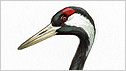
No. 23 - Common Crane
Find out about the only one of the world's 15 species of crane which has ever been native to Britain.
Best places to see - Norfolk and Suffolk.
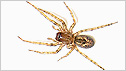
No. 21 - Arachnids
They're all poisonous and lots of people don't like them but spiders are fascinating... find out why!
Best places to see - UK-wide, in your own back garden!


Also on Nature's Top 40
BBC Nature & Wildlife
More from bbc.co.uk nature

BBC iD
BBC iDBBC navigation
BBC links

BBC © 2014The BBC is not responsible for the content of external sites. Read more.
This page is best viewed in an up-to-date web browser with style sheets (CSS) enabled. While you will be able to view the content of this page in your current browser, you will not be able to get the full visual experience. Please consider upgrading your browser software or enabling style sheets (CSS) if you are able to do so.
