

EXPLORE EPISODE THREE - 32 to 29
Local Navigation

Bringing to life spectacles of natural wonder on our doorstep
No.32
Rutting Goats
Goats aren’t native to Britain and Ireland but have been kept domestically for many years. There are a number of Feral Goat (Capra hircus) populations in remote areas including Snowdonia as a result of Goats escaping or being released.
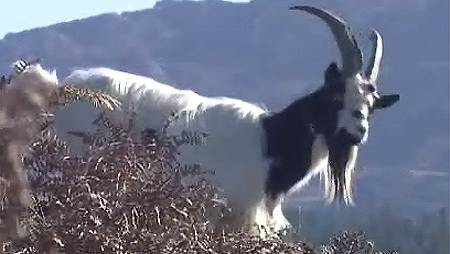
There are about 1,000 of the shaggy black and white wild Goats in the Snowdonia National Park, and nobody knows how they come to be there. It’s believed that Goats have been roaming the area for 10,000 years, since the last Ice Age. They’re regarded as British "primitives" because some believe that the family line has been unbroken from when they were introduced by Neolithic farmers. Their isolation has kept them largely free of interbreeding.
They have swept back horns, long shaggy black and white coats, and beards. They will eat almost anything and that ability helps them to survive in even the harshest conditions.
In the autumn there’s the annual rut when mature males fight it out for the right to mate with females who are in season. They paw the groundand circle each other before actually clashing heads, and the battles can last quite a long time.
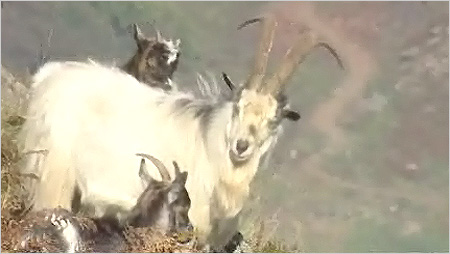
One of the characteristics of the rutting season is seeing males and females together – normally, nannies (females) and billies (males) lead separate lives. After the kids are born the billies are often seen in groups while the nannies look after the kids which stay close to their mothers.
Find our more about Feral Goats...
Weblinks
Photo gallery
Watch and Listen
Iolo Williams takes a walk in the hills of Snowdonia to try to catch sight of the Goats at their annual rut:
Help playing audio/video
Tips
Tips for viewing this species:
- In the winter the Goats come down from the mountains and can easily be spotted.One of the best places to see these wild Goats is the Nant Gwynant valley in Snowdonia especially around Beddgelert.
- There are herds of Feral Goats in upland and coastal areas of Scotland including the islands of Bute and Colonsay and also in the Valley of Rocks in Exmoor National Park, near Lynton, on the North Devon coast.
- A number of populations of Goats live on land owned by the National Trust, National Trust for Scotland, Natural England and Scottish Natural Heritage. It is best to ask around locally about where and when Goats might be seen.
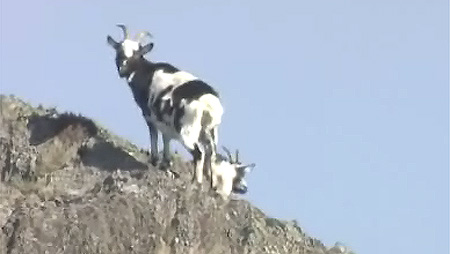
- Kids can be seen on over rocks as they learn new climbing skills so they can survive in the harder conditions.
- Rutting Goats may be seen in the autumn (October and November). In bad weather the Goats come down off the hills but if the weather’s good the Goats stay high up in the mountains and you may have to follow them.
- A clue that there are Goats nearby is the very distinctive and overwhelming smell of Goats cheese – this is the scent laid down by the males.
- Keep your distance from the Goats. If they sense you’re there, they could well run off. The best thing is to get into the same area as the Goats then settle down and let them come to you.
- You could be out for a while watching the Goats and as they’re in some fairly inhospitable places, remember to wrap up warm in the winter… and check the weather forecast, you don’t want to get stuck on a mountainside in fog or snow.
- Binoculars will help you observe the Goats from a distance without disturbing them
Habitat
In the Nant Gwynant valley in Snowdonia there are three herds, a total of about 300 animals. It’s the densest population of wild Goats in the UK. The nannies will tend to stay in the same place but the billies can roam for 50 kilometres.
Goats were domesticated as the land became populated after the last Ice Age but as the human population moved around in the 18th and 19th centuries some of the Goats escaped and became feral. Some naturalists think of the Goats as domestic rather than wild.
The Goats have been part of the landscape providing meat and milk, and their hair was even used to make wigs for judges.
Controversially a number of the Goats have been culled after being blamed for damaging saplings in protected woodland and damaging local peoples’ gardens. The council responsible for the cull said the animals targeted did not have Snowdonia's "pure breed".
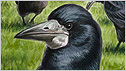
No. 29 - Rook Roost
The fascinating behaviour of a bird regarded as one of the UK's most intelligent, but not necessarily one of our most loved.
Best places to see - Norfolk and Aberdeenshire in Scotland.
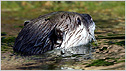
No. 30 - Hunting Otters
Find out about the animal now making a come back after once being considered as vermin.
Best places to see - Northumberland, Morven Peninsula on the West Coast of Scotland and the Isle of Skye.
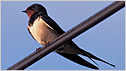
No. 31 - Swarming Swallows
One of the UK's most familiar wild birds which flies 10,000 miles each year to breed.
Best places to see - UK-wide, reedbeds are a favourite for roosting.


Also on Nature's Top 40
BBC Nature & Wildlife
More from bbc.co.uk nature

BBC iD
BBC iDBBC navigation
BBC links

BBC © 2014The BBC is not responsible for the content of external sites. Read more.
This page is best viewed in an up-to-date web browser with style sheets (CSS) enabled. While you will be able to view the content of this page in your current browser, you will not be able to get the full visual experience. Please consider upgrading your browser software or enabling style sheets (CSS) if you are able to do so.
