

EXPLORE EPISODE THREE - 32 to 29
Local Navigation

Bringing to life spectacles of natural wonder on our doorstep
No.30
Hunting Otters
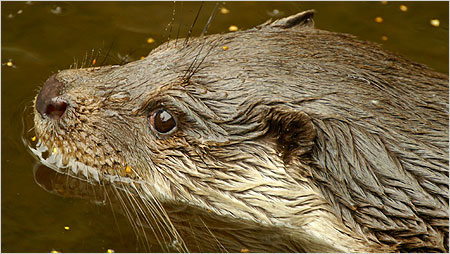
Otters are members of the Mustelid family which also includes badgers, polecats and weasels. There are 13 species of otter in the world but the only one found in the UK is the European or Eurasian otter (Lutra lutra).
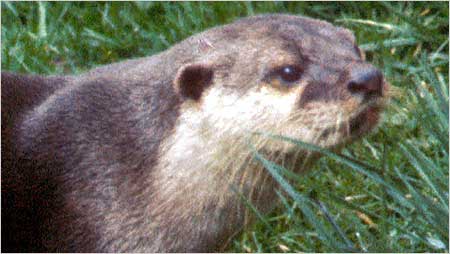
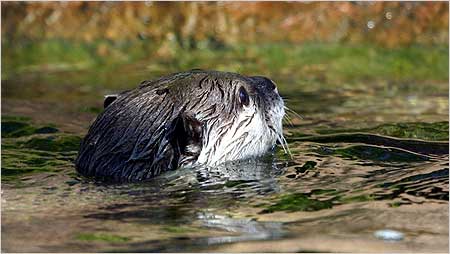
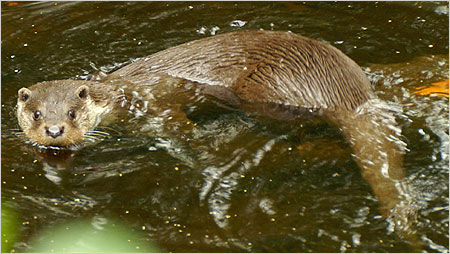
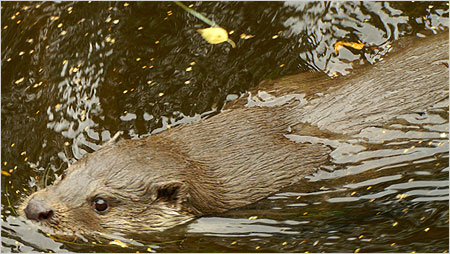
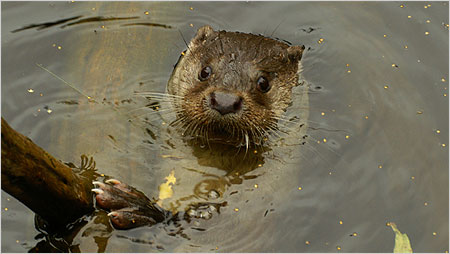
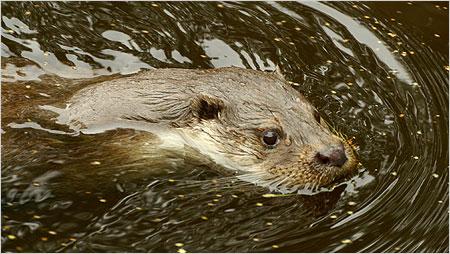
They have long streamlined bodies with rudder-like tails. They have short legs, webbed feet and claws, and they can close their ears and nostrils while they’re underwater. Otters can swim at up to 12km per hour underwater and can hold their breath for up to four minutes. They use their long whiskers to detect vibrations and movement whilst under the water. This means they can hunt successfully in what is often dark, murky water.
They’re playful animals and can be seen apparently enjoying themselves sliding around on muddy banks. They also make loud chirping noises as they chase each other.
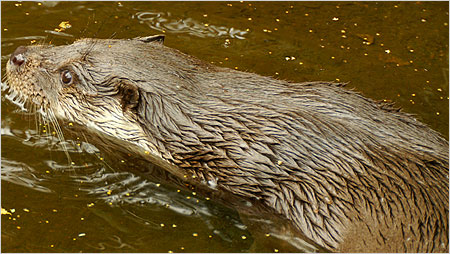
They have two types of fur, a dense underfur to keep them warm and a waterproof outercoat. The Otters’ diet consists mainly of fish although they will also eat frogs, crustaceans and small animals like voles. They’re opportunistic, so the diet of coastal Otters will vary from that of otters living near rivers. They’ll eat salmon and trout which doesn’t make them popular with anglers.
Otters were at one time considered vermin and a number of terrier dogs were originally bred to hunt otters. The story of Tarka the Otter by Henry Williamson was set in the 1950s when hunting Otters was still legal.
They can live for up to 10 years although the average is only four.
Find out more about Otters...
Weblinks
BBC News: Otters return to rivers.
Environment Agency Guide to Otter watching
The BBC is not responsible for the content of external internet sites.
Photo gallery
Watch and Listen
Chris Packham goes Otter spotting with actor Tim Healy at Big Waters near Newcastle:
Help playing audio/video
Tips
Tips for viewing this species:
- Watching Otters can be difficult and you need luck and patience.
- The North East of England is one of few places where you can see otters during the day. Big Waters, north of Newcastle upon Tyne, is a nature reserve where there's a good chance of seeing Otters. See BBC Nature’s Calendar Druridge and Big Waters.
- The Morvern peninsula on the West Coast of Scotland is another good place for otter watching as there are three large estates where the Otters have been left to themselves. Lochaline, a small sea loch on the Ardtornish estate is a good place to look for otters. Look out for signs of disturbance in the water which may be Otters out looking for food. See BBC Nature’s Calendar Ardtornish and the Morvern Peninsula.
- Skye is also a good place to see Otters. There are many bays where it’s possible to get close to them when they’re hunting in the sea.
- Look out for classic signs that otters are about. Paw prints, droppings, other wildlife and birds flapping around at the presence of danger.
- Otter droppings, which are called spraints, are tarry black when fresh and have a musky fishy smell. They’re left in prominent places near water.
- Keep downwind of the Otters, they have a keen sense of smell and will soon be off if they get scent of you.
- Watch from a hide if there is one…for example at Big Waters.
- The best time to see them is at dawn and dusk when they’re most active.
- Environment Agency Otter Spotter
Habitat
Otters live near water, mainly rivers but also estuaries and coastal areas. Even those living near salt water need access to fresh water pools to clean their fur. They’re very territorial and tend to live alone. A male may have more than one female within his territory to rear his cubs. One Otter’s territory can stretch to 12 miles in length.
They tend to come out at dusk and rest during the day in a burrow which is called a holt. Otters breed all year round with litters of two or three cubs. The cubs are blind at birth but open their eyes after 35 days. They then remain in the holt for another couple of weeks before going outside with their mother. Young Otters aren’t natural swimmers and are often dragged to the water by their mothers. They soon learn to swim and will catch their own food but they stay with their mother for more than a year.
Otters have the highest level of protection under UK and wildlife law. They’re strictly protected by the Wildlife and Countryside Act (1981) and cannot be killed, kept or sold without a licence. From the 1950s until the 1970s Otters suffered a rapid decline in the UK for a number of reasons, including polluted watercourses and loss of riverbank habitats where they’d previously been able to live and breed. Wildlife experts say that Otters seem to be making a come back.
No. 29 - Rook Roost
The fascinating behaviour of a bird regarded as one of the UK's most intelligent, but not necessarily one of our most loved.
Best places to see - Norfolk and Aberdeenshire in Scotland.
No. 31 - Swarms of Swallows
One of the UK's most familiar wild birds which flies 10,000 miles each year to breed.
Best places to see - UK-wide, reedbeds are a favourite for roosting.
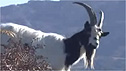
No. 32 - Goats
See the rutting Goats of Snowdonia. These feral animals live wild on the hillsides.
Best places to see - Nant Gwynant Valley in Snowdonia.


Also on Nature's Top 40
BBC Nature & Wildlife
More from bbc.co.uk nature

BBC iD
BBC iDBBC navigation
BBC links

BBC © 2014The BBC is not responsible for the content of external sites. Read more.
This page is best viewed in an up-to-date web browser with style sheets (CSS) enabled. While you will be able to view the content of this page in your current browser, you will not be able to get the full visual experience. Please consider upgrading your browser software or enabling style sheets (CSS) if you are able to do so.
