

EXPLORE EPISODE TWO - 36 to 33
Local Navigation

Bringing to life spectacles of natural wonder on our doorstep
No.34
Roosting Knot
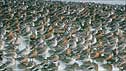
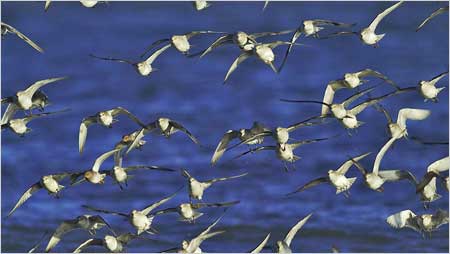
Knot can be seen in great numbers around Britain's shores in autumn and winter. These waders look rather dumpy and drab on their own but when they flock together in a swooping aerial display, they create one of nature's most amazing spectacles.
The birds spend the summer in some of the most inhospitable places on the planet – Greenland and Arctic Canada. When they arrive in the British Isles from their breeding territories in the Arctic in August, their aerial display is a real show-stopper. The Knot fly into our shores in a cloud of between 3,000-5,000 birds.
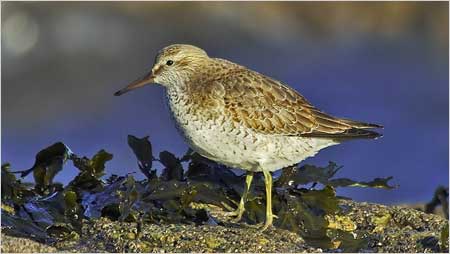
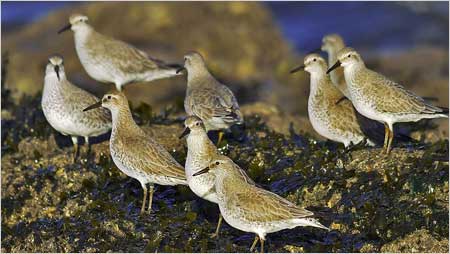
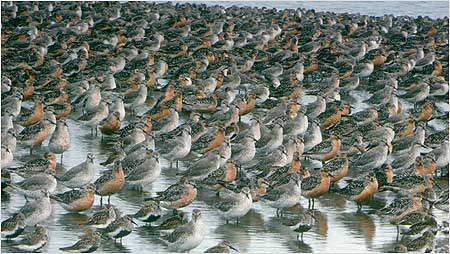
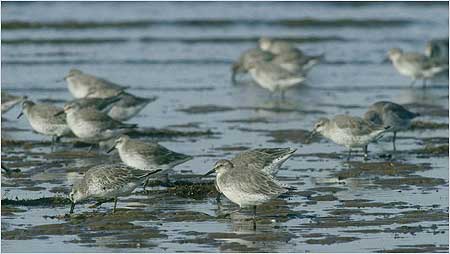
The bird, in its rich summer plumage, is a stunning mixture of reds, russets, burnt orange and a hint of tobacco. During the winter they turn a pale grey colour with a white speckled chest.
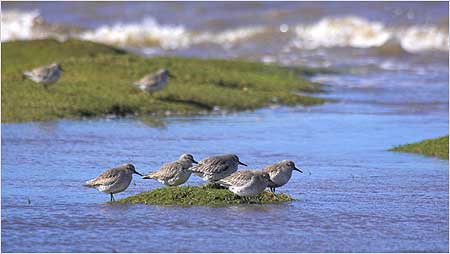
The individual birds are stocky with a shortish bill and legs.
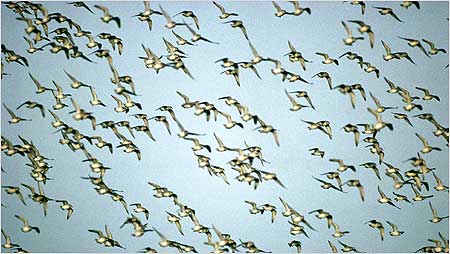
Knot can often be seen in large flocks, flying in formation, and twisting and turning in the sky in a spectacular aerial display.
Photo credits
Knot images c/o RSPB Images and Andy Hay, Chris Gomersall and Ben Hall - and NE Wildlife.
Web links
The BBC is not responsible for the content of external internet sites.
Photo gallery
Watch and Listen
Watch a flock of Knot in their gorgeous summer colours in north Norfolk with presenter Chris Packham:
Listen to the sound of a Knot on the RSPB website:
Help playing audio/video
Tips
Tips for viewing this species:
- Knot can be seen around the coastline of the British Isles between August and May. Large numbers can be spotted at high tide roosts between December and March. The big spectacle of the knot roost at high tide only happens when there are super high spring tides when the birds are forced to leave the mud flats and fly to a lagoon behind the beach to sit it out.
- August is a good time to see the Knot at their glorious technicolour best. During the summer the birds are still in their breeding plumage, but beware - there’s only a short window in August when all the birds are a uniform brick red colour before they change into their duller grey winter plumage.
- The RSPB reserve at Snettisham in Norfolk is one of the best places to see Knot in impressive numbers - there can be more than 10,000 birds at one time. The best time to see the birds is early in the morning during a full moon when there's a high spring tide.
- There are several coastal bird hides at Snettisham from which you can watch the Knot without disturbing them. Check local tide times, a copy of which is posted on a board in the main RSPB reserve car park.
- The birds can also be seen in significant numbers around The Wash, Humber and Dee estuaries.
- Check your tide times. Normally these birds are out on the mud flats miles away where they’ve been roosting. But when there’s a high tide, the birds are pushed closer to you especially on the very highest tides in August. Watch for them flying right over your head.
- Don't forget your binoculars or scope if you want to watch the flocks of Knot at their most sensational.
Habitat
Knot are usually found in muddy estuaries and coastal areas where they arrive in large numbers from their Arctic breeding grounds.
Some of the best places to see the birds are North Norfolk, Morecambe Bay, The Wash, Strangford Lough, the Solway Firth, and the Thames, Humber and Dee estuaries.
Look out for the birds on the mud flats probing for their favourite food - shellfish, small molluscs and worms.
Legend has it that the birds were named after King Canute because they like to stay on the beach or shore until the rising tide covers their feet.
When the bird breeds in the Arctic tundra, it makes a nest in between the rocks and lays its eggs.
When the tide covers their roost, they take to the skies in their hundreds, providing a great spectacle for wildlife watchers.
No. 36 - Moths
Moths are fascinating creatures and you can find several hundred different species just in your garden.
Best places to see - Wareham Forest (Dorset), Thorp Perrow (North Yorks) and woodlands.
No. 35 - Seals
About half the world’s population of Grey Seals are found on and around British coasts so why not go seal spotting?
Best place to see - Isles of Scilly.
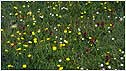
No. 33 - Machair flowers
The machair is one of the greatest wildflower displays anywhere in the British Isles - find out how to enjoy it at its best.
Best place to see - North West Scotland.


Also on Nature's Top 40
BBC Nature & Wildlife
More from bbc.co.uk nature

BBC iD
BBC iDBBC navigation
BBC links

BBC © 2014The BBC is not responsible for the content of external sites. Read more.
This page is best viewed in an up-to-date web browser with style sheets (CSS) enabled. While you will be able to view the content of this page in your current browser, you will not be able to get the full visual experience. Please consider upgrading your browser software or enabling style sheets (CSS) if you are able to do so.
