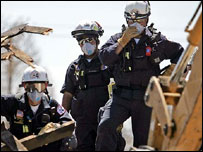
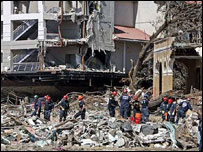
Here in Louisiana, I have been overwhelmed by the countless demonstrations of compassion that I have been witness to. 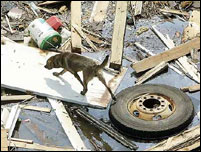 | | Pets stranded in the debris Photo (c) AP |
But a week since hurricane Katrina ripped through the heart of New Orleans there is a taste of disbelief and anger that now lingers in the air. The storm has past and the water levels are beginning to drop but now people are starting to wonder how, in a country that prides itself on being the world’s number one giver of aid and relief, has this all gone so terribly wrong. I have spoke to numerous people on campus who each have their own tragic story of loss but along with them lies grievances with such magnitude I can't help but feel enraged. | "Never did I think that I be witness to the richest country in the world allowing its people without food or water." | | Chris Ackerley in Louisiana |
It would be unfair to say that a government could prevent a natural disaster but America is a country with the most technologically advanced weather radar system in the world; they knew that Katrina was going to hit three days before it reached land. Why is it then that it took President Bush over a day after the hurricane hit before he came back and started organising the relief efforts? A question so many people are asking is why the government and State cut the budgets necessary for making the levy strong enough to withstand a category five hurricane. Experts have been predicting the possibility of a full force hit of this enormity for years. To have the levees up to the safe and suggested level would have only cost this administration the equivalent of two days in Iraq. Maybe people should begin to question whether this government is putting its war over the safety of its own people. It seems that mismanagement and bureaucracy have been put before the real task that was at hand, getting those the help who needed it the most. Never did I think that I be witness to the richest country in the world allowing its people without food or water on the roofs of their houses for five days on end. Why it took so long for President Bush to get the military involved is a mystery to me and all those people who have been attacked or stolen from this week. I have just heard that the director of the Federal Emergency Management Agency (FEMA) has been sent back to Washington in disgrace. A scapegoat or not? Either way Mr Brown has to be ashamed of the backwards relief system that he has led for the last week. Hopefully we will see quick and efficient action taken in the near future to help all of these displaced people with nothing but anger and hope left. |