_____________________________________________________________________________________________________
Download a free 6 Minute English worksheet and transcript!
Try our free interactive quiz!
______________________________________________________________________________________________________


Introduction
What would the world of athletics look like if athletes were allowed to take drugs? That's what the organisers of The Enhanced Games want to find out. In mainstream sport, taking performance-enhancing drugs is strictly forbidden. It's known as 'doping' and if athletes are caught doing it, they can face fines, suspensions or even bans from professional sport. But in The Enhanced Games, doping is allowed. Is this an insult to sporting tradition or an acceptance of scientific progress? Pippa and Neil discuss this and teach you some new vocabulary.
This week's question
How many times did Lance Armstrong win the Tour de France, the famous cycling race, before he was finally caught out for doping?
a) five
b) six
c) seven
Listen to the programme to hear the answer.
Vocabulary
doping
(informal) using banned substances to perform better in a sports competition
it's fair to say…
used to introduce a statement which the speaker believes is balanced, reasonable or true
divisive
causing disagreement and argument between people
cross the line
start behaving in an unacceptable way
set a good/bad example
behave in a way that encourages others to behave well/badly
normalise
treat something as normal or acceptable when it previously was not

TRANSCRIPT
Note: This is not a word-for-word transcript.
Neil
Hello, this is 6 Minute English from BBC Learning English. I'm Neil.
Pippa
And I'm Pippa. Sharing your Netflix password, lying about your age or not paying the bus fare are a few examples of cheating in daily life. But there's one place where cheating is usually considered wrong, and that's sport.
Neil
Cheating in sport through the use of performance-enhancing drugs, informally called doping, is normally considered wrong. Just ask American cycling legend Lance Armstrong, who was thrown out of the sport for using banned substances. But earlier this year, a sporting event took place which turned the debate about drugs in sport upside down. Here's Asma Khalid from BBC World Service's The Global Story to explain:
Asma Khalid
This weekend, elite athletes from around the world are descending on Las Vegas, Nevada, for the first-of-its-kind sporting competition known as The Enhanced Games. It's kind of like the Olympics, but only for swimming, sprinting and weightlifting. The aim is to break world records. In fact, some of these competitors are former Olympians – medallists battling it out for money and glory. But there's one big difference...
Pippa
The big difference is that The Enhanced Games allow athletes to use performance-enhancing drugs that are banned in professional sports. In these games, nicknamed The Doping Olympics, steroids, growth hormones and stimulants are all OK. You're a big sports fan, Neil. Would you enjoy watching a sport where the athletes have taken drugs?
Neil
No, I wouldn't. I really don't think that's fair. I think we need to know that all the athletes start and compete from the same level.
Pippa
Yeah, I guess that makes sense. I don't really watch that many sports so I guess I wouldn't notice the difference, but if you're really into sport you care about the rules, right?
Neil
Yes, absolutely. And in this episode we'll dive into the controversial world of The Enhanced Games, learning some useful new words and phrases along the way. And remember, you'll find all the vocabulary, plus a quiz and a worksheet, on our website, bbclearningenglish.com.


Pippa
But now I have a question for you, Neil. You mentioned the famous sporting cheat Lance Armstrong, but how many times did Lance Armstrong win the famous race, the Tour de France, before he was finally caught out? Was it:
a) five,
b) six, or
c) seven?
Neil
Ooh... Well, it was a lot, so I think I'll go for c) seven.
Pippa
Well, we'll find out the answer at the end of the programme. Now, it's no exaggeration to say that The Enhanced Games are controversial. After all, organisations like the World Anti-Doping Agency have spent decades fighting performance-enhancing drugs in sport. Here's BBC sports editor Dan Roan on World Service programme The Global Story.
Dan Roan
I think it's fair to say it's one of the most divisive and controversial events that the world of sport has seen for a long time. It's an event where performance-enhancing drugs, banned elsewhere in mainstream sport of course, are actually allowed to be taken by the competitors under medical supervision.
Neil
Dan Roan says, "It's fair to say The Enhanced Games are controversial." He uses the phrase it's fair to say to introduce a statement that he considers to be balanced and reasonable – that the games are controversial.
Pippa
Dan also describes the games as divisive – an adjective that means causing a lot of disagreement between people. Much of this disagreement is about the use of performance-enhancing drugs themselves. The Games' organisers point out that all drugs are approved by the US Food and Drug Agency and taken openly under medical supervision, which they say makes them safer than when they are taken secretly at competitions elsewhere. But there are many critics too, as Dan Roan outlined to BBC World Service's The Global Story.
Dan Roan
But the critics, of course, say that this crosses an ethical line, that it sets a dreadful example because it risks normalisingdoping. It could harm the integrity, therefore, of sport, and it could be dangerous to the health of those taking part.
Neil
For the Games' critics, dopingcrosses an ethical line. The phrase to cross the line means to start behaving in a way that's not socially acceptable. These critics say the Games set a bad example, meaning that they encourage others to behave badly as well. Why is that, Pippa?
Pippa
Well, it's because critics argue the games normalise the use of performance drugs in sport. If you normalise something, you treat it as normal or acceptable when previously it wasn't. But with arguments strongly held on both sides, the debate is far from over. So Neil, have you changed your opinion after hearing both sides of the story?
Neil
No, I haven't. I think it's just not fair, and I think if you're not fair in sport, what's the point?
Pippa
Well, let's hear the answer to my quiz question, Neil. I asked you how many times Lance Armstrong won the Tour de France, and it was c) seven times, consecutively between 1999 and 2005. Of course, we now know that there were performance-enhancing drugs involved.
Neil
OK. So, now it's time to recap the vocabulary we've learned, starting with doping – using banned drugs to perform better in sporting competitions.
Pippa
You can use the phrase it's fair to say to introduce a statement you consider to be balanced, reasonable or true.
Neil
If something is divisive, it causes disagreement between people.
Pippa
The idiom cross the line means to start behaving in an unacceptable way.
Neil
If you set a bad example, you behave in a way that encourages others to behave badly.
Pippa
And finally, to normalise something means to treat it as normal or acceptable when previously it wasn't.
Neil
OK. Once again, our six minutes are up, but if you'd like to practise more, you'll find a quiz and worksheet on our website, bbclearningenglish.com. See you again soon. But for now, it's goodbye.
Pippa
Bye!

Next
Find an A-Z list of our programmes.
Find more programmes for your level here.
Practise your reading skills with The Reading Room.
ሐድሽ ፓድካስትታት ተመልከት 6 Minute English

Can apps teach you a language?
Episode 260910 / 10 Sep 2026
What's better for learning languages – an app or a class?

Climate change and extreme weather
Episode 260903 / 03 Sep 2026
Every year we see damage, death and destruction caused by hurricanes, cyclones and typhoons - tropical storms. Is climate change making this impact worse?


Sharing the road with driverless cars
Episode 260820 / 20 Aug 2026
Would you trust a robot to drive you around a city?

Who does the housework?
Episode 260813 / 13 Aug 2026
When you were growing up, did your mum or dad do more household chores?

How do climate scientists make predictions?
Episode 260806 / 06 Aug 2026
What is the difference between a prediction and a projection?
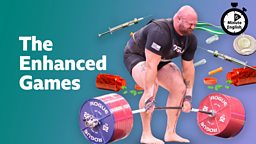
The Enhanced Games
Episode 260730 / 30 Jul 2026
Would you watch a sport if you knew the athletes had taken drugs?


What's in a footballer's brain?
Episode 260716 / 09 Jul 2026
How do footballers cope with high-pressure scenarios like penalties and corners?



Stress-free family meals
Episode 260625 / 25 Jun 2026
What foods did you dislike when you were growing up?

Limiting screen time for children
Episode 260618 / 18 Jun 2026
Children are spending too much time with electronic devices.

How advertisers make us spend money
Episode 260611 / 11 Jun 2026
When was the last time you bought something you didn't need?




How reading shapes your brain
Episode 260514 / 14 May 2026
Can learning to read alter the way your brain works?


Should we eat ultra-processed food?
Episode 260430 / 30 Apr 2026
Ultra-processed food can be tasty, but what is it doing to our health?




Weight loss drugs
Episode 260326 / 26 Mar 2026
How do weight loss drugs like Ozempic and Mounjaro help people lose weight?

How do we adapt to the cold?
Episode 260319 / 19 Mar 2026
Would you prefer to be too hot or too cold?


Why are some animals black and white?
Episode 260305 / 05 Mar 2026
The answer is not as black and white as you might think!





Why are billionaires building bunkers?
Episode 260129 / 29 Jan 2026
Is the end of the world closer than we thought?

Scared of speaking English?
Episode 260122 / 22 Jan 2026
Beth and Pippa talk about why we often find speaking a new language scary.

What English phrases really mean
Episode 260115 / 15 Jan 2026
Why don't British people say what they mean, or mean what they say?