6 Minute English now comes with a video! It's the same programme that you know and love, but now you can see us!
_____________________________________________________________________________________________________
Download a free 6 Minute English worksheet and transcript!
Try our free interactive quiz!
______________________________________________________________________________________________________


Introduction
How much plastic do you use on a daily basis? And how much of it is used to package or prepare food? Recently, scientists are becoming increasingly concerned that microplastics, tiny bits of plastic invisible to the naked eye, are entering our bodies through these food sources... but it is unclear exactly what the long-term health effects will be. Becca and Phil discuss this and teach you some new vocabulary.
This week's question
How long would it take to ingest a credit-card-sized amount of microplastics?
a) 13,000 years
b) 23,000 years
c) 33,000 years
Listen to the programme to hear the answer.
Vocabulary
marine
related to, found in or produced by the sea
emerging
coming into view after being hidden, allowing a better understanding or development
correlation
relationship between two or more things
spike
sudden, sharp increase in something
quantified
measured and given a number or a value
exposure
come into contact with something that may have an impact on you

TRANSCRIPT
Note: This is not a word-for-word transcript.
Phil
Hi Becca.
Becca
Hi Phil.
Phil
Becca, I've got a question for you. What's the last plastic thing you had in your hands?
Becca
Well, I just did my makeup, so probably a makeup brush.
Phil
Many of us own lots of things made of plastic. It's cheap, easy to shape and long lasting, but that's not always a good thing. In this episode of 6 Minute English, we'll be hearing from experts as they teach us about microplastics – those are tiny plastic pieces. And we'll be asking the question, 'Are microplastics affecting our health?'

Phil
OK. Well, let's start with our quiz, Becca. There was a social media post that says that every week we ingest the same amount of plastic as there is in a credit card, but that's not true.
Becca
Oh, thank goodness!
Phil
So, my question for you is how long would it really take to ingest that amount of microplastics? Would it be:
a) 13,000 years,
b) 23,000 years, or
c) 33,000 years?
Becca
Well, I want to be hopeful, so I'll go with the longest period of time. That would be 33,000 years.
Phil
OK. Well, we'll find out the answer at the end of the programme.
Becca
So, the World Health Organisation says that microplastics have been found in many different food groups. But Phil, what is the food group that is more affected by microplastics?
Phil
Well, scientists have found that seafood is one of the main food groups where microplastics can be found, and BBC World Service programme The Evidence has been investigating this. Professor Shilpa Chokshi told host Claudia Hammond about some pictures that she was shown by a microplastics expert.
Professor Shilpa Chokshi
And he showed me all these marine animals that looked like they had plastics in their livers and hind guts. And from that initial discussion, I went away and I looked at the literature and I looked at the data, and there was emerging evidence that there was plastics in the liver, and there was this correlation increase.
Becca
Shilpa says that plastics have been found in marine animals. Marine describes anything related to, found in or produced by the sea.
Phil
Yes, these pictures of marine animals with plastics in their bodies inspired Shilpa to dive deeper into the data. She found emerging evidence, and the adjective emerging describes something coming into view after being hidden, allowing it to develop or be better understood.
Becca
And from this emerging evidence, Shilpa noticed a correlation. You'll hear this word a lot when talking about data. A correlation is a link or connection between two or more things. So, Phil, we know how toxic microplastics get into our body, but are they definitely harmful?
Phil
Well, plastics have been a big part of daily life since the 1950s, but it's only recently that we've started thinking about microplastics as a health issue. For example, scientists have been looking at people who worked in nylon factories where they were exposed to high levels of microplastic. And the scientists think that there may be a correlation between this and diseases that they developed later on. Science professor Mark Miodownik, from University College London, has mixed feelings about microplastics and explained these to BBC World Service programme The Evidence.
Professor Mark Miodownik
Well, you know, we have been exposed for decades and surely if it was that bad, you know, we'd have seen a spike or something by now. But on the other hand, you know, I think, you know, if you look at how much plastic packaging is in supermarkets, it's gone up and up and up and up. And this is not a quantified measure, but our exposure seems to be increasing, and that's the worry for me.
Becca
Mark mentions that some people say if microplastics were harmful, we surely would have seen a spike in issues related to them by now. A spike is literally a pointy shape, but here it means a sudden, sharp increase in something.
Phil
Right. And though the amount of plastic packaging we use has increased, this isn't a quantified measure. If something is quantified, then it's measured and given a number or a value.
Becca
So, Mark concludes that he is worried about our exposure to plastics. Exposure means coming into contact with something that may have an impact on you. OK. Phil, so, if people are worried about their exposure to microplastics, what can they do to reduce this?
Phil
Well, one thing they can do is to replace things like plastic chopping boards, utensils and food storage containers. And another tip from BBC World Service's The Evidence is to replace tea bags, which often contain microplastics, with loose-leaf tea. OK. Becca, now it's time to get the answer to our quiz question. And I asked you how long it would take to ingest a credit-card-sized amount of microplastics.
Becca
Yes, and I said 33,000 years.
Phil
OK. Well, I've got two bits of bad news for you, Becca. One, you were wrong. And two, I'm afraid it's only 23,000 years that it would take to ingest that plastic. OK. Let's recap the vocabulary we learned in this programme, starting with marine, which describes anything related to, found in or produced by the sea.
Becca
The adjective emerging describes something coming into view after being hidden, allowing it to develop or be better understood.
Phil
A correlation is a relationship between two or more things.
Becca
A spike is a sudden, sharp increase in something.
Phil
If something is quantified, it's measured and given a number or a value.
Becca
And exposure means to come into contact with something that may have an impact on you.
Phil
Once again, our six minutes are up. Test what you've learned with the worksheet on our website, bbclearningenglish.com.

What do you think of the new version of 6 Minute English? Email us at learningenglish@bbc.co.uk.
Next
Find an A-Z list of our programmes.
Find more programmes for your level here.
Practise your reading skills with The Reading Room.

تازه ترین 6 Minute English


Learning from different generations
Episode 261112 / 12 Nov 2026
Could mixing younger and older generations together help us stay more healthy?

Could vaccines cure cancer?
Episode 261105 / 05 Nov 2026
Can we train our own immune system to fight certain types of cancer?

Is aircon the answer to a heating world?
Episode 261029 / 29 Oct 2026
Do you have air conditioning in your house?

What should you eat for a better night’s sleep?
Episode 261022 / 22 Oct 2026
How much sleep do you get each night?


Can apps teach you a language?
Episode 260910 / 10 Sep 2026
What's better for learning languages – an app or a class?

Climate change and extreme weather
Episode 260903 / 03 Sep 2026
Every year we see damage, death and destruction caused by hurricanes, cyclones and typhoons - tropical storms. Is climate change making this impact worse?


Sharing the road with driverless cars
Episode 260820 / 20 Aug 2026
Would you trust a robot to drive you around a city?

Who does the housework?
Episode 260813 / 13 Aug 2026
When you were growing up, did your mum or dad do more household chores?
How do climate scientists make predictions?
Episode 260806 / 06 Aug 2026
What is the difference between a prediction and a projection?
The Enhanced Games
Episode 260730 / 30 Jul 2026
Would you watch a sport if you knew the athletes had taken drugs?

What's in a footballer's brain?
Episode 260716 / 09 Jul 2026
How do footballers cope with high-pressure scenarios like penalties and corners?



Stress-free family meals
Episode 260625 / 25 Jun 2026
What foods did you dislike when you were growing up?
Limiting screen time for children
Episode 260618 / 18 Jun 2026
Children are spending too much time with electronic devices.

How advertisers make us spend money
Episode 260611 / 11 Jun 2026
When was the last time you bought something you didn't need?



How reading shapes your brain
Episode 260514 / 14 May 2026
Can learning to read alter the way your brain works?
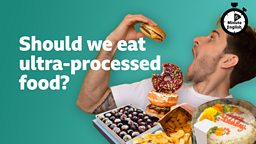
Should we eat ultra-processed food?
Episode 260430 / 30 Apr 2026
Ultra-processed food can be tasty, but what is it doing to our health?



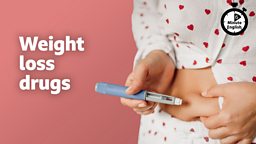
Weight loss drugs
Episode 260326 / 26 Mar 2026
How do weight loss drugs like Ozempic and Mounjaro help people lose weight?
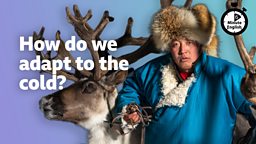
How do we adapt to the cold?
Episode 260319 / 19 Mar 2026
Would you prefer to be too hot or too cold?
Why are some animals black and white?
Episode 260305 / 05 Mar 2026
The answer is not as black and white as you might think!





Why are billionaires building bunkers?
Episode 260129 / 29 Jan 2026
Is the end of the world closer than we thought?

Scared of speaking English?
Episode 260122 / 22 Jan 2026
Beth and Pippa talk about why we often find speaking a new language scary.

What English phrases really mean
Episode 260115 / 15 Jan 2026
Why don't British people say what they mean, or mean what they say?