
Talk Portuguese - Summer in Brazil
Learn about Brazil and Brazilian Portuguese
In order to see this content you need to have both Javascript enabled and Flash installed. Visit BBC Webwise for full instructions
Brazilian lingo
An introduction to Brazil and Brazilian Portuguese.
Leisure
Making arrangements for meeting and going out, as well as talking about what you like doing at the weekend or in your spare time.
Money
Buying a sugar cane drink (caldo da cana) and changing dollars for Reals.
Opinions
An introduction to the Pelourinho district in Salvador. People mention what they like about their city. Some talk about how they enjoy buying postcards and stamps.
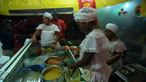
Salvador
An introduction to the city of Salvador and the State of Bahia. It also mentions African influences, including food such as 'Acarajé'.
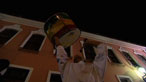
Drinks
Information about Brazilian drinks, mango juice, the energy drink 'guaraná', draught beer and a recipe for 'caipirinha', an alcoholic drink made from sugar cane spirit, lime and sugar. It's also party night in Salvador with Samba bands in the Pelourinho district.
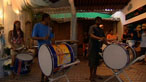
Music school
Meeting musician Carlinhos Brown and his music school 'Pracatum' in the favelas of Salvador, where young people learn the skills to become musicians.

Samba
An extract from Blue Peter, exploring the origin of Brazilian dance Samba, which dates back to the 16th century. Elements of Portuguese culture and African settlers come together to create a vibrant music and dance form.

Note: This section features both Brazilian Portuguese (BP) and European Portuguese (EP) sounds.
- PortuguêsEnglish
- Bom dia! *
Brazilian Portuguese: European Portuguese:Good morning! - Oi, tudo bem?
BP: , EP:Hi, everything alright? (lit.) - O que gosta de fazer nos fins de semana?
BP: , EP:What do you like doing at weekends? - Gosto de… *
BP: , EP:I like to... - Adoro... **
BP: , EP:I love to… - Gosto muito de dançar samba
BP: , EP:I really like dancing the samba - Adoro ir ao shopping
BP: , EP:I love to go shopping - O que vamos fazer amanhã?
BP: , EP:What shall we do tomorrow? - Gostaria de... *
BP: , EP:I'd like to… - jogar futebol *
BP: , EP:to play football - jogar tênis ** BP:
jogar ténis * EP:to play tennis - jogar golfe ** BP:
jogar golf * EP:to play golf - visitar
BP: , EP:to visit - ir dançar
BP: , EP:to go dancing - ir à praia
BP: , EP:to go to the beach - ir para um jogo de futebol *
BP: , EP:to go to a football match - assistir a um concerto
BP: , EP:to go to a concert - ir a um restaurante *
BP: , EP:to go to a restaurant - Onde é que nos encontramos?
BP: , EP:Where shall we meet?
* Pronunciation guide
- Bom dia!, gosto de, gostaria de
In Brazilian Portuguese, d sounds like j before i or a final unstressed e. - Restaurante, jogar futebol
In Brazilian Portuguese, t sounds like ch before i or a final unstressed e. - Gosto de, gostaria de, jogar, ir para um jogo de futebol
When g is followed by a, u or o, it sounds like the g in the English got.
** Grammar notes
- Adoro, gosto de
These are very useful phrases to use, especially in Brazil, where people like to express themselves with lots of enthusiasm: Adoro ir à praia, I love going to the beach.
Gosto is always followed by de: Gosto de jogar futebol, I like to play football.
When asking someone else, change the o to an a: Gosta de ir dançar?Do you like to go dancing? - jogar tênis, jogar golfe
Sometimes, there are differences in European Portuguese and Brazilian Portuguese. For example, in some accents and words such as ténis - tênis, golf - golfe.
Note: This section features both Brazilian Portuguese (BP) and European Portuguese (EP) sounds.
- PortuguêsEnglish
- Quanto custa um caldo de cana?
Brazilian Portuguese: European Portuguese:How much is a sugar cane juice? - um real
BP: , EP:one real (the currency of Brazil) - Posso trocar dólares aqui, por favor?
BP: , EP:Can I change dollars here, please? - Quanto tem?
BP: , EP:How much do you have? - Queria trocar cem dólares
BP: , EP:I would like to change 100 dollars - Qual é a cotação de hoje?
BP: , EP:What is the exchange rate today? - Gosto muito deste cartão postal
BP: , EP:I like this postcard a lot - Eu também gosto
BP: , EP:I like it, too - Este é muito bonito também, não é?
BP: , EP:This one is lovely too, isn’t it? - Posso ajudar?
BP: , EP:Can I help you? - Queria estes cartões postais e mais seis selos para a Europa, por favor
BP: , EP:I would like these postcards and six stamps for Europe, please - Quanto custam?
BP: , EP:How much are they? - dez reais no total
BP: , EP:Ten reals in total
Note: This section features both Brazilian Portuguese (BP) and European Portuguese (EP) sounds.
- PortuguêsEnglish
- O que gosta mais da sua cidade?
Brazilian Portuguese: European Portuguese:What do you like best about your city? - Da minha cidade gosto mais das praias
BP: , EP:What I love about this city are the beaches - São maravilhosas
BP: , EP:They’re marvellous - Eu adoro praia
BP: , EP:I love the beach - Sou amante da cidade
BP: , EP:I also love this city - O que eu mais gosto da Bahia, do Salvador é ...
BP: , EP:What I like most about Bahia and Salvador is ... - Acarajé
BP:a typical dish - Pelourinho
BP:an area in Salvador - um suco de manga
BP: , EP:mango juice - um guaraná
BP:a fizzy energy drink - um chope
BP: , EP:an ice-cold beer - uma caipirinha
BP: , EP:a Brazilian drink made of fresh lime, sugar, ice and 'cachaça', a white spirit made from sugar cane - saúde!
BP: , EP:cheers!
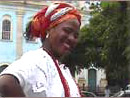 Brazil is the largest Portuguese-speaking country in the world. Salvador was its capital for two hundred years from 1549 and one of South America’s largest slave ports.
The State of Bahia is still known today as A alma negra do Brasil, The black soul of Brazil.
Step-by-Step guide

1. Watch the videos
2. Kick off with key language
3. Listen and repeat essential phrases
4. Practise the language and try a quiz
5. Check out the cultural notes
Useful resources
Transcript:
 See the transcript of each video
BBC Languages links
Quick Fix: Essential phrases in Portuguese
Brazil Inside Out: Brazil's carnival, its music and its football
More Videos from the Learning Zone
More than 3,000 clips from BBC programmes on Learning Zone Broadband ready to play in your classroom.

