STALKING - HELP AND ADVICEStalking can cause immense metal anguish and suffering to the victim and their family and help should be sought as soon as possible. If you think you maybe a victim of stalking, we have provided some basic information to act as a guide. By definitionStalking is defined as a constellation of behaviours in which an individual inflicts upon another repeated unwanted intrusions and communications (Mullen, 1999). Intrusions include making approaches, maintaining surveillance and gathering information. Communication can be by telephone, letters, cards, faxes, internet, graffiti, gifts, or ordering goods and services on the victim's behalf. What to do1. Take action
Whilst all agencies agree that victims should never react to or communicate with the stalker, ignoring the harassment will not necessarily cause the stalker to stop. The sooner action is taken, be it police caution or warning, solicitors letter or arrest, the more chance it has of stopping. Research has shown that those stalkers who are allowed to carry on are less likely to stop easily.  | | Record the date and time and details of all calls from the stalker |
2. Contact the police
Contact the local police as soon as possible. Ask for the name of the officer in charge of the case and record the crime reference number if applicable. 3. Do not respond
On no account should you agree to meet with your stalker or communicate with them in any way. It might put you in a dangerous situation and may weaken any prosecution case against your stalker simply because you have co-operated with them. 4. Inform
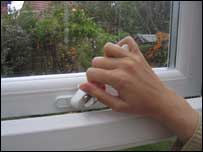
Make friends, neighbours and colleagues aware of what is happening. They can also keep a record of sightings and suspicious incidents for you, as well as supporting and protecting you. 5. Improve personal safety
Carry a mobile phone with you as well as a personal attack alarm - it will help you feel more comfortable when you go out. Rely on your instinct. If you ever feel in imminent danger do not hesitate to call 999. Consider improvements to your home security. 6. Record
Record any incident you feel is suspicious including: Telephone calls
Do not enter into conversation with your stalker. Remain calm and try not to show any emotion. Put the handset to one side then leave for a few minutes then return and replace the handset. Record the date and time of the call as well as the details even if they were unanswered or silent calls. Try dialling 1471 for the caller's number. Write down and save any text messages and the time they were received. Sightings
Record the date, time, location, a description of clothing they are wearing and anything they may be carrying and what they are doing. Cars
If you are aware of a particular car, record the date, time, location, make and model of car, colour, registration number and any other distinguishing features. Mail
If you are wary of any mail that is delivered to you either give it straight to the police without opening it, or put gloves on so you do not put your fingerprints on it. Computers
Save information received onto disk and print out a hard copy of relevant data. Do not delete the original. Only open emails if you know the originator and ensure your computer is secure and virus protected. Camera
Record on film anything you can as this will be very useful evidence of what is happening, location and frequency of the incidents. Diary of events
Keep a diary of what happens, how you are feeling. This will not only help you, but assist the police in their investigation.
The Protection from Harassment Act 1997 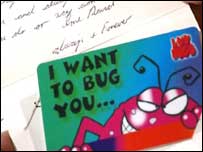 | | Keep hold of any letters or gifts you receive |
The spirit of the Act is to deal with unsocial conduct occurring on at least two occasions in which a person is subjected to persistent and often obsessive behaviour causing harassment, alarm or distress outside existing civil and criminal law. The two occasions do not need to be the same incident, for example one can be a phone call, the other being followed. However they do need to be reasonably close together in time. A police warning might be enough to stop it, but the power is there for the police to arrest if necessary. The power of the Protection from Harassment Act reaches into the civil law as well as the criminal law. If you don't want to take action through the police, you can go to a solicitor and obtain an injunction through the civil courts, although this will cost. A breach of restraining order or injunction obtained either through the criminal or civil courts is an arrestable offence and is liable for up to five years imprisonment. Sources of help and adviceNetwork for Surviving Stalking - www.nss.org.uk
The NSS is a registered charity dedicated to support those affected by stalking. Suzy Lamplugh Trust - www.suzylamplugh.org
After her daughter Suzy disappeared in 1986, Diana Lamplugh founded this personal safety trust. It offers advice to children and adults to help them stay safe and recognise potentially dangerous situations. Victim Support - 0845 30 30 900 - www.victimsupport.org.uk
Victim Support helps people cope with the effects of crime. There are separate advice sections for people living in England and Wales, Scotland and Northern Ireland. Women's Aid Federation - 08457 023 048 - www.womensaid.org.uk/
Women's Aid offers support for women and children who are the victims of stalkers. The Samaritans - 08457 90 90 90 (UK) - 1850 60 90 90 (ROI) -
www.samaritans.org/
Call the Samaritans if you need to talk to someone in confidence. They are available 24 hours a day. Citizens Advice Bureau - www.adviceguide.org.uk/
Adviceguide gives basic advice and information on your rights. It gives you a broad outline of where you stand and what you can do. | 



 Inside Out - Yorkshire & Lincolnshire: Monday January 10, 2005