 | 24 September 2014 |

| |
| BBC Homepage | | |
| |||
| Contact Us | | |
Your StoriesYou are in: Humber > People > Your Stories > Migrant Stories 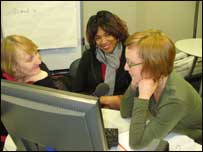 Migrant StoriesThere are many reasons why people from across the world head to the UK; some seek asylum from war-torn countries, whilst others are looking for a better life for their families. The stories below were written by students who attended a media and communication skills course operated by Hull College. The students travelled to the UK from around the world and these stories detail their journeys, hopes and dreams. My home in KurdistanMy home, so my father told me, was in a valley in the mountains with a river, clear and cold, it’s water running from the snowfields. In the garden, fruit trees grew. In our home, heated by the baking oven, were handmade carpets of all colours. It was my home until 1980 when I was two years old.  Then Saddam’s soldiers came. Iraqi troops bulldozed our house and the barn, destroyed the garden, and drove us out from our valley in the mountains. Hunted, homeless, frightened, we had to flee. My father’s horse carrying some blankets, pots and pans and my older brother carrying me. For years and years we walked at night lighted by the stars. We were hungry, cold, and ill – sleeping in a cave as from place to place we went. Like that we lived until 1988, when I was ten years old. Then planes flew by and chemical bombs exploded in the sky. I had to run and was hiding in the mountains. When I returned, I found that my brother was lying dead. Revolutionaries helped me bury them. And then I fled. Four years went by. I stayed with thousands of other Kurds in a Turkish camp. We lived in tents. For heat: the sun. For light at night: the shining stars. Now I am in another world of new light and cars. Here in the United Kingdom, I go to school and work at night. I call myself a man and say I have forgotten the pain – I am on my way. But when I sleep, I am a child at home in the valley, in the mountains, with the river cold and clear, it’s water running from the snowfields. In the garden fruit trees grow. We have cucumbers, grapes and melons in the barn. There are, of course, cows and sheep and my father’s horse. All in my dream I clearly see them, my father, my mother and my older brother, in our home in the valley in the mountains. In my country: Kurdistan. My name is Ghassan saidMy name is G Said. I’m Palestinian. I came to England four years ago because of the occupation in my country. I like challenges, so I chose England to work and try and have a new life. Back home my job was a Civil Engineer. I’ve got more than 13 years work experience, but when I came to England people didn’t accept my qualifications and experience and I would to study again. It’s still a challenge, but I will prove to myself that I can overcome the difficulties and work again as a Civil Engineer. I like this country and I hope that things will finish the way I’d planned. In the future, I would like to work for a local authority and try to change the laws to be able to demolish old houses and rebuild them by making them more modern and spacey. Ali, IraqI came from Kurdistan Iraq. I am a qualified teacher. I was teaching for two years, but I left the country because my life was in danger. I did not feel safe. There was the threat of civil war, that Saddam would invade Kurdistan again, the threat of terrorism and of al Qaeeda. I crossed the border illegally to Turkey and from there I travelled through other countries. I just wanted to be in a safe country. I did not plan to come to the UK. People say it’s a safe country – that the police are OK. I left Iraq in May 2000 and arrived in the UK in Sept 2000. I arrived at Dover. I could not speak English. I did not know where to go. I went to the police and they treated me as an asylum-seeker. I spent two weeks in Dover in a ‘bed and breakfast’ There were about 50 people from different countries in one house and it was always noisy. Then I was sent to Hull. I heard from a friend that Hull is not the best place to be. They said that the people are not friendly, that they threaten foreign people and you cannot go out a night. I was advised not to introduce myself to the neighbours so they would not know that a foreigner lived next door. It was not easy to make friends in Hull. No-one wanted to know you. It was not easy to enrol at college or go to gym or join a football club. I could not get on an ESOL course. I had to live on £56 a week. It was really hard to manage. When you are shopping you have always to look for the cheapest thing. You can’t buy clothes and shoes and personal items. There is only money for food. And the worst thing is that you had to pay in vouchers – and so everyone knew you were an asylum-seeker as you are paying in vouchers. My English was not good enough to explain why I am in this country. I knew I was safe from the Saddam regime – but my life was not better than at home. I could not go out at night. A lot of people were attacked. If you go through the park late at night there is a 90% chance that you will get attacked. I saw someone get his legs broken and his face beaten and he was in hospital for months. He reported it to the police but they could not find anyone. After six months I was allowed to work… but after two years this right to work was taken away. My last application for asylum was in May 2007. I feel almost settled here – I got married two years ago! I belong to her now, and she belongs to me, so I am almost settled. I have no more choices. I can’t go back to Iraq. I would like to work as a teacher. I am trained as a maths teacher. There is a shortage of maths teachers in the UK and I’d like to be able to do this. The media course is very good. Before the course I would not go to an interview with a journalist, but now I am not scared to talk to the media… to tell them how I feel. I would tell someone coming to the UK – you won’t get the job you want, you will have to do anything. My support has been taken away, so I have to work even though I am not allowed to. I can’t go back to Iraq as hundred of people are killed every months there. I can’t leave my wife so I will do anything to stay in the UK now. Reza (not his real name) from IranI left Iran illegally with the help of an ‘agent’ – crossing the border with Turkey. I spent 10 days in a ‘safe house’ – a secret location where you cannot go out. I paid US $8,000 to escape. It is a lot of money: but if it’s about your life – I think you will pay even more if you need to. I travelled in different cars all the time and at night-time. Like a James Bond film. But James Bond always lives. You maybe die. Sometimes I was travelling with other people – sometimes not. The route is secret and you always travel at night so you don’t know where you are. I don’t know what countries I travelled through. I know I went through turkey, but nowhere else. I was not fearful, just glad to escape. I have never done anything illegal in my life -- but I had to leave. I arrived in the UK on 16 Oct 2003, in Peterborough. I just knew a few words of English then. I was taken to the Police Station. They were very nice to me. They gave me £20 to buy some food and a train ticket to London. They told me I had to go to Croydon to the immigration department. I arrived on Friday and they told me I had to come back on Monday. I did not speak English and I did not know where to go. I was 3 nights at Kings Cross station. On Monday I went to Croydon again. They interviewed me and sent me to Dover to something like a hotel for asylum-seekers. After 12 days they sent me to Hull. I arrived by coach – 20 people from different countries. It was dark. I was shocked. No language and no friends. I thought I was nobody. Then they gave us a six-bedroom house. All the people staying there were Iranian. But people are very different. You don’t know whether to rely on them, be scared of them, or be friends with them. I could not speak out to people from Iran because of my political background. I did not know if one of them was a spy or not. I was there for two months. Then I had an interview with the Home Office. They refused my appeal for asylum. The asylum system is a lottery – it depends on whether you are lucky or not. If I was a judge I would say, “who is that person?” If he is a doctor in his country I would find out why he had come to the UK. But they are just looking for inconsistencies in what you say… if you say something a little different… so that they can turn you down. I had a letter from my political party which said clearly that I was active in the students union in my country. The letter was in Farsi. They translated it at a firm in Sheffield – and they translated it incorrectly. Instead of saying that I had fled from my country they said that I had been arrested in my country. The judge was very angry with me. I had an hour and a half interview with him. He did not look at me at all during the whole time. I went to a solicitor and who said I had ten days to appeal against the decision. At the end of the ten days she said they would not help me make the appeal. I asked a teacher at Hull College for help and she helped me to prepare for the tribunal. After six months I was granted an appeal. They said I needed to bring a correct translation to show what the letter really said. I got it translated by another company. Then the Home Office sent me to another town, to Grimsby. Here I was in Home Office accommodation – sharing with another Iranian. In January 2005 the Home Office stopped my support and I had to rely on friends to support me. I had many papers – to say I was a doctor, etc. My documents were sent to an expert to see if they were genuine or fake. The expert said they were genuine. Then the Home Office agreed to reopen my case. Since then I have been in Home Office accommodation again in Hull. So now I can speak to you. Before when I had nowhere proper to live I was too angry and too depressed. I was afraid of being deported. How you feel, you cannot explain. There are not enough words. If I had to go back to Iran – I would be ‘disappeared’ by the intelligence service. They can do what they want. All the time, I have continued with my studies and continued learning English. Now I am working for a housing agency which arranges accommodation for asylum-seekers. I hope to stay in Hull – its up to the Home Office now. I love English people. Yes some of them are racists. But you get racist people everywhere. But I work with English people and many have been really helpful to me. The course is something really unusual. I have never met journalists before. I had friends in many areas but always thought of journalists as something different. But many of them are people with knowledge. You can talk to them. They are very open. Media coverage of asylum issues…? The government sometimes wants to brainwash people, telling them incorrect stories for instance about asylum-seekers. They want to encourage people to vote for them, so they tell them that asylum-seekers are lazy and don’t want to work. We don’t work because we are not allowed to work! Many British people don’t know that we can’t work. If British people knew what was going on they would be against their own government. We are both human and we understand each other. I would tell another Iranian, “if you are a political activists against the government, that is a good thing – but your life would be in danger and nothing good will come of it”. I would tell them stay in Iran and forget about politics. It is too hard to leave and be in the UK. I would go back straight away if I could – if it was safe. Ines Da Costa from AngolaI’ve lived here about six years. Angola wasn’t a safe place to stay because of war and I came to England for my safety. And for more opportunities for my children like a good education. Joanna Borecka from Poland“England gave me.….” Everyone who came to England from overseas can give a list explaining what she/hehas got from this country. By the verb ‘got’, I mean more positive experiences than goods received from the English government. However, the list will depend on the reasons why we decided to come to England.  Most English people think that Poles and other East European nationalities came to England for money. I can agree that most of the migrants came here to provide a better standard of life for themselves and their families. They came here to work and it is often very hard work for their own benefits, but also for the benefits of the English economy. For this group of migrants, a well-paid job will be the first position at the ‘England gave me….’ List. I was trying to arrange my own list with three of the most important reasons for why I am glad that I live in England. To present my story better it is essential to write just a few words about why I left Poland. The major factor is that I was not happy. I felt that I was not living my own life. I worked as an office worker but without any opportunities to progress within the company and my private life lost its imaginativeness. I needed some changes and challenges and I wanted to be able to say: ‘I am happy’. And so I left Poland in October 2006. Coincidence or destiny’ ‘I can do anything’ Homesick I am also homesick for my motherland, which at first was suppressing for me, because I thought that the people who you live with were more important than the place where you live. It’s still true, but a place also has a big impact on your everyday life. To sum up, I believe that the decision that brought me to England was the best choice that I’ve ever made. However, I found that life is unpredictable and many events that occur in our lives mostly aren’t coincidental. I don’t believe that our life stories are written down somewhere, but I do believe that being present at the right place and at the right time can change our lives. Julia from RussiaI have been living in the UK for nearly two years. I like living in Hull, it’s nice city with beautiful architecture. There are friendly people live here. I really enjoyed the Media Course in Hull College. During this course I met a lot of interesting people from all over the world. The last day of the course was one of the best. We went to BBC, I have never been there before and found it very interesting. I will miss the course, Farah and my class-mates. Danuta Malska, PolandWhen I decided to change something in my life, and solve my financial problems, I decided to apply for a job in Great Britain. I started as a carer in a residential home. It was a very hard job because they were always short staffed. I was not happy with the job. I was also not happy with the quality of care that we were able to give to people. I remember my first wage packet. I earned £417. Not enough to pay for accommodation and living. The second month I earned 315 for 35 hours work and a lots of overtime. The residents we were looking after were dependable only on us. Due to the fact that there were not enough carers to meet residents’ needs I left this company and got another job as a nursing assistant in forensic hospital – mental health unit. I am very happy there now. We try to help the residents to go back into the community.  I came to the UK on 7 July 2005 – the day of the terrorist attack in London. I flew into Liverpool. Before I came the conditions described by the agency looked like absolute paradise: but the reality was very different. I came in a group of 19 people who were recruited together by the agency. We were taken from Liverpool to Hull by coach. We were not allowed to work together. In the place I worked there were four polish people but we were not allowed to work on the same shifts. When I came here it was hard to understand the Yorkshire accent – but after a week I started to understand! My accommodation was OK – they took the money for accommodation directly from our wages so I didn’t know how much I was paying for rent from our wages. I also had to pay £30 a month to the company I worked for. It was for the second-hand furniture to furnish it. Then I changed flat and wanted to take the furniture but they would not let me. I asked a furniture company how much it cost and was very surprised to find how different the price was from what I was charged. I lived in a smaller town than Hull in Poland. There is no comparison between the living conditions here and in Poland. Here the houses are very cold and damp and the standard of living and accommodation is not as I expected. But I am happy nevertheless – I don’t look for bad things! I try to find some positives in life. I have a lot of friends in the UK. The majority of them I met at work and some at college. The Oxfam media course is amazing – I always look forward to the course. It’s really interesting to work with journalists. I want to study mental health nursing but at the same time I am interested in the media. The articles in the media present immigration to the UK in a bad light. But it is not true. People think migrants are uneducated and are coming and taking people’s jobs, but it is not true. Many are very educated. Some people are asylum-seekers and cannot stay in their own countries. Some people came to escape conflict. It is not easy to survive here. Anyone thinking of coming to the UK has to be ready for hard work. I am working very long hours. I don’t live in poverty any more, but I have been badly cheated here by companies – agencies who promise you certain working conditions and don’t deliver. And if you are not a native speaker you can be cheated. I had trouble with my pension. They were making deductions for my pension here but I am paying in Poland so I tried to cancel it – but they kept on making the deductions. Here everything is about money. I work to survive. I send money back to Poland. But I earn just enough to live on. Leonardo Manjarres Diaz Granados from ColombiaI am an industrial engineer from Colombia, I used to work in a factory that make wheels for cars. Later I worked for a company that make electric wire. Later still I had my own factory. I processed crabmeat for export to Florida. In that time (2003) the situation in Colombia was very bad and my company folded. 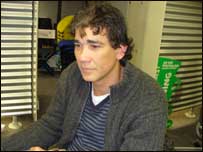 After that I worked as a volunteer with a Christian organisation which helped poor people. The director of the organisation is an English man, a Christian lady from England went to Colombia to see how the work in the foundation was. When I met her, she invited me to England to visit. When I came to England it was initially for 3 months in 2004. I started to work for a lady’s friend in an Italian restaurant and started to learn some English. I have family to support. I went back to Colombia but came back to the UK in April 2004 to work in a factory and learn more English. It was good to help my family and earn money to support them. After that I worked in a factory. Before I came I watched some films from England but I had no clear perception of what it would be like. I have never had any trouble in England just with the language because I never speak English before. I have been treated well. I am always able to work I did not live on benefits so I have a good place to live. The hard situation I found is because I am not from the community European Country, for this I can not to apply to a job as an engineer as I am. My name is IwonaMy name is Iwona and I’m from Poland. I’m a qualified midwife and I worked in Poland for three years. I came to England nearly four years ago and I’ve been working as a care assistant in a nursing home since then. I like my job, so I hoped to be a midwife here – but after a long application process I was refused. I work nights so after doing it for so long I would like to change the job and I’m working on it. 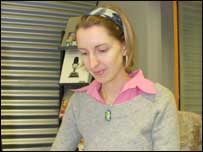 I attended New English and Communication Skills at Hull College because I like developing and learning new skills. I found it very interesting and useful. I also met people from different countries. The course is about media and its purpose is to teach us how to speak to journalist, to give us confidence but also to improve our English. Walat Oramary, IraqI had to leave Iraq for my safety. In Kurdistan there are a lot of problems that are pushing you to leave. I had to leave my family behind – my family did not want my life to be in danger and I did not want my family to be in danger. It took me 3-4 months to come to the UK and it was a very difficult journey. I crossed the border with Turkey – and then we travelled by many different lorries . You are with the smugglers who are like mafia and you don’t know where you are. You are travelling in very, very difficult conditions. Some people lose their lives in these conditions. People die because of the food – or because they have no air – or because the lorries are like fridges. Some people travel in ships and the ships were sunk. It is a very difficult journey. I travelled alone until I got to Turkey and then usually when you are smuggled you are put toghether with other people of other nationalities. I arrived in Dover in Oct 2000. I was put in a ‘bed and breakfast’ in Ashford. Later we were transferred to Hull. I was very happy to be in the UK and to be somewhere safe. During the journey you are always scared. When I got to the UK, I knew I would be safe. At the start a lot of people were talking about Hull and wanted to come to Hull. When I first came, I really did not like it – I did not think it was an exciting place to be. But I got used to it and it got better after a few years. You are not allowed to choose where you go. I was just sent to Hull. I was on NASS support for six months. I was getting £28 a week to live on. You can’t even by enough food on this – let alone clothes. I was living with other people so we shared – we cooked everything together. With the vouchers you didn’t get change, so it was very difficult to shop. After six months I got permission to work and I have been working for six years. But last week I was dismissed from the factory because the Home Office told them I was not allowed to work and that my permission to work had been withdrawn Now I’m not allowed to work or apply for benefit. I am young. I like to work. Even the factory I was working for were not happy that I could not work there anymore. My boss wants me to apply again – he wants to give me a job – but he will be fined if he does so. I was settling in Hull until last week when I lost my job. It’s difficult for me to integrate – particularly because the language, the culture and everything were new for me. It took some time and some effort from me to settle. I knew I needed to learn the language to be able to talk to people here. Now when I go to other cities I really miss Hull. I can’t wait to come back here! What would I tell another asylum-seeker – sometimes when people’s lives are in danger they will do anything to save their lives and you can’t say anything to these people about not doing this. There is a lot that is good about the UK. It is a land of opportunity. It does not matter what you do or where you come from - there is opportunity here for you. There is a lot of negative coverage of asylum issues in the media, which affects people’s behaviour towards asylum-seekers. Some people think that they are working and paying taxes and you are getting everything from the government. But it’s really not like that. I was working for six years and paying taxes – until the government said I could not work anymore. I only got benefit for six months and if I was allowed to work, I would support myself now. It’s impossible to live on the asylum-seeker allowance. I want to work. I don’t want to depend on benefit. But this situation pushes people like me to do any kind of job for £2 or £3 an hour; Illegal jobs, where they don’t pay taxes. I don’t think this is in the interests of anyone. I am not tempted to do this yet – but sometimes when I am in a really bad situation I might be tempted to do that. The people who do these kinds of jobs are exploited by their employers. Some people here are in a very bad situation: they have no money and have to live off friends, but no matter how bad it gets they don’t want to go back home. It is not safe to go back to Iraq. For some people the situation is so bad. You are not allowed to work, and cannot claim benefit and you are isolated. Some people try to leave to work in other countries. I’d like the Home office to review their policies and to look on asylum-seekers as human beings. Let them work. It’s the least they should be allowed to do. I don’t see any point in me sitting at home doing nothing. Through work you can be independent, you can contribute by paying taxes, and you feel happy that you are contributing. People get depressed if they stay at home and do nothing. For the last week I have been doing nothing. My name is Sirous KarimiHello! My name is Sirous Karimi. I am an Iranian doctor. I came to the UK almost four years ago. The reason I came here was because of my political activities against the Islamic fundamentalist government of Iran. 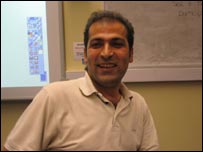 Unfortunately in England I couldn’t continue my career because my case was refused by the Home Office. But thanks to Hull College, ESOL department, I have been learning English and I now work as an interpreter for UPM (United Property Management), which provided accommodation to asylum-seekers. Although I feel quiet confident with this job, I often get bored because I miss my professional job, which I already mentioned was a GP. I also have other qualifications, which are as teacher of Russian language and as a medical laboratory technician. Finally, I wanted to mention that sometimes life is difficult but it is beautiful anyway. My life isn’t always quiet and easy; it’s also full of ups and downs. Hopefully, I am healthy and still coping with problems, because I am an optimist – which means that I will be able to be more useful for myself and the society in which I live in. Liene’s storyMy name is Liene Maslakova. I am from Latvia and have been living and working in Hull for three years. I am a student at Hull College, studying English and a Media and Communication skills course run by Oxfam’s Migrant Workers Project. 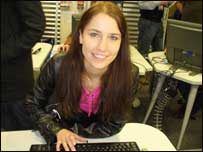 When I read articles about immigrants in the press, I get angry sometimes. I don't think that hating us would be sorting problems out. Journalists like "bloody" stories, so they create stories that would be interesting for readers. Facts are facts, and if they only show one side of the iceberg, it's doesn't mean that you know the whole story. We read that migrants are taking jobs away from British people. The things is that’s not a fact. Anyone can lose or get a job, it doesn’t matter if you are English or not. I asked my colleague how she feels about immigrants. Are they a problem for her? She said, that they will cause problems, because England didn't have so many immigrants in the past. But the UK always has been welcoming to immigrants and has helped those who are in difficulties. People are coming to the UK because of the expansion of the European Union, which has opened up opportunities for so many who are looking for better life. All the immigrants that I know work very hard every day to earn money. Most of them are saving or sending money home. The economic system in my country is unfair. Wages are very low, but prices and bills very high. I am happy to be here. I don't want to take anything from somebody else, and I am not doing it - because I am working. The shadow of being away from home is missing my family. I buy presents for them, but it will never be the same as when we were living all together. It's breaking my heart, because family is the most important thing in the world. Now I need to catch everybody on the phone, and it's not easy. Also it’s hard to keep contact with friends. Years are going and if you don't call or don't write letters – you are losing relationships that you had before. In spite of this, I am very happy to be working in Hull. Life is not easy sometimes, and I don’t know what my plans for the future are; but I am happy for the opportunity to make a new life here for the moment. Milda Sataite from LithuaniaI went to college, dreaming of being a social teacher and working with children in a school. It happened that I ended up in England – and ended up working as a production developer in a bakery! 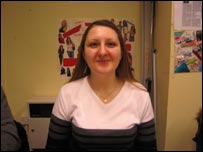 I found out through an agency in Lithuania that a company was offering a job in social care in the UK for the summer – but it was not very good experience. We had to live 33 people in one house – girls from Latvia, Lithuania and Estonia; and the job was not well paid. I never got a pay slip. The agent did not pay taxes to the government; and he wanted us to pay £50 a week for accommodation, even though we were four girls to a room. I could not pay £50 a week when I got only £80 in tow weeks. The agency had offered £5 an hour for 40 hours a week, doing social care with old people. The agent provided bikes for us to visit old people in their homes, but we were not paid to travel between the houses. We arrived in London by bus which took 32 hours. Then by coach to Hull. The agent met us and put us in his house. We lived four girls in a room, in bunk beds. At first it was OK because I like to communicate with people – and some of the elderly people were very nice. They explained things if I did not understand them. We had to help them to dress, give them breakfast, help them to wash etc. I was working 7 days a week. I had to get up at 5.00am in the morning and work until 12.00pm. Sometimes I had to get people up at 6.00pm and others would not go to bed until 11.00pm. Somedays I had 16 clients. When it was straightforward it was ok. The elderly people are just human beings and it’s easy to take care of them. I was working more than 50 hours a week, but I only got £80. But without experience and without proper language it was too hard to complain about how we were treated. So I went to work in a factory producing frozen meat. Another experience I don’t want to remember! But this time it was just to get money for my ticket home. But in some way I am glad I had that bad experience because it taught me to stand up for myself. Now if someone tried to do that to me I would say NO. I went back home but I decided to come back to the UK at the end of November the same year. I had a lovely time then, I worked in a gadget shop warehouse and had a nice time wrapping presents. The people were very nice – and it was just me and another friend. The job ended in January and then I got a job in a bakery through an agency. I started packing cakes in a line and then the factory took me and that was a relief as now I had a secure job where I could stay. After a few months they asked whether I would like to try working as a production developer. I said – OK. I have been here nearly for three years. It’s a good job. I work in the morning. And I go to college in the evening and I have had lots of training so my position is quite good. It’s not the work I want to do. But you have to do something to pay the bills. I still want to work with children, I want to continue to study and learn more. The UK government treat Lithuanians the same as British people – we have the same rights. But I am still foreign. Not everyone treats us with respect. Its not because of my skin: my language shows I am different. When people look at you or try to avoid you, you can feel very bad. But It has improved. Before it was harder to go out in the town centre with English guys attacking migrant boys. I like the course, its something different. Every lesson I learn something new. I am getting more ideas – this course has pushed me more to try and do what I want to do. I will try to get a job as a teacher or teacher’s assistant – and I have new plan to maybe be a counsellor… My family visited me from Lithuania. My mother likes the UK because she thinks there are more chances here. In Lithuania there is a bit of economic crisis: prices are going up but the wages are the same. I would say to anyone else coming to the UK – learn the language before you come. And read the paper work properly. Prepare yourself. And fight for yourself. Stand up for yourself. I did not expect so many people to try to cheat us. But there are good sources of information, like the Home Office. I am not taking anyone’s job. At my factory there are vacant jobs. The benefits in the UK are amazing. If you have no job – the government will pay you. This would never happen so easy in my country. I think the government is spoiling some of the people which haven’t deserved benefits and those which need them can’t get easy. last updated: 12/05/2008 at 16:55 You are in: Humber > People > Your Stories > Migrant Stories
 City and country trails | ||||||||||||||||||||
| | About the BBC | Help | Terms of Use | Privacy & Cookies Policy |

