


Can Google now see, hear and search in real time?
- 8 Dec 09, 11:11 GMT
"Take that, Bing!" That seemed to be the message underlying Google's announcement of its new search features at the Computer History Museum in California.
Packing the biggest punch was real-time search - as shown off in the company's short promotional video.
Google told us that the feature is live, but may take a few days to roll out across the world - in the meantime, Google Trends gives a sense of the look and feel.
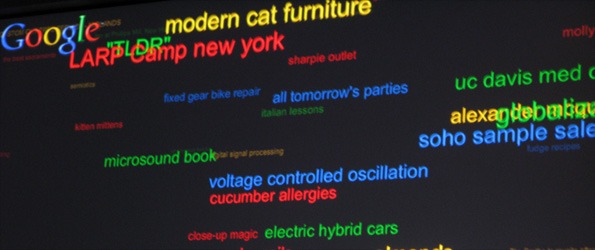
When the company's big guns - search VP Marissa Mayer, engineering VP Vic Gundotra (ex-Microsoft, by the way) and Google fellow Amit Singhal - came on stage, it was clear that their aim was to put the competition on notice, the competition in this case being Microsoft and its search engine Bing.
Lately, Bing has been grabbing the lion's share of headlines: finalising its search deal with Yahoo; introducing 3D maps; another deal with microblogging service Twitter and, less happily, that half-hour outage last week.
While Google remains the search giant with a 65+% share, Bing's deal with Yahoo ups the ante as the joint partnership prepares to lay claim to nearly 30%.
And so Google has fought back and claimed to be the first search engine to include real-time search in its results pages. There are of course other - smaller - services offering real-time search including Collecta, One Riot and Crowdeye.
Mr Singhal told me that he thought real-time search was as much of a breakthrough as Google's 2007 upgrade to universal search, when the company began providing results from books, maps, videos, news and books as well as from web pages.
Addressing the crowd of reporters and bloggers, Mr Singhal used the same kind of hyperbole as we heard back then:
"At Google, we are never satisfied. It takes a tenth of a second for light to go around the world. At Google we will not be satisfied until that is the only barrier between you and your information."
So there was the headline announcement for Google. There were other interesting features. For example, Mr Gundotra had fun showing off "visual search" - where search queries are made of pictures instead of words.
Snapping a picture of a wine bottle with his phone, he said that this kind of computer vision was one of the toughest challenges, as all sorts of information popped up in the search results box.
I'm not sure how much wine was drunk in the process of coming up with a name for this feature, but you certainly have to be sober to say Google Goggles a few times in a row.
Mr Gundotra - who, I should add, was clearly not intoxicated in any shape or form - literally spoke in tongues when demonstrating another feature, "voice search".
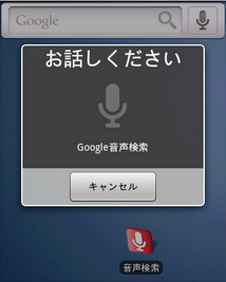 He did well getting results in Chinese for McDonalds in Beijing, but stepped aside when it came to demonstrating Japanese, the new language that is now part of the product.
There was also the launch of "what's nearby" for Google Maps on Android phones, which will give users a list of 10 of the closest places to them, including shops and restaurants.
All these developments, concluded Mr Gundotra, add up to "the beginning of the beginning":
"When you take a sensor-rich device and you connect it to the cloud - yes, it could be that we are at the cusp of an entire new computer era."
Google CEO Eric Schmidt clearly agrees. Anticipating all these announcements, he opened @ericschmidt, his Twitter account. Yes, this is the same Mr Schmidt who, earlier in the year, said "speaking as a computer scientist, I view all these as sort of a poor man's e-mail systems."
All that, of course, was way before Google formed a partnership with the popular micro-blogging service.
It's interesting to note that the photograph for Mr Schmidt's Twitter account shows him wearing a flak jacket.
The BBC is not responsible for the content of external internet sites
This is dot.life - a blog about technology from BBC News.
Rory Cellan-Jones is the BBC's technology correspondent.
Maggie Shiels is the BBC's tech reporter based in Silicon Valley.
Archive
« January 2010
| Sun | Mon | Tue | Wed | Thu | Fri | Sat |
|---|---|---|---|---|---|---|
| 1 | 2 | |||||
| 3 | 4 | 5 | 6 | 7 | 8 | 9 |
| 10 | 11 | 12 | 13 | 14 | 15 | 16 |
| 17 | 18 | 19 | 20 | 21 | 22 | 23 |
| 24 | 25 | 26 | 27 | 28 |
Being Discussed Now
- Logging out... and straight back in(3)
- Gadgets of the Noughties(20)
- Plastic Logic's long journey to Vegas(21)
- Sexting teens(17)
- Wikipedia on the wane?(49)
- 'Cooling-off' for mobile phones? Not on the High Street(37)
- 2009 - the social year(36)
- Twitter, Iran and #uksnow(25)
- Broadband Britain - how far down the league?(55)
- Microsoft and Murdoch: Teaming up to bash Google?(34)
BBC Technology Headlines
- %28none%29
%28none%29 - %28none%29
%28none%29 - %28none%29
%28none%29
Visit the Technology index
Visit the BBC News website
Rory's TV/Radio reports
- Residents block Google car
Broadcast: 3 April 2009 - New adverts to tackle film piracy
Broadcast: 2 April 2009 - Call to scrap 'illegal databases'
Broadcast: 23 March 2009 - Female robot takes to the catwalk
Broadcast: 16 March 2009 - Super-charged battery breakthrough
Broadcast: 12 March 2009

- News Editors
- Sport Editors
- Journalism Labs
- BBC Internet Blog
- Radio 4 Blog
- Peston's Picks
- Nick Robinson's Newslog
- Stephanomics
- Mark Easton's UK
- Mark Mardell's America
- Nick Bryant's Australia
- Andrew Harding on Africa
- Gavin Hewitt's Europe
- Soutik Biswas' India
- dot.Rory
- Science: Jonathan Amos
- Richard Black on environment
- Today: Tom Feilden
- Fergus Walsh's medical files
- Newsnight: Paul Mason
- Newsnight: Mark Urban
- Torin Douglas
- Will Gompertz's arts
- Phil Coomes on photojournalism
- Magazine Monitor
- Mark D'Arcy in Westminster
- NI: Mark Devenport
- Scotland: Brian Taylor
- Scotland: Douglas Fraser
- Wales: Betsan Powys
- Martin Rosenbaum on FOI
- 5 Live Breakfast
- Newsnight
- PM programme (iPM)
- World Tonight: Robin Lustig
