


Africa gets connected
- 11 Sep 09, 08:46 GMT
I'm off on a trip this weekend as one of a BBC team hoping to give you some new insights into how technology is shaping a fascinating part of the world.
It's a place where you can get a vision of the mobile future, where millions of people use their phones to run their finances and as their main point of access to the web.
But it's also an area where millions of people have a huge and unsatisfied thirst for faster connections to the rest of the world - and a belief that this could change their lives for the better.
I'm talking, of course, about Africa. Across the continent, there's the promise of far more reliable and speedy internet connections arriving via fibre-optic cables.
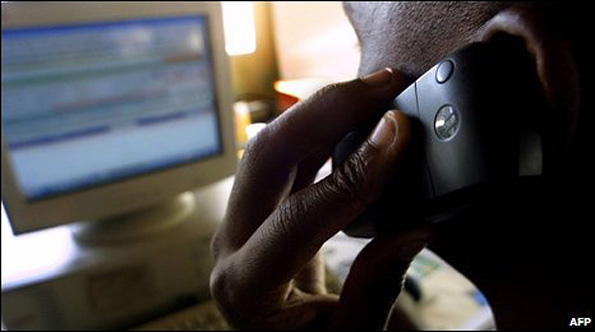
A clutch of commercial and government projects have been racing to give Africa the bandwidth it needs.
Now there's a winner in that contest - the Seacom cable laid under the sea from Mumbai to the East African coast.
It has come ashore in South Africa, Mozambique, Tanzania and Kenya - and internet service providers are just beginning to hook up customers who should now benefit from much speedier connections.
The coastal countries will benefit first, but there's huge excitement too in places like Uganda and Rwanda, where governments are promising that their citizens too will soon be connected to the cable.
Just how important this is was summed up for me by a BBC colleague, Joseph Warungu, who grew up in Kenya. He described just how difficult it was even to make an international phone call back then:
"If you wanted to call London, you had to book it in advance with the international operator and you'd be given a slot. You then had to hang around your house for the operator to call you when they found a free circuit...not necessarily at the agreed time. It could take hours for the call to come through and when it did you just hoped and prayed that your party on the other end was available otherwise it was a long wasted day."
Now Kenyans - and many other Africans - have seen their lives transformed by the arrival of mobile phones, with commercial operators succeeding in delivering a decent service where state telecoms companies had a long record of failure.
But to get onto the internet they've usually had to rely on those same mobile connections, which have been both expensive and slow.
And even businesses with a fixed line web connection struggle - witness this week's very amusing story about the South African firm which found that a racing pigeon was a quicker way of moving data than an ADSL line.
But Joseph Warungu reckons the cables could complete a digital revolution, which could be as significant for many African countries as the arrival of independence in the 1960s.
So our project - which we're calling Connected Africa - involves us heading first to Mombasa, where the Seacom landing-station in Kenya is located.
We're planning to spend a couple of days recording the impact of the new connection in the weeks after it was switched on.
Then next Wednesday, we are hoping to use the connection to broadcast live pictures and sound - a plan which is already bringing me out in a cold sweat as we all know just how unwise it can be to depend on brand new technology.
From Kenya, we head on Thursday to Rwanda, where we will spend a couple of days filming a report on how that country is hoping to use the cable to fulfil its ambitions to be Africa's digital hub. I'm planning to post daily updates about our experiences on this blog from Monday. From Wednesday, there will also be a wealth of material in a special Connected Africa section of the site, and you can catch us on radio and TV from Mombasa.
Like the cables, this project has been a long time in the planning - so I'm hoping we can deliver. Watch this space.
The BBC is not responsible for the content of external internet sites
This is dot.life - a blog about technology from BBC News.
Rory Cellan-Jones is the BBC's technology correspondent.
Maggie Shiels is the BBC's tech reporter based in Silicon Valley.
Archive
« January 2010
| Sun | Mon | Tue | Wed | Thu | Fri | Sat |
|---|---|---|---|---|---|---|
| 1 | 2 | |||||
| 3 | 4 | 5 | 6 | 7 | 8 | 9 |
| 10 | 11 | 12 | 13 | 14 | 15 | 16 |
| 17 | 18 | 19 | 20 | 21 | 22 | 23 |
| 24 | 25 | 26 | 27 | 28 |
Being Discussed Now
- Logging out... and straight back in(3)
- Gadgets of the Noughties(20)
- Plastic Logic's long journey to Vegas(21)
- Sexting teens(17)
- Wikipedia on the wane?(49)
- 'Cooling-off' for mobile phones? Not on the High Street(37)
- 2009 - the social year(36)
- Twitter, Iran and #uksnow(25)
- Broadband Britain - how far down the league?(55)
- Microsoft and Murdoch: Teaming up to bash Google?(34)
BBC Technology Headlines
- %28none%29
%28none%29 - %28none%29
%28none%29 - %28none%29
%28none%29
Visit the Technology index
Visit the BBC News website
Rory's TV/Radio reports
- Residents block Google car
Broadcast: 3 April 2009 - New adverts to tackle film piracy
Broadcast: 2 April 2009 - Call to scrap 'illegal databases'
Broadcast: 23 March 2009 - Female robot takes to the catwalk
Broadcast: 16 March 2009 - Super-charged battery breakthrough
Broadcast: 12 March 2009

- News Editors
- Sport Editors
- Journalism Labs
- BBC Internet Blog
- Radio 4 Blog
- Peston's Picks
- Nick Robinson's Newslog
- Stephanomics
- Mark Easton's UK
- Mark Mardell's America
- Nick Bryant's Australia
- Andrew Harding on Africa
- Gavin Hewitt's Europe
- Soutik Biswas' India
- dot.Rory
- Science: Jonathan Amos
- Richard Black on environment
- Today: Tom Feilden
- Fergus Walsh's medical files
- Newsnight: Paul Mason
- Newsnight: Mark Urban
- Torin Douglas
- Will Gompertz's arts
- Phil Coomes on photojournalism
- Magazine Monitor
- Mark D'Arcy in Westminster
- NI: Mark Devenport
- Scotland: Brian Taylor
- Scotland: Douglas Fraser
- Wales: Betsan Powys
- Martin Rosenbaum on FOI
- 5 Live Breakfast
- Newsnight
- PM programme (iPM)
- World Tonight: Robin Lustig
