


Who is batting for file-sharing proposals?
- 25 Aug 09, 15:39 GMT
"Peter just doesn't get the internet..."
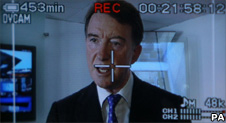 That was the instant reaction of one person I spoke to this morning about the government's new measures against illegal file-sharing - and Lord Mandelson's part in them. And this was not someone from digital campaigners the Open Rights Group or from an internet service provider, but a political insider from the same party as the business secretary.
The reaction to tough new proposals which could see those who repeatedly indulge in illegal file-sharing have their internet connections suspended has not, it's fair to say, been universally positive.
An executive from a major software business, who did not want to be named, rang me within hours of the announcement to express astonishment."What are they doing?" he asked. "It just won't work - when so many people have unsecured wireless networks, how are you going to pinpoint who the file-sharer is?"
Another critic was not so shy about coming forward. TalkTalk, whose boss Charles Dunstone has long made clear his distaste for anything that would force his business to police its own customers, put out a humdinger of a press release.
It accused the government of a U-turn and said Lord Mandelson had "caved in under pressure from powerful lobbyists in the content industry." And the company emphasised again that this policy would not work and would be strongly resisted. Other ISPs joined in the attack, albeit in more restrained a manner than TalkTalk.
Who, then, was batting for the proposals? Well, obviously the music and video industries, but even they seemed somewhat cautious in their support for what are seen as pretty radical measures. "We don't want to be seen as crowing," one spokesman told me.
It's important that this should be seen as the latest battle in the war between the content industries and the ISPs for the government's support on the file-sharing issue, with this proving a rare victory for the media barons. My understanding is that the original draft of Digital Britain did contain some strong anti-piracy measures, but that Lord Carter stepped in and toned them down.
Now Stephen Carter has left the government and it appears that Lord Mandelson has tipped the balance back towards the interests of the entertainment industries. While much has been made of the dinner attended by the business secretary and the Hollywood mogul David Geffen - the government insists they never even mentioned Digital Britain - there has also been plenty of high-level pressure from the UK film, television and music industries. They sincerely believe that a vital part of our economy is under threat - and that the issue was not taken seriously enough in the original report.
But this battle isn't over yet. By lunchtime, the Department for Business was putting out a new statement stressing that the government does not believe that "taking tough action against consumers is the right approach in every case" and even suggesting that "we have not changed our policy from the Digital Britain report".
The message seems to be that in the battle over anti-piracy measures, there's still plenty to play for. And if Lord Mandelson really "doesn't get the internet", you can be sure that there will be plenty of people now offering to educate him.
Anonymous on the internet
- 25 Aug 09, 13:58 GMT
 This morning, the Today programme featured a debate on the question of anonymity and blogging, made topical by a couple of cases where bloggers have had their identities revealed against their will.
It featured political gossip blogger Guido Fawkes (aka Paul Staines) and Dr Vince Miller, a University of Kent academic who studies the blogosphere.
In order to see this content you need to have both Javascript enabled and Flash installed. Visit BBC Webwise for full instructions. If you're reading via RSS, you'll need to visit the blog to access this content.
I was asked by the programme's producers to write an audio essay which would act as an introduction to the debate. Here it is:
"According to a famous New Yorker cartoon, on the internet nobody knows you're a dog.There are two views of that anonymity which has been an essential characteristic of the online world.
Either it allows the free expression of all sorts of interesting and subversive voices that would not otherwise be heard.
Or it makes the web a playground for every noisy and offensive bar-room bore - who doesn't even have to put a name to their ill-considered views.
Now it's becoming evident that this anonymity is, in any case, pretty fragile. Two cases have highlighted that fact.
First there was the police officer behind the award-winning NightJack blog>, revealed as Detective Constable Richard Horton after the Times persuaded a High Court judge that bloggers had no absolute right to keep their identities secret.
Then there was the unnamed female blogger who posted a series of offensive remarks about a Vogue cover model.
A New York judge ordered Google, which hosted the blog, to unmask Rosemary Port after the model Liskula Cohen sued, arguing that the comments were defamatory.
Now Google is on the back foot, accused of violating the blogger's privacy .The search company insists it does care about anonymity, and will only provide information about a user in response to a court order.
So, on both sides of the Atlantic it appears that the law is giving little protection to those who believe the internet should be an anonymous space.
There is too a growing momentum in the blogosphere behind the idea that those who want the world to hear their very strong opinions should have the courage to identify themselves - just as they would in a letter to a newspaper.
But - as recent events in places from Iran to Burma to China have shown - for some people, online anonymity can be a matter of life and death."
What I didn't discuss is an issue that sometimes occupies the writers of this and other BBC blogs - who exactly are the respondents who contribute their views on our posts, and should they remain in the shadows?
For instance, I'd love to know more about people like "ravenmorpheus" or "synthil", "hackerjack" or "mighty morfa power ranger".
Now anonymity is a valuable, indeed vital protection for junior staff inside corporations or public bodies, or people from countries with repressive governments, who would otherwise feel unable to contribute their views or provide valuable information to blogs like this.
But doesn't "Disgusted of Tunbridge Wells" have more credibility if she writes as Josephine Bloggs of Acacia Gardens?
I'd love to hear your views on this matter - and of course if you wish to remain anonymous, that's your choice.
The BBC is not responsible for the content of external internet sites
This is dot.life - a blog about technology from BBC News.
Rory Cellan-Jones is the BBC's technology correspondent.
Maggie Shiels is the BBC's tech reporter based in Silicon Valley.
Archive
« January 2010
| Sun | Mon | Tue | Wed | Thu | Fri | Sat |
|---|---|---|---|---|---|---|
| 1 | 2 | |||||
| 3 | 4 | 5 | 6 | 7 | 8 | 9 |
| 10 | 11 | 12 | 13 | 14 | 15 | 16 |
| 17 | 18 | 19 | 20 | 21 | 22 | 23 |
| 24 | 25 | 26 | 27 | 28 |
Being Discussed Now
- Logging out... and straight back in(3)
- Gadgets of the Noughties(20)
- Plastic Logic's long journey to Vegas(21)
- Sexting teens(17)
- Wikipedia on the wane?(49)
- 'Cooling-off' for mobile phones? Not on the High Street(37)
- 2009 - the social year(36)
- Twitter, Iran and #uksnow(25)
- Broadband Britain - how far down the league?(55)
- Microsoft and Murdoch: Teaming up to bash Google?(34)
BBC Technology Headlines
- %28none%29
%28none%29 - %28none%29
%28none%29 - %28none%29
%28none%29
Visit the Technology index
Visit the BBC News website
Rory's TV/Radio reports
- Residents block Google car
Broadcast: 3 April 2009 - New adverts to tackle film piracy
Broadcast: 2 April 2009 - Call to scrap 'illegal databases'
Broadcast: 23 March 2009 - Female robot takes to the catwalk
Broadcast: 16 March 2009 - Super-charged battery breakthrough
Broadcast: 12 March 2009

- News Editors
- Sport Editors
- Journalism Labs
- BBC Internet Blog
- Radio 4 Blog
- Peston's Picks
- Nick Robinson's Newslog
- Stephanomics
- Mark Easton's UK
- Mark Mardell's America
- Nick Bryant's Australia
- Andrew Harding on Africa
- Gavin Hewitt's Europe
- Soutik Biswas' India
- dot.Rory
- Science: Jonathan Amos
- Richard Black on environment
- Today: Tom Feilden
- Fergus Walsh's medical files
- Newsnight: Paul Mason
- Newsnight: Mark Urban
- Torin Douglas
- Will Gompertz's arts
- Phil Coomes on photojournalism
- Magazine Monitor
- Mark D'Arcy in Westminster
- NI: Mark Devenport
- Scotland: Brian Taylor
- Scotland: Douglas Fraser
- Wales: Betsan Powys
- Martin Rosenbaum on FOI
- 5 Live Breakfast
- Newsnight
- PM programme (iPM)
- World Tonight: Robin Lustig
