


So long and thanks for all the...
- 25 Jun 09, 15:14 GMT
After nine years at the BBC, I've decided to say goodbye to Auntie and to "pursue other opportunities", as is sometimes said.
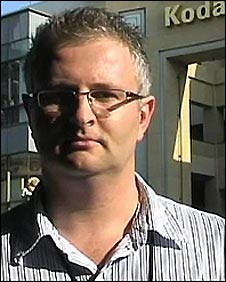 I've had three wonderful years running the technology section, interviewed some of the biggest names in the business and covered some of the best stories.
I leave dot.life in the capable hands of Rory Cellan-Jones and Maggie Shiels. And in the crack online tech team, they'll continue to write the day-to-day journalism because they recognise how important the subject area is.
As author Carl Sagan once said:
"We live in a society exquisitely dependent on science and technology, in which hardly anyone knows anything about science and technology."
For those who want to stay in touch, you can find me on Twitter.

A browser-free Windows 7
- 25 Jun 09, 14:45 GMT
Microsoft has just issued a press release and blog about the pricing of Windows 7 when it arrives on 22 October, which is so complex and so full of PR guff that I would have chucked it straight into my virtual bin, if I hadn't had a briefing from the company earlier today.

Luckily, during that telephone call with John Curran, Windows business lead, Microsoft UK, a story did emerge. And it's this - European consumers will be offered a browser-free Windows at a decent price to satisfy those fussy folks at the European Commission. The trouble is, that's unlikely to please either Brussels or consumers.
Microsoft is in the middle of another epic battle during its long war with the European Commission over the alleged abuse of its monopoly position. This time the issue is the bundling of Internet Explorer with Windows, the subject of complaints from rival browser makers.
Earlier this month Microsoft came up with a ploy it thought might satisfy the Commission, promising that Windows 7 would be released in Europe without any browser.
Today we learned that this would mean that European users who wanted to upgrade would have to install the full version - if they'd been offered the simpler upgrade, that would have simply imported their existing browser, almost certainly Internet Explorer, into their new setup.
But Microsoft says it's giving European users that full version for the same price that it would normally charge for an upgrade - £79.99 in the UK.
But here's the problem. You upgrade from XP or Vista to Windows 7, and then find you've got no browser. No problem, I hear you say, you just go and download one - say Firefox, or Chrome, or Safari or maybe Internet Explorer 8. Using your browser. Ahh...right.
Microsoft told me "we will have some answers" to this issue, but admitted there were "challenges and complexities" involved. But the company pointed out to me that the vast majority of Windows 7 users were likely to be people buying new computers, and the manufacturers were likely to pre-install a browser on those machines.
So what will the likes of Dell, Toshiba, HP or Lenovo choose to install? Internet Explorer 8, perhaps?
John Curran from Microsoft said the whole aim of the European version of Windows 7 was to make sure that the company was "in full compliance with EU law." I rang a man in Brussels to ask whether the European Commission was impressed by Microsoft's behaviour.
The sound of loud harrumphing came whistling down the line. "For them to claim they're doing this in order to comply with European law is just nonsense," he told me, although he used a slightly stronger term than nonsense.
He explained that Brussels had suggested an alternative approach, whereby consumers were offered a "ballot screen" when they first turned on a Windows 7 computer, allowing them to choose from a menu of different browsers.
And he pointed out that if the whole business ends up with Microsoft somehow persuading manufacturers to install Internet Explorer on their machines, then consumers will be no better off.
Microsoft believes it's offering European consumers a compelling product while satisfying the concerns of the regulators. But the next move will come from Brussels - and it looks likely that Microsoft will be ordered to offer not a browser-free Windows 7 but one with a full menu of choices.

The Steve Jobs obsession
- 25 Jun 09, 12:21 GMT
In the last few days, the media here in Silicon Valley could be forgiven for losing it a bit over Steve Jobs and the news about his liver transplant. The way information has been stalked down, you might think we've been covering some ailing head of state or member of a royal family.
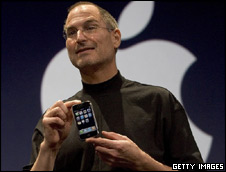 The thing is that here, to some degree, that is just what Steve Jobs is.
You see, there are very few colourful characters to flip out over in this part of the world. There isn't really that much in the way of bad behaviour. The megalomaniacs tend to operate on the down-low. And the gods of geek are very different from those of rock that most emulate or admire.
Think about it for a second.
Larry Page and Sergey Brin, the founders of Google, keep such a low profile they are almost invisible. Eric Schmidt, Google's CEO, is like everyone's favourite uncle with a wicked glint in his eye. Facebook's Mark Zuckerburg also plays the inconspicuous card, along with the founders of Twitter, who are settling into a different stage of their lives - one with wives and babies and dogs and cats.
Apple co-founder Steve Wozniak springs to mind as one who stands out from the crowd; despite his attempts to show the world that "geeks really can dance", though, he admits to being painfully shy.
So why the obsession with Steve Jobs, who shuns the limelight and does not court publicity in any shape or form?
A big part has to do with how he has transformed Apple and its products into some of the most talked-about in the world. And, of course, there is the whole issue of his health five years after his battle with pancreatic cancer and what it means to the future of this publicly-traded company.
Mr Jobs appears to be a complete enigma. He doesn't give interviews; he is described as a genius and a visionary; he doesn't want to talk about the past and he only wants to focus on the future.
While Mr Jobs jealously guards his privacy and controls the flow of information regarding his own life, he is a star performer when he gets on stage at those Apple events touting the latest software upgrade or iPhone release. He does not come across as some tortured soul who prefers the company of bits and bytes. He seems really comfortable in his skin.
Over the last year, the amount of information that the Apple chief exec has allowed to be made public about his health has been minuscule. In the last few days, it has been like a torrent.
Timing, of course, is all. The cynics note that news of Mr Jobs' liver transplant coincided with the release of the new iPhone 3GS on a Friday, giving analysts plenty of time to absorb it so that, come Monday, the markets would not overreact.
As some started speculating about whether Mr Jobs had used his wealth and influence to leapfrog others to a transplant, he and his handlers moved quickly to nip that in the bud.
In a highly unusual move, the hospital went on the record and issued a statement about why Mr Jobs was selected: "whoever is on the top of the list, they're there because they're the sickest".
Not only that, the doctor who runs the transplantation unit at Methodist University Hospital in Memphis then met with local reporters to talk more about it.
We all know that had to have happened with the express approval of Mr Jobs himself, a move that certainly has everyone wondering what he is up to, given his previous attempts to stymie all conversation about his health.
Does this mark a new beginning? A turning point? Either way, this game of cat and mouse is not set to stop any time soon.
China and Google: What's going on
- 25 Jun 09, 11:22 GMT
We aim to serve on this blog, so when a reader of my last post asked for some thoughts on the interesting stand-off between Google and China over web censorship, I set to work.
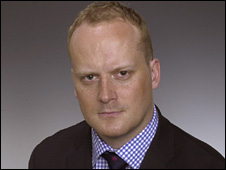 Or rather, I got in touch with an old friend who knows far more about this subject than I do. Quentin Sommerville, formerly a business correspondent in London, is now the BBC's Beijing correspondent.
Not only has he lived in China for the last four years, he's a very tech-savvy guy, and has plenty of knowledge of the workings of the Great Firewall of China.
So I sent him some questions - and he gave me some very useful answers.
Quentin, what exactly is going on with Google in China right now?
"On Wednesday night, Google's international and Chinese websites were unavailable in many parts of China. Gmail disappeared too. Service has now been restored, at least in some places. China's internet watchdog says that Google promotes porn; the state broadcaster CCTV on 18 June broadcast a report saying something similar."
Just a minute: I thought that those "don't do evil" folks from Mountain View had done a deal a few years back which meant that they could go on operating in China in return for censoring certain search terms?
"They did. If you search Google China for anything political or naughty, you get the following message:
"'According to the local laws and policy, part of the search results are not shown'"Chinese internet users are even prevented from searching for the names of their leaders, Hu Jintao and Wen Jiaobao.
"Of course, there are plenty of Chinese search engines that link to porn. The suspicion among some internet users is that Google's rivals are using government connections to hobble their foreign competitor."
This is all part of a wider web crackdown in China, isn't it? What's this Green Dam carry-on all about?
"Ah, the Green Dam Youth Escort. It is net nanny software that has to be installed on every computer sold in China from 1 July. Beijing claims that the filter's primary aim is to block pornography, but it will also restrict access to sites that contain politically sensitive sites.
"The US says it might violate trade rules - in fact, everyone seems to hate it. Especially Chinese internet users. Even parts of the state media have come out against the software."The Green Dam appears to have been badly written, and parts of it may have been lifted from a rival US software filter. Those who have decoded it say that it will put computers at greater risk from hackers.
"Also, it works by looking for flesh tones as well as keywords, but has also been found to block sites which contain lots of the colour pink. I'm also reliably informed that it doesn't block pornography featuring dark-skinned performers."
Does this affect the way Chinese people can view bbc.com?
"BBC News in English is available in China, but our Chinese site remains blocked."
Now, I know that you, Quentin, are a fanatically heavy user of the web on every form of device - how are you finding surfing in China compared with in the UK?
"Despite the government's best efforts, the internet is a fairly vibrant place in China. Bloggers here often complain that we exaggerate the effect of the controls. Many users know how to circumvent the government's various firewalls and other blocks.
"Internet campaigns against cases of injustice or corruption are occurring more frequently, with some notable successes (perhaps that's why the government is so afraid)."I find surfing okay here, although it drives me nuts when my iPhone automatically takes me to Google's Chinese site, rather than the international site - not much use for a journalist in China."
So there we are: some fascinating insights on the issue of web censorship in China. I find it always pays to go to an expert - and then pass off their knowledge as your own. So thanks, Quentin!
The BBC is not responsible for the content of external internet sites
This is dot.life - a blog about technology from BBC News.
Rory Cellan-Jones is the BBC's technology correspondent.
Maggie Shiels is the BBC's tech reporter based in Silicon Valley.
Archive
« January 2010
| Sun | Mon | Tue | Wed | Thu | Fri | Sat |
|---|---|---|---|---|---|---|
| 1 | 2 | |||||
| 3 | 4 | 5 | 6 | 7 | 8 | 9 |
| 10 | 11 | 12 | 13 | 14 | 15 | 16 |
| 17 | 18 | 19 | 20 | 21 | 22 | 23 |
| 24 | 25 | 26 | 27 | 28 |
Being Discussed Now
- Logging out... and straight back in(3)
- Gadgets of the Noughties(20)
- Plastic Logic's long journey to Vegas(21)
- Sexting teens(17)
- Wikipedia on the wane?(49)
- 'Cooling-off' for mobile phones? Not on the High Street(37)
- 2009 - the social year(36)
- Twitter, Iran and #uksnow(25)
- Broadband Britain - how far down the league?(55)
- Microsoft and Murdoch: Teaming up to bash Google?(34)
BBC Technology Headlines
- %28none%29
%28none%29 - %28none%29
%28none%29 - %28none%29
%28none%29
Visit the Technology index
Visit the BBC News website
Rory's TV/Radio reports
- Residents block Google car
Broadcast: 3 April 2009 - New adverts to tackle film piracy
Broadcast: 2 April 2009 - Call to scrap 'illegal databases'
Broadcast: 23 March 2009 - Female robot takes to the catwalk
Broadcast: 16 March 2009 - Super-charged battery breakthrough
Broadcast: 12 March 2009

- News Editors
- Sport Editors
- Journalism Labs
- BBC Internet Blog
- Radio 4 Blog
- Peston's Picks
- Nick Robinson's Newslog
- Stephanomics
- Mark Easton's UK
- Mark Mardell's America
- Nick Bryant's Australia
- Andrew Harding on Africa
- Gavin Hewitt's Europe
- Soutik Biswas' India
- dot.Rory
- Science: Jonathan Amos
- Richard Black on environment
- Today: Tom Feilden
- Fergus Walsh's medical files
- Newsnight: Paul Mason
- Newsnight: Mark Urban
- Torin Douglas
- Will Gompertz's arts
- Phil Coomes on photojournalism
- Magazine Monitor
- Mark D'Arcy in Westminster
- NI: Mark Devenport
- Scotland: Brian Taylor
- Scotland: Douglas Fraser
- Wales: Betsan Powys
- Martin Rosenbaum on FOI
- 5 Live Breakfast
- Newsnight
- PM programme (iPM)
- World Tonight: Robin Lustig
