


Can HTC's Hero be a smartphone winner?
- 24 Jun 09, 15:53 GMT
A glitzy launch in a trendy Shoreditch location, with technology journalists flying in from all over the world - it sounds like the kind of event that Apple would lay on. But this was the unveiling of the phone that could - just could - provide a worthy challenger to the iPhone.
Yes, I know you've heard it all before - everyone from Blackberry to LG, from Samsung to Nokia - has stepped up to the plate with smart and shiny touchscreen devices which were going to prove that Apple's success in the smartphone stakes was a mere flash in the pan. And they've all failed to knock the iPhone from its perch because none has had its sheer usability.
But could the HTC Hero - the new device unveiled in Shoreditch - finally crack it?
In order to see this content you need to have both Javascript enabled and Flash installed. Visit BBC Webwise for full instructions. If you're reading via RSS, you'll need to visit the blog to access this content.
The Taiwanese firm has a good track record in making smart devices, hitherto mainly on the Windows Mobile platform. But its phones have appealed mainly to techies rather than a wider market - a fact implicitly acknowledged in the launch presentation. They showed us a series of interviews with people on the streets talking about their mobiles - and a frequent comment was "phones have too many features made for techies."
So the Hero, a phone that takes Google's Android operating system and makes it even more user-friendly, is aimed fairly and squarely at non-techies. In the presentation there was hardly a mention of all those aspects the true geeks love to hear about - the 5 megapixel camera, the expandable memory, the AGPS - all of which are present on the phone.
Instead, the focus was on "putting people at the centre", allowing the user to personalise the device to the nth degree. So, for instance, you can have everything about one friend - their e-mails, their texts, their Facebook statues, their Flickr photos - all in one view. You can choose which applications - e-mail, music, weather - to make easily available, and which to hide, and you can have different settings for work, home, or holiday.
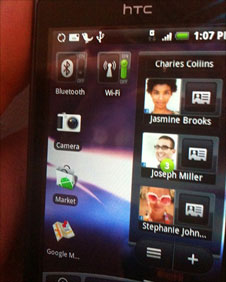 The look and feel of the phone was also a major theme, from the angled mouthpiece to a non-smudging touchscreen. It wasn't "hard and slippery" like some other phones, we were told, but soft to the touch, thanks to a Teflon coating. Now, in the few minutes I had to play with the Hero, I can't say that its non-slip coating was particularly exciting - but I was impressed by what I could see of the user-interface.
The iPhone has succeeded because it has made what were "geeky" things simple - from viewing a web page to trimming a video and sending it to YouTube. The Hero seems to have learned that lesson.
But Apple has also succeeded in the phone business because of its marketing strategy. It has one device, on one network, acompanied by one enormous marketing blitz, and when consumers hear the word "iPhone", they recognise that in a way they don't recognise the N96, the Omnia or the Viewty.
Here's where the HTC device may run into trouble. It's being offered across Europe by two networks, Orange and T-Mobile. Fine, as long as they unite around one marketing message. But when I returned to my desk from the launch, I found an e-mail from T-Mobile headlined "G1 Touch Joins T-Mobile Android Family." Puzzled, I rang to inquire whether this was yet another phone, but discovered that T-Mobile had decided to sell the Hero under its own brand, with no mention of HTC.
Convincing consumers that the Hero is more fun, fashionable and usable than the iPhone was never going to be an easy job. But giving it two different names is going to make that all the harder.

Please leave your phone on in the cinema
- 24 Jun 09, 08:31 GMT
The San Francisco Jewish Film Festival (SFJFF) is taking a leap into the digital age.
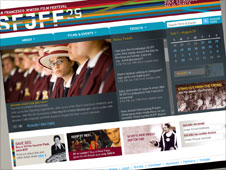 The organisers hope to act as a kind of one-stop shop for anyone interested in Jewish films and film-makers (see Four Short Films About Love and Not Another Jewish Movie), billing it the IMDb of Jewish film.
The festival's executive director Peter Stein told me:
"What we are trying to do is bring some of the essential aspects of what a film festival does in four walls to the online world. We are talking about offering not just great content, but also context and meaning and a sense of community, and migrating all of that to the online space."
This means, of course, podcasts, streaming media, educational materials and social networking opportunities - but the tool that the organisers really want to encourage people to use is the ubiquitous mobile phone. They want anyone who comes to the physical festival to keep their phone on in the theatre. Yep, I said "on".
Rather than sitting back and munching on the popcorn, the festival hopes that audience members will give instant feedback - and use VoIP technology to interview film-makers who can't be there in person.
"We want to create relationships between films and the audience over time. Relationships between people who are not in the same place at the same time," explained Mr Stein.
The project is being backed by a number of foundations, including that set up by film director Steven Speilberg, the Righteous Persons Foundation, and hopes to provide "a living archive and educational tool for Jewish history and film for future generations".
The SFJFF sees this as part of a broader trend of film festivals, film-making and educational content moving online and stakes a claim that "we are one of the first culturally-specific film festival organisations and the first Jewish organisation to do this".
The BBC is not responsible for the content of external internet sites
This is dot.life - a blog about technology from BBC News.
Rory Cellan-Jones is the BBC's technology correspondent.
Maggie Shiels is the BBC's tech reporter based in Silicon Valley.
Archive
« January 2010
| Sun | Mon | Tue | Wed | Thu | Fri | Sat |
|---|---|---|---|---|---|---|
| 1 | 2 | |||||
| 3 | 4 | 5 | 6 | 7 | 8 | 9 |
| 10 | 11 | 12 | 13 | 14 | 15 | 16 |
| 17 | 18 | 19 | 20 | 21 | 22 | 23 |
| 24 | 25 | 26 | 27 | 28 |
Being Discussed Now
- Logging out... and straight back in(3)
- Gadgets of the Noughties(20)
- Plastic Logic's long journey to Vegas(21)
- Sexting teens(17)
- Wikipedia on the wane?(49)
- 'Cooling-off' for mobile phones? Not on the High Street(37)
- 2009 - the social year(36)
- Twitter, Iran and #uksnow(25)
- Broadband Britain - how far down the league?(55)
- Microsoft and Murdoch: Teaming up to bash Google?(34)
BBC Technology Headlines
- %28none%29
%28none%29 - %28none%29
%28none%29 - %28none%29
%28none%29
Visit the Technology index
Visit the BBC News website
Rory's TV/Radio reports
- Residents block Google car
Broadcast: 3 April 2009 - New adverts to tackle film piracy
Broadcast: 2 April 2009 - Call to scrap 'illegal databases'
Broadcast: 23 March 2009 - Female robot takes to the catwalk
Broadcast: 16 March 2009 - Super-charged battery breakthrough
Broadcast: 12 March 2009

- News Editors
- Sport Editors
- Journalism Labs
- BBC Internet Blog
- Radio 4 Blog
- Peston's Picks
- Nick Robinson's Newslog
- Stephanomics
- Mark Easton's UK
- Mark Mardell's America
- Nick Bryant's Australia
- Andrew Harding on Africa
- Gavin Hewitt's Europe
- Soutik Biswas' India
- dot.Rory
- Science: Jonathan Amos
- Richard Black on environment
- Today: Tom Feilden
- Fergus Walsh's medical files
- Newsnight: Paul Mason
- Newsnight: Mark Urban
- Torin Douglas
- Will Gompertz's arts
- Phil Coomes on photojournalism
- Magazine Monitor
- Mark D'Arcy in Westminster
- NI: Mark Devenport
- Scotland: Brian Taylor
- Scotland: Douglas Fraser
- Wales: Betsan Powys
- Martin Rosenbaum on FOI
- 5 Live Breakfast
- Newsnight
- PM programme (iPM)
- World Tonight: Robin Lustig
