


In search of audio perfection
- 23 Apr 09, 12:04 GMT
Does anyone care about good audio quality anymore? In the age of the MP3 player have we all settled for lower quality audio, compressed sounds, and the artificial edge to ripped music?
 When I first started ripping my CDs on to my computer I did so at the default 128kbps quality setting. It wasn't long before I realised that while the music sounded acceptable on my MP3 player, songs sounded pretty "thin" when played through my stereo.
If you are still ripping in MP3 128kbps quality, try playing a song through your hi-fi and then use the original CD. There's a world of difference.
When iTunes first started it was offering songs at 128kbps in AAC format, which many people believe to offer better audio quality than MP3.
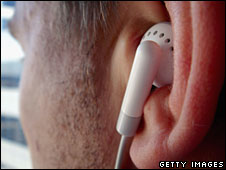
Again, it sounded okay on the bundled headphones that came with your iPod but play it through a stereo and the limitations are clear.
These days Apple offers all of its songs in 256kbps AAC format, twice the quality of songs when it launched.
But it is still a "lossy" format. You are not getting the full quality of the CD.
The issue for many of us is that the distinction between our music on the go and the music we listen to at home is blurring. Many of us now have all of our music stored on a computer or server, which is streamed to a hi-fi or speakers.
I've put all of my CDs in storage and have about 7,000 tracks on a server up in the attic which I access via iTunes or a games console.
The problem is that I have some songs recorded at 128Kbps MP3, most at 192Kbps MP3 and many at 192Kbps AAC.
I'm slowly beginning to rip my CDs once more - this time in a lossless format. There are quite a few to choose from, among them Apple Lossless, Free Lossless Audio Codec, Audio Lossless Coding and Windows Media Lossless.
The downside is that the better the bit rate of the encoding, the more storage space is requured for the track and in the case of lossless formats.
As I want to play these songs on the go I have to choose Apple Lossless, because my iPhone supports this format.
For those of us pursuing the lossless route the problem is the quality of the headphones that come bundled with our MP3 players, which tend to have very limited frequency response and so can't take full advantage of the extra audio quality.
There is a good range of more expensive earphones out there from companies such as Bose, Shure and Etymotic. All which significantly improve the listening experience.
The US firm Etymotic has done a deal with small British firm ACS to take this one stage further - providing custom sleeves that fit your ears alone.
I've had the procedure done myself, which you can watch in the video below. It's a painless process, pretty quick and quite interesting, if you've ever wanted to know what the inside of your ears look like.
In order to see this content you need to have both Javascript enabled and Flash installed. Visit BBC Webwise for full instructions. If you're reading via RSS, you'll need to visit the blog to access this content.
A pair of Etymotic HF2 earphones bought from Apple comes with a voucher. You can use that to get a "cast" of your ears at an approved audiologist.
You will then be sent a pair of custom sleeves which fit on to the end of the HF2 earphones. ACS also makes a range of custom sleeves which fit on to other manufacturers' earphones.
So why do this? The HF2 earphones certainly offer much more sophisticated audio quality than the earphones that come bundled free with MP3 players. And the custom sleeves offer a better fit for your ear and noise isolation. The advantage here is that you don't need to turn up your music to hear it better because it is not being diluted by external sound.
Custom sleeves on a decent set of earphones is a couple of stages removed from true earphone nirvana, however. If you are one of the jet set then you could invest in a pair of custom monitors. These are sleeves with the audio drivers built-in and used by rock musicians and Formula One drivers. However, they can cost up to £500, so are not exactly within reach of the mainstream consumer.
I was chatting to Michael Shaver from Etymotic on Wednesday and he said teenagers had become used to cranking up the bass and volume on their MP3 players to compensate for the external noise of the street and the limitations of their earphones.
Aside from being bad for your hearing, this is clearly not the best way to get the most out of your digital audio.
The wider problem, however, is that a whole generation of music lovers have become accustomed to the poorer audio quality of MP3 encoded at a low bit rate.
Professor Jonathan Berger, from Stanford University, has been testing the listening preferences of students, exposing them to MP3 encoded music and tracks encoded at a higher quality.
He has been doing this for a number of years and found with each new influx of students, more and more them prefer music encoded at the lower MP3 encoding rate.
His explanation: music listeners have become accustomed to the digitised "sizzle" of MP3 compression.
So if you are of the generation that has been brought up with the iPod, you might want to save yourself some disk space and the extra money required to buy better earphones, or custom sleeves, and stick with the bog standard MP3 encoding.
The BBC is not responsible for the content of external internet sites
This is dot.life - a blog about technology from BBC News.
Rory Cellan-Jones is the BBC's technology correspondent.
Maggie Shiels is the BBC's tech reporter based in Silicon Valley.
Archive
« January 2010
| Sun | Mon | Tue | Wed | Thu | Fri | Sat |
|---|---|---|---|---|---|---|
| 1 | 2 | |||||
| 3 | 4 | 5 | 6 | 7 | 8 | 9 |
| 10 | 11 | 12 | 13 | 14 | 15 | 16 |
| 17 | 18 | 19 | 20 | 21 | 22 | 23 |
| 24 | 25 | 26 | 27 | 28 |
Being Discussed Now
- Logging out... and straight back in(3)
- Gadgets of the Noughties(20)
- Plastic Logic's long journey to Vegas(21)
- Sexting teens(17)
- Wikipedia on the wane?(49)
- 'Cooling-off' for mobile phones? Not on the High Street(37)
- 2009 - the social year(36)
- Twitter, Iran and #uksnow(25)
- Broadband Britain - how far down the league?(55)
- Microsoft and Murdoch: Teaming up to bash Google?(34)
BBC Technology Headlines
- %28none%29
%28none%29 - %28none%29
%28none%29 - %28none%29
%28none%29
Visit the Technology index
Visit the BBC News website
Rory's TV/Radio reports
- Residents block Google car
Broadcast: 3 April 2009 - New adverts to tackle film piracy
Broadcast: 2 April 2009 - Call to scrap 'illegal databases'
Broadcast: 23 March 2009 - Female robot takes to the catwalk
Broadcast: 16 March 2009 - Super-charged battery breakthrough
Broadcast: 12 March 2009

- News Editors
- Sport Editors
- Journalism Labs
- BBC Internet Blog
- Radio 4 Blog
- Peston's Picks
- Nick Robinson's Newslog
- Stephanomics
- Mark Easton's UK
- Mark Mardell's America
- Nick Bryant's Australia
- Andrew Harding on Africa
- Gavin Hewitt's Europe
- Soutik Biswas' India
- dot.Rory
- Science: Jonathan Amos
- Richard Black on environment
- Today: Tom Feilden
- Fergus Walsh's medical files
- Newsnight: Paul Mason
- Newsnight: Mark Urban
- Torin Douglas
- Will Gompertz's arts
- Phil Coomes on photojournalism
- Magazine Monitor
- Mark D'Arcy in Westminster
- NI: Mark Devenport
- Scotland: Brian Taylor
- Scotland: Douglas Fraser
- Wales: Betsan Powys
- Martin Rosenbaum on FOI
- 5 Live Breakfast
- Newsnight
- PM programme (iPM)
- World Tonight: Robin Lustig
