


Facebook is Five
- 4 Feb 09, 10:22 GMT
Happy Birthday, Facebook. You've made it to five, and you're still standing on your own two feet.
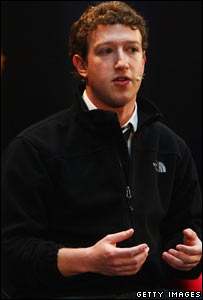 That is a pretty good achievement for a little website started in a bedroom by a student. Mark Zuckerberg has defied those who advised him to sell up when the going was good rather than forging ahead on his own.
And for those, like me, who've tired of Facebook and moved on to another social network (I won't mention it because I know it's beginning to bore some of you), it is worth looking at the latest figures to remind ourselves of the extent to which Mr Zuckerberg's creation now dominates its young industry.
Eighteen months ago, when the London media became somewhat obsessed with Facebook, it was growing rapidly but was still way behind MySpace in terms of its total audience. Even 12 months ago, according to Nielsen Online, Facebook had a global audience of 38 million compared to MySpace's 78 million - although in the UK it had already grabbed the number one spot. But by the end of 2008, Mr Zuckerberg's network had nearly trebled, with 110 million people using it worldwide, while MySpace had barely moved at all, up to 83 million.
In the UK the figures are even more startling. Facebook has more than 17 million users, three times as many as MySpace, and people spend more time on it than on any other site. Networks with professional rather than social aims, such as LinkedIn, are also growing rapidly, but are minnows in the wake of the Facebook whale.
So who are all these people in the poking crowd? Well, it seems that at least in the UK just about anyone between 15 and 25 feels obliged to have a Facebook profile.
I've been talking to some students in Bristol, who seem almost addicted to the network. Joe Gilder, now the communications officer at Bristol University students' union, admitted he was amazed that he'd got through his degree, so much time had he spent just mucking around on Facebook.
"I used to spend at least three hours a day on it which I called revising," he told me. "For me it's the most important thing around. I know exactly what's going on everywhere through my Facebook profile." His verdict - and that of others I spoke to - was that it was almost impossible to live the student life without Facebook.
But how is Mr Z getting on with turning all this obsessive devotion into money? He certainly hasn't taken the easy way out. The MySpace founders got out rather rapidly, selling up to the Murdoch empire. Friends Reunited was bought by ITV. And most impressively of all, Bebo tied the knot with AOL for $850 million a year ago.
All of those deals now look pretty smart. AOL has denied recent reports that it's now looking to shed Bebo at a loss, but you can't help thinking that anyone who bought a social network before the global downturn really began to bite is now feeling like someone who took out a 100% mortgage on a London house in 2007. While those who sold the houses - and banked their winnings - are feeling, well, somewhat smug.
 Social networking is one trend that shows no sign of going away. But it is proving surprisingly hard to "monetise", with users deeply suspicous of any attempt to insert marketing messages between them and their friends. Still, according to the Harvard Crimson's report, just five days after Mark Zuckerberg launched "thefacebook.com", he "did not create the website with the intention of generating revenue".
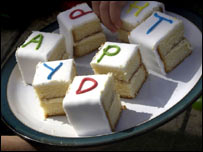
So, as he lights the candles on the birthday cake, maybe it's enough for him just to have created something that has changed the way millions of people communicate.
The BBC is not responsible for the content of external internet sites
This is dot.life - a blog about technology from BBC News.
Rory Cellan-Jones is the BBC's technology correspondent.
Maggie Shiels is the BBC's tech reporter based in Silicon Valley.
Archive
« January 2010
| Sun | Mon | Tue | Wed | Thu | Fri | Sat |
|---|---|---|---|---|---|---|
| 1 | 2 | |||||
| 3 | 4 | 5 | 6 | 7 | 8 | 9 |
| 10 | 11 | 12 | 13 | 14 | 15 | 16 |
| 17 | 18 | 19 | 20 | 21 | 22 | 23 |
| 24 | 25 | 26 | 27 | 28 |
Being Discussed Now
- Logging out... and straight back in(3)
- Gadgets of the Noughties(20)
- Plastic Logic's long journey to Vegas(21)
- Sexting teens(17)
- Wikipedia on the wane?(49)
- 'Cooling-off' for mobile phones? Not on the High Street(37)
- 2009 - the social year(36)
- Twitter, Iran and #uksnow(25)
- Broadband Britain - how far down the league?(55)
- Microsoft and Murdoch: Teaming up to bash Google?(34)
BBC Technology Headlines
- %28none%29
%28none%29 - %28none%29
%28none%29 - %28none%29
%28none%29
Visit the Technology index
Visit the BBC News website
Rory's TV/Radio reports
- Residents block Google car
Broadcast: 3 April 2009 - New adverts to tackle film piracy
Broadcast: 2 April 2009 - Call to scrap 'illegal databases'
Broadcast: 23 March 2009 - Female robot takes to the catwalk
Broadcast: 16 March 2009 - Super-charged battery breakthrough
Broadcast: 12 March 2009

- News Editors
- Sport Editors
- Journalism Labs
- BBC Internet Blog
- Radio 4 Blog
- Peston's Picks
- Nick Robinson's Newslog
- Stephanomics
- Mark Easton's UK
- Mark Mardell's America
- Nick Bryant's Australia
- Andrew Harding on Africa
- Gavin Hewitt's Europe
- Soutik Biswas' India
- dot.Rory
- Science: Jonathan Amos
- Richard Black on environment
- Today: Tom Feilden
- Fergus Walsh's medical files
- Newsnight: Paul Mason
- Newsnight: Mark Urban
- Torin Douglas
- Will Gompertz's arts
- Phil Coomes on photojournalism
- Magazine Monitor
- Mark D'Arcy in Westminster
- NI: Mark Devenport
- Scotland: Brian Taylor
- Scotland: Douglas Fraser
- Wales: Betsan Powys
- Martin Rosenbaum on FOI
- 5 Live Breakfast
- Newsnight
- PM programme (iPM)
- World Tonight: Robin Lustig
