Conflict over resources
Conflict has occurred throughout history and have taken many different forms. They include the Norman Conquest and the Battle of Hastings (1066), the Second World War (1939-1945) and the Cold War (1947-1991).
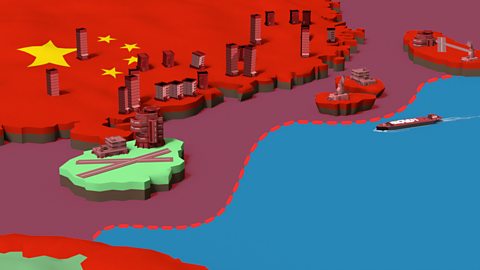
Some causes of conflict could be disputes about land use or resources, over political authority or territorial rights. Religion and ideals can also affect how different countries interact with each other and can lead to conflict in some cases.
Conflict in Wales
In 1957, a private bill sponsored by Liverpool City Council was brought before Parliament to create a reservoir in the Tryweryn valley, near Bala, Gwynedd. This was to meet the increasing need for water for households and industry in Liverpool and the Wirral. It meant that the village of Capel Celyn would be flooded.
Liverpool City Council were able to obtain authority through an Act of Parliament. This meant that the development could bypass any planning inquiry in Wales where any arguments against the proposal could be made.
The flooding of the Tryweryn Valley led to opposition from many people in Wales and became a source of tension between some Welsh communities and the UK Government. Several peaceful protests were held and hundreds of people including the residents of Capel Celyn marched through the streets of Liverpool.
On 10 February 1963 the militant group Mudiad Amddiffyn Cymru planted a bomb that damaged an electrical installation on the dam construction site in an attempt to stop the flooding of the valley.
Welsh local authorities opposed the flooding and 27 of the 36 Welsh MPs voted against the second reading of the bill with none of them supporting it. Despite this the valley was flooded in 1965.
The village and its buildings, including the post office, school, and chapel were lost, with farms being submerged. This led to the primarily Welsh speaking locals being displaced or losing their livelihoods.
Impact of conflict
Conflict can have a range of impacts on people, communities and countries. The effects may vary depending on the nature of the conflict, its duration and the resources available to those affected.
Conflict can lead to a variety of other issues such as:
- war - when armed violence is used by one country against two or more countries often over land, resources or power
- terrorism - where individuals or groups use violence to attempt to influence governments or achieve political, religious or ideological aims
- civil war - opposing groups within the same country use armed force in order to gain power or control
- traditional warfare - the armed forces of one country fight those of another using conventional weapons and military tactics
Conflict can have significant effects on people's lives. People may be injured, lose their homes or be forced to leave their communities because of violence or destruction. Some may move to other regions or countries in search of safety, including as refugees or asylum seekers.
Conflict can also damage a country's ability to develop. Governments may have to spend large amount of money on military activities rather than on new infrastructure, education, and healthcare. Conflict can disrupt access to clean water, food supplies, and medical services, increasing the risk of diseases, malnutrition and poverty.
Resolving conflict
Turning a period of conflict into non-conflict is known as conflict resolution. This can be achieved through a number of methods, including:
- compromise - both sides reach an agreement which will often involve both sides giving way on some of their demands.
- democratic debate - opposing groups are given the chance to discuss their views, consider different options, vote on proposals and accept the decision of the majority.
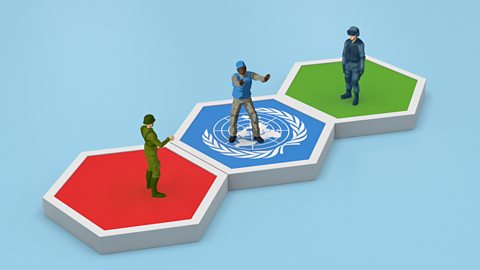
Many organisations help to reduce the effects of conflict by providing humanitarian aid, healthcare and education. The United Nations also supports peacebuilding efforts across the world by helping countries develop their capacity to prevent, manage and resolve conflict.
The UN has played a central role international peacekeeping efforts in countries such as Cambodia, Afghanistan, Haiti and Sudan. It aims to promote peace and stability through activities such as:
- the monitoring of ceasefires
- assisting the return of refugees and displaced persons
- helping to organise and monitor elections of new governments
More on Conflict and peace
Find out more by working through a topic
- count1 of 2