Relevant context for Romeo and Juliet

Context is important but don’t use too much!
A few small and relevant references used to support your points about the play are far better than huge chunks of unrelated information – even if the information is interesting.
English society
Just like many of the source tales on which it is based, Romeo and Juliet is set in Italy, in the city of Verona. Shakespeare often set his non-history plays in states abroad, for several reasons:
- Many members of the English audience would never get to travel much, and seeing portrayals of foreign lands and their people was exotic and exciting to them.
- Plays such as Romeo and Juliet showed violent passion; it was generally felt that hotter countries gave people more passionate temperaments, so sunny foreign settings could enhance the understanding of the behaviour in the story.
- Shakespeare sometimes included elements in his plays which could be seen as critical of the establishment, particularly in such volatile political times as the The 'Golden Age' of the reign of Queen Elizabeth 1st in Britain from 1558-1603. and From the time of King James I (1603–1625). English periods traditionally use the Latin version of the monarch’s name. Jacobean literally means “of James". eras. By setting his plays abroad, he could avoid coming under such close scrutiny for criticising (or seeming to criticise) social, economic or political institutions within England.
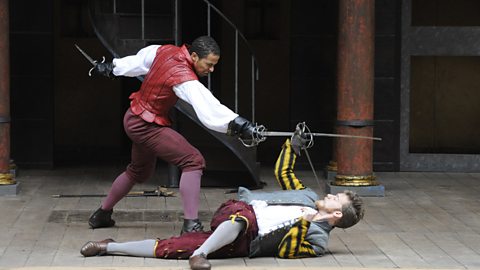
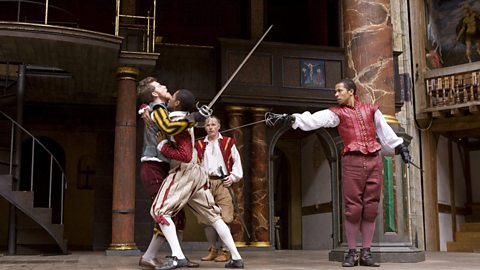
In Elizabethan London, people often watched public executions and went to see cockfighting or bear-baiting as entertainment; violence was everywhere. Duelling with swords, which had previously been thought of as a foreign pursuit, was gaining popularity in England after the recent publication of technical duelling manuals (think of Mercutio’s scathing commentary on Tybalt’s studied duelling technique), and so theatre audiences – especially young men – were keen to see fighting on stage.
Religion, superstition and fate
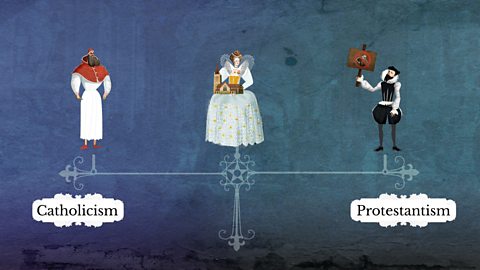
Following King Henry VIII’s conversion to Protestantism, there was a great deal of unease regarding the relationship between church and state in England. Tension between Protestants and Catholics resulted in alternating persecution as successive monarchs imposed religious rules on the country. By the time Romeo and Juliet was being performed, Elizabeth I was on the throne; she had put a ‘Religious Settlement’ in place to try and reconcile the opposing churches, but Protestantism was still the official religion of England and the majority of Shakespeare’s audience would have either been Protestant or would have attempted to appear so in order to avoid persecution. As a representative of the Catholic church, the character of Friar Lawrence in Romeo and Juliet would have been regarded with suspicion; this may be why Shakespeare does not present him solely as a wise and trustworthy counsellor, but gives him some moral ambiguity and even a suggested moment of cowardice when he deserts Juliet in the tomb at the end.
Religious conflict. revision-guide
Find out more about religion in Shakespeare's time.

The Religious Settlement. revision-guide
How successfully did Elizabeth deal with the problem of religion?
Elizabethan England. video
A collection of GCSE History videos exploring the Elizabethan era.
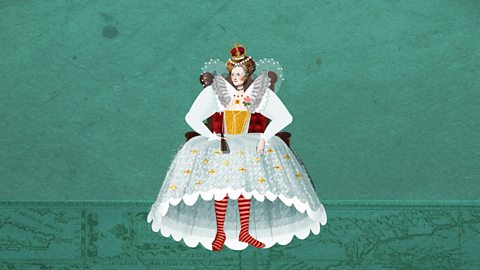
The prologue at the beginning of the play underscores the fact that Romeo and Juliet are “star-cross’d lovers”, meaning that they are destined to never be together – their doom is ‘written in the stars’. The idea of fate – a force beyond human control that had already decided how everything would turn out, no matter what people tried to do or change about it – was popular in the superstitious Elizabethan times. This is perhaps particularly understandable since many people had little to no power over their own lives – there was no democracy, poverty was rife and there had been years of political, social and religious turmoil. Astrology was also growing in popularity during this era, and the link between the study of literal stars and the metaphorical futures ‘written in stars’ was present in public consciousness.
Shakespeare often raises questions about fate in his plays – he was interested in the conflict between fate and free will, because those ideas suggested how much control people might have over their own lives. Were tragic characters doomed from the start, no matter what they did, or did their own bad choices made through their free will have more of an impact on their lives? It is worth considering this when looking at both deliberate decisions made by characters in the play (Mercutio’s provocation of Tybalt, or Romeo murdering Tybalt in revenge for Mercutio’s death) and at instances of chance (Friar John’s unforeseen detention and failure to deliver the crucial letter, or the timing of Romeo’s arrival at the tomb and drinking the poison) which greatly affect the plot.
The role of women
Traditional gender roles of the time dictated that women became wives and produced children – this was their only perceived purpose in society. Girls were considered the property of their fathers until married, when they would become their husband’s property instead. They would have been expected to submit to the will of the men in their lives without question or comment, as seen when Capulet forces Juliet into marriage with Paris despite her protestations. Marrying his daughter to a highborn nobleman like Paris would raise the social status of the Capulet family, which suggests that on some level Capulet and other fathers like him cared more about the outward appearance of their family in society than about the happiness of their daughters. Juliet refuses to be passive and do what she’s told, making her an unusually strong and courageous female character for the time.
Any analysis of Juliet’s role and character for your controlled assessment task should include a little context about the accepted roles of women at this time and how unusual she was in being resistant to the expectations placed on her by her family and society.
It's also worth noting that while women were expected to have children, wealthier women did not usually look after their children themselves but had someone else do it for them – Juliet’s Nurse is an example of this. She lost her own child, Susan, as a baby, and transferred all the affection she felt for her deceased daughter onto Juliet as she raised her. This explains why Juliet’s relationship with her Nurse is closer and more intimate than the relationship she has with her mother. Her Nurse is affectionate and has been with her since she was a baby; her mother is more formal, less familiar and exhibits less care towards her.
Romeo and Juliet performed
Romeo and Juliet. video
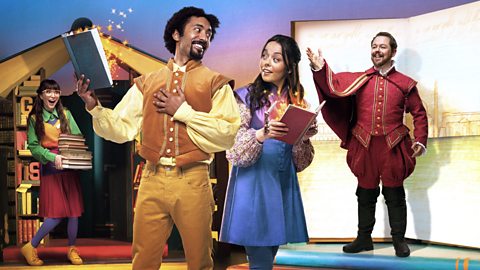
A host of CBeebies stars and actors join Rebecca in a magical library to stage a performance of William Shakespeare’s most famous play, Romeo and Juliet.
Drama on 3. audio
Shakespeare's tragic love story. With Trystan Gravelle and Vanessa Kirby as the lovers and David Tennant as the Prince.

English Literature / Drama GCSE: Shakespeare Unlocked - Romeo and Juliet. collection
Three key scenes from Romeo and Juliet are explored by actors and directors at the Royal Shakespeare Company.

Further study
The study of Shakespeare, controlled assessment guidance. activity
Unit 3 of the CCEA GCSE English Literature qualification is a controlled assessment unit based on the study of a play by William Shakespeare.
In Our Time. audio
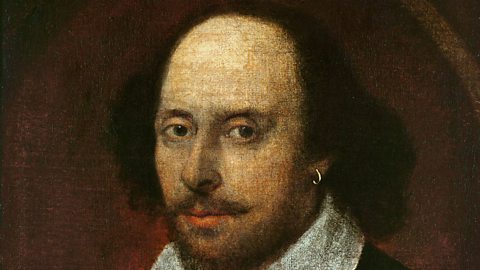
Melvyn Bragg and guests discuss the poetry and power of Shakespeare's tragedy of two young lovers in Verona, their families divided by a bitter feud.
GCSE English Literature podcasts - Romeo and Juliet. podcast
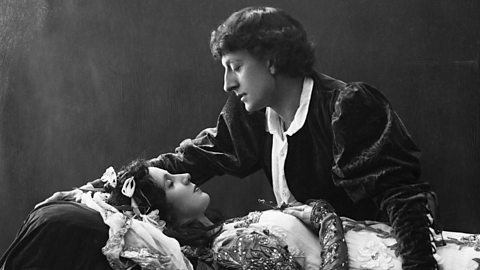
Revise Shakespeare's Romeo and Juliet, learn the quotes and get the grade.

More on Romeo and Juliet
Find out more by working through a topic
- count5 of 5
- count1 of 5
- count2 of 5