Pronouns
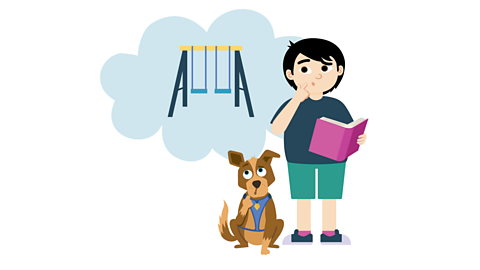
A pronoun is a word which takes the place of a noun or noun phrase in a sentence.
The children went to the park. The children played on the swings.
The noun phrase 'the children' is used twice, which sounds repetitive.
The children went to the park. They played on the swings.
The pronoun 'they’ has replaced the noun phrase ‘the children’.
What is a pronoun?
Explore pronouns by following Kevin and Maria’s adventure in the frozen Himalayas.
When to use pronouns
Pronouns are words which replace nouns or noun phrases in a sentence.
Pronouns help you avoid repeating the same words again and again, so your writing flows more smoothly.
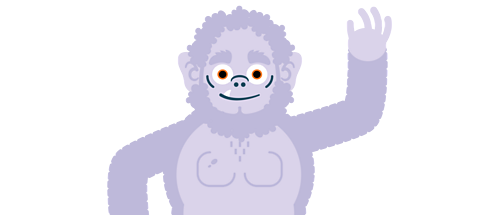
The yeti looked huge. The yeti was covered in snow.
Instead of using the noun phrase 'the yeti' twice, you can use the pronoun 'it'.
The yeti looked huge. It was covered in snow.
Personal pronouns are usually used to replace the names of people. They include:
I, you, we, he, she, me, us, them
These pronouns stop your writing from sounding repetitive.
Maria shouted, “I can do it!”
The personal pronoun ‘I’ replaces Maria’s name.
Example 1
In this part of Kevin and Maria’s story, the pronouns are missing.
Can you add the correct pronouns to make the sentences flow better?
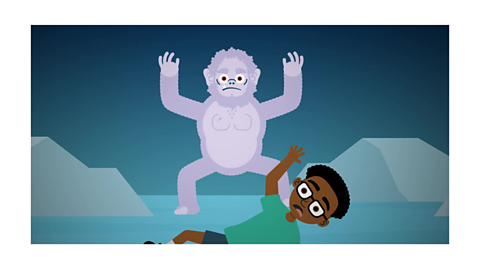
Kevin and Maria crept along the frozen cliff. Maria helped Kevin climb to safety. Then Kevin and Maria looked behind. Kevin and Maria saw a huge Yeti sliding towards Kevin and Maria.
✓ Here are the missing pronouns.
Kevin and Maria crept along the frozen cliff. She helped him climb to safety. Then they looked behind. They saw a huge Yeti sliding towards them.
Repeating names and nouns too often makes writing sound strange. Pronouns help avoid repetition.
Example 2
What two pronouns are used to replace Kevin and Maria’s names in this short paragraph below?
In truth, Kevin had much to thank Maria for. The success of the adventure was theirs, but it was mostly hers - oh, and the whale’s, of course!
✓ Here are the pronouns.
In truth, Kevin had much to thank Maria for. The success of the adventure was theirs, but it was mostly hers - oh, and the whale’s, of course!
'Hers' and 'theirs' are two examples of another type of pronoun, known as possessive pronouns.
They are used to show possession of something.
In the example above, they show possession of the success.
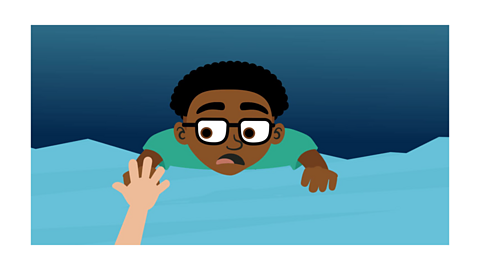
Task
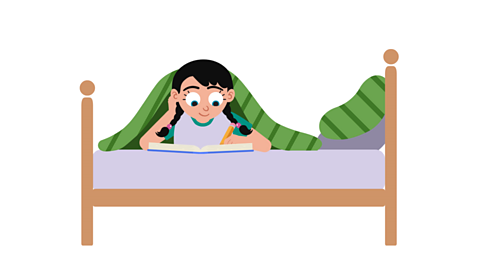
Story starter
Kevin and Maria's story starts mid-action.
Have a go at writing your own start to their adventure.
Think about how they arrive in the mountains and why they are there.
Here are some ideas to get you started:
- They are researching yetis.
- They are dropped in by parachute.
- They find a mysterious portal.
Remember to include both personal and possessive pronouns.
Play our fun English game Crystal Explorers! game
Use grammar, punctuation and spelling skills to explore jungles, caves and tombs on your mission.

More on Grammar
Find out more by working through a topic
- count3 of 14
- count4 of 14
- count5 of 14
- count6 of 14