Impact of voluntary sector and private sector
Quick version
Voluntary and private sectors play a role in tackling social and economic inequality.
Voluntary organisations efforts are crucial in addressing issues like homelessness, healthcare and discrimination.
For example:
- food banks
- charities
Private sector companies and organisations are separate from government and run for a profit.
They can work to reduce inequality:
- providing apprenticeships provides people with skills and can lead to more secure employment
- public-private partnerships provide up-front funding for government projects
- paying the real Living Wage helps low-paid workers meet the cost of living
Learn in more depth
Keep going to learn:
- How does the voluntary sector help people in need?
- What is the role of the private sector?
Then test how much you have learned.
Impact of voluntary sector and private sector on social inequalities
Governments are not the only institutions working to address social and economic inequalities - the voluntary and private sector also play a supporting role.
Voluntary sector
 Image source, jeremy sutton-hibbert / Alamy
Outside of government, there are many different voluntary organisations helping to tackle social and economic inequality.
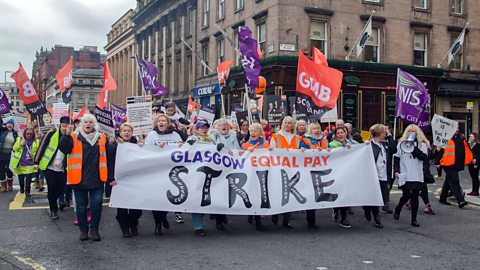
Across Scotland and the UK, many voluntary organisations or charities have been established and these help support people in terms of homelessness, health and discrimination.
Often these voluntary organisations “plug the gaps” or provide additional support that goes beyond what the Welfare State provides.
One of the best known voluntary areas of additional voluntary support is food banks.
According to House of Commons Library, there were over 2,800 food banks in operation in the UK in 2025. The Trussell Trust, Britain’s largest food bank network, handed out 2.6 million emergency food parcels in 2025.
Most people who receive food from these banks are on low incomes or awaiting benefit payments. However, a significant proportion of the supplies go to people who are working.
Another voluntary organisations that aims to provide support to people in need is Shelter Scotland.
As well as providing advice for people who are homeless or who are struggling to find a place to call a home of their own, Shelter Scotland also campaigns to raise awareness in government and with the public of the impact homelessness has on individuals and families.
Shelter Scotland also undertakes research that helps inform decision makers of the impact of policy changes, including those introduced by government.
Image source, jeremy sutton-hibbert / AlamyPrivate sector
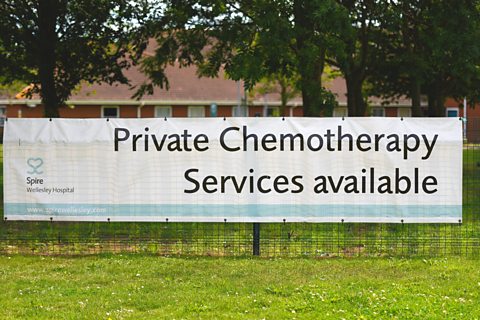 Image source, Avpics/Alamy
The private sector is made up of companies and organisations that are separate from government and run for a profit.
The private sector does have a role to play in delivering services such as education and health but there is a debate as to whether private sector involvement in these areas reduces inequality in social and economic inequality in society or widens social and economic inequality in society.
Apprenticeships
Private companies can work with the Scottish Government and Skills Development Scotland to provide apprenticeships. These allow young people to 'earn while they learn', gaining skills and qualifications that could lead to more secure and more highly paid work.
According to a 2022 report from the OECD:
Modern Apprenticeships reach a broad group of learners, including those from more deprived backgrounds and adult learners.
90% of people who completed a Modern Apprenticeship were in work six months later.
Apprenticeships provide valuable entry points for young people and adult learners in economically disadvantaged communities.
Social housing
Private developers and building companies work with national and local government to include affordable social housing within new developments. This aims to reduce housing shortages, particularly for people on low incomes.
In the City of Edinburgh council area, in 2024/25, 94% of planning applications for developments of 20 or more homes included affordable housing within the plan.
Real Living Wage
The real Living Wage is a rate of pay based on the cost of living. Private companies can sign up for Living Wage accreditation by committing to pay the real Living Wage to all their employees aged 18 and over. This includes staff such as cleaners, security guards and caterers who are regularly employed through another company.
Paying the real Living Wage reduces inequality by helping the lowest paid employees to meet the cost of living.
According to the Living Wage Foundation, as of 2025, more than 4000 employers across Scotland are accredited Living Wage employers.
Private heathcare
Private healthcare is available for those able to afford it. Health care services – such as dental care or mental health counselling – are often provided by employers in workplace schemes through private medical insurance.
Workplace medical insurance can help employees, including those on lower wages, to access health services more quickly than they might be able to on the NHS, and without having to pay themselves.
Wealthier people may National Insurance and taxes that help fund the NHS even if they don't use these services themselves. Some argue that this reduces NHS waiting times and increases the funding available for those who do use the NHS.
However, those on limited incomes or who are without work most often won’t have access to private healthcare.
Many consultants and specialists working in private healthcare also work for the NHS. Spending time on private practice reduces the time they have available for NHS work, potentially resulting in longer NHS waiting times.
Private finance
The private sector has also helped build new schools and hospitals in partnership arrangements with governments and local councils.
Usually the private companies pay for and build the new buildings and then rent them to the councils or government. The appeal of these partnerships for governments is they do not have to provide funds upfront to pay for construction.
The criticism of Public Finance Initiatives which were used in the past to fund building of schools and hospitals is that the government is trapped paying for projects over a lengthy period, and that public money is given to private companies that make a large profit.
The Scottish Government now uses a Mutual Investment Model (MIM), in which a company jointly owned by the private construction/finance companies and by government. is set up to run the project and any profits are shared.
Private education
In 2025, around 4% of pupils in Scotland go to independent or private schools that are not part of local authority or council education provision.
This means 25,919 pupils received their education in independent schools in Scotland. For pupils from less affluent backgrounds there may be fee assistance or a bursary available to help cover the cost of private education fees.
(Source: Scottish Council of Independent Schools)
Image source, Avpics/Alamy Quiz
Recap what you have learned
The voluntary sector consists of non-profit organisations, charities, and community groups that help fill gaps left by government services by providing critical support to those who need it.
Their efforts focus on tackling issues like homelessness, food insecurity, and health disparities.
Food banks are critical source of support for people experiencing food insecurity and in 2025 the UK had approximately 2,800 food banks.
Shelter Scotland is a charity that offers assistance to people who are homeless or struggling to secure stable housing. They also raise awareness among policymakers and the public about the impacts of homelessness.
Private sector organisations operate for **profit)). They can help reduce inequality but there is debate about whether their involvement always benefits society.
Apprenticeships can improve opportunities for people from disadvantaged backgrounds by increasing skills and employability.
Companies which pay the real Living Wage can help low-paid workers meet the cost of living.
Private developers work within planning rules to provide low cost social housing as part of their private residential developments.
Private healthcare can provide faster access to treatment and may reduce pressure on the NHS, but critics argue it can increase inequality because many people cannot afford it and NHS staff may spend time working privately.
Private finance can provide up front funding for government projects but can lead to long term costs from public money.
More on Inequality
Find out more by working through a topic
- count10 of 10
- count1 of 10

- count2 of 10

- count3 of 10