Food and sustainability
A long time ago, people started farming instead of hunting and gathering. This meant people needed more land to grow crops and raise animals. To get this land, they had to clear out forests, grasslands, and other natural places. They cut down trees and made fields to plant things like wheat, rice, and corn.
Today, it is estimated that almost half of the liveable land on Earth is used for agriculture. Changes in land use can affect the habitats of animals and plants.
In some places, native plants are replaced with a cash crop. Palm oil is an example of this. It's grown in large quantities in the Amazon rainforest. The tropical rainforest has been deforested in some areas to make way for palm oil plantations, as palm oil production can provide higher economic returns than some native Amazonian tree species.
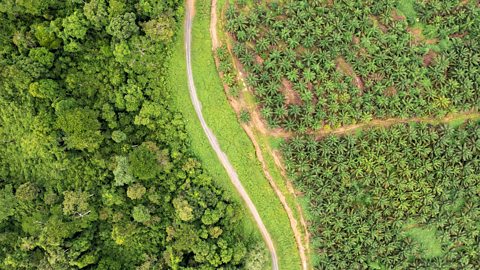
The way we farm now can affect water quality and soil fertility, which may make it more difficult to grow crops without additional inputs. This means that some farmers use artificial fertilisers and pesticides, which can have impacts on certain plants and animals in the surrounding environment.
Activity: How has farming changed throughout history?
Unsustainable food production
Unsustainable food production can affect the environment, and sometimes our ability to grow food. These impacts have led some organisations, governments and farmers to explore ways of reducing the environmental effects of food production.
Impacts on society
- The quality of soil can be damaged (if overused) which may lead to reduced crop yields, affecting food availability and access for communities.
- Pesticides and fertilisers used in the growing of crops can sometimes pose health hazards to farmworkers and nearby communities.
- Food waste can affect the efficiency of food systems, and may contribute to food insecurity in some regions.
Impacts on the environment
- Transportation of food over long distances can contribute to greenhouse gas emissions, depending on the method of transport used.
- Clearing land for farming can result in the loss of natural habitats, which may affect biodiversity and ecosystems.
- Intensive farming practices can deplete soil nutrients, degrade soil structure, and lead to erosion.
- Water that runs off from agricultural fields containing fertilisers and pesticides can contaminate water sources, harming aquatic ecosystems.
- Methane from livestock and carbon dioxide from deforestation, contribute to global warming and climate change.
Sustainable food production
Sustainable food production refers to approaches that aim to produce food while protecting the environment, preserving biodiversity, supporting local communities, and ensuring that there are enough food supplies for the future. Environmental impacts vary considerably depending on the type of farming, location and management practices used.
Organic farming involves producing crops without artificial chemicals.
Crop rotation and diversification can help to improve soil health, reduce pests and diseases, and enhance biodiversity.
Agroforestry integrates trees and shrubs into farm land. This can support soil conservation and improve biodiversity of animal and plant life.
Urban farming, allotments and community gardens utilises vacant urban spaces for food production which can promote local food, community engagement, education and food security.
Fair trade and ethical farming practices support fair pay and working conditions for farmers and agricultural workers.
