Religion and life
In this article, learn about how Sikhs view the origins of the universe as well as some of life's big questions.
Key points
- Sikhism teaches that every human contains the light of Sikhs believe in one God called Waheguru which means ‘Wonderful Lord’ or ‘Wonderful Teacher’., which makes life sacred, valuable and unique. Sikhs are therefore taught it is their responsibility to live morally and truthfully.
- The The Guru Granth Sahib is the most important Sikh holy book. It is a collection of songs, prayers and hymns from the Sikh Gurus and other holy men, as well as teachings from other faiths. It is treated as a living Guru. teaches that all beings are created by God and infused with his divine light, linking humanity with the whole of creation.
- The purpose of life for many Sikhs is to follow The order or command of God, referred to as Waheguru. and ultimately achieve The freeing of the soul from rebirth/salvation/liberation. from the cycle of rebirth.
- Sikhism teaches that the universe and all life exist because of Waheguru’s will. It emphasises that all living things are equal and that humans have a duty to care for creation, not dominate it.
Video
Watch the video below to compare Muslim, Jewish, and Sikh attitudes towards whether humans have the right to use the planet however they want.
Muslim presenter: Should humans have the right…
Jewish presenter: to use the planet…
Sikh presenter: however they want?
Muslim presenter: Hello, I'm Muslim,
Jewish presenter: I'm Jewish,
Sikh presenter: and I'm Sikh
Muslim presenter: And our religions all teach that God created the world for us to live in and care for.
Jewish presenter: But does that give us the right to do whatever we want with it?
Sikh presenter: Especially if that means damaging the environment for future generations?
All: Our planet is home to over 8 billion people and counting, and we're quickly using up its resources.
Forests have been destroyed and the seas are polluted.
The summers are getting hotter and the winters are getting wetter.
Muslim presenter: Climate change is real and it's caused by humans.
Jewish presenter: It puts the planet and us all at risk.
Sikh presenter: So what do our religions say about this?
Jewish presenter: Should humans have the right to use the planet however they want?
Muslim presenter: Muslims are taught that Allah created the world to provide us with everything that we need and to be a place of worship. It's our job to be khalifahs or stewards, which means that we have a responsibility to look after the earth. Muslims believe that we'll be judged by Allah on how well we've lived up to his trust.
Jewish presenter: Judaism also teaches that the earth belongs to God and we're his stewards. And not only that, the Torah says that the world was given to humans to rule over. But it comes with responsibilities because we must work the land and take care of it. An important Jewish principle is bal tashchit, ‘don't waste’ or ‘don't destroy’, which means we should care for the Earth's resources and avoid harming the environment.
Sikh presenter: The Guru Granth Sahib ji is the sixth Scripture and our eternal guru. The first words are ‘Ik Onkar’, which means everything is one. We're taught that God created the world and the world is part of God. All things are part of this oneness. Everything is connected, the worlds, the animals, and plants, us. So if we harm the planet, we harm the oneness we are part of. Sikhs follow the principle of Seva, which means selfless service. So to serve humanity, we need to protect the world we all share.
Muslim presenter: As Muslims, we believe that we should care for even the smallest of animals, the Prophet Muhammad, peace be upon him, said “whoever kills anything bigger than a sparrow, without just cause, will be accountable to Allah”, which means animals should only be killed for food.
Jewish presenter: A Jewish rabbi called Moses Maimonides once wrote, “it is forbidden to cause pain to any animal, although we are allowed to eat meat too.”
Sikh presenter: Guru Nanak Dev ji, the founder of Sikhi, wrote, Air is the guru, Water the Father, Earth the Great Mother. Nature provides everything we need and deserves respect. Many Sikhs do this by living simply and making choices that reduce harm to the environment, like being vegetarian.
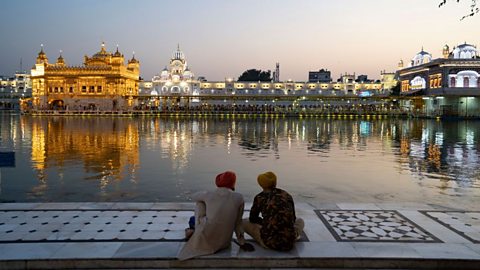
Every Sikh temple, called a Gurudwara, has a free community kitchen called Langar. The food is always vegetarian, so that people of any background can share the same meal as equals.
Muslim presenter: But it's not always easy to know where our food has come from or how it was produced.
Jewish presenter: And have you ever wondered how your clothes are made?
Fast fashion and food choices can also have an impact on the environment.
Muslim presenter: Pesticides, deforestation, cheap labour.
Sikh presenter: However, it can be more expensive to buy food and clothing that have been ethically produced.
Jewish presenter: But our religions teach us that we should try and make the right choices.
Muslim presenter: So we could decide to save up, do without, or eat less meat, for example.
Sikh presenter: One of our most important principles is Kirat Karna, earning an honest living. That means we should never take advantage of people or damage the environment to make a profit.
Jewish presenter: A Jewish principle that's relevant here is Tikkun olam, which means repairing the world. We believe that we're partners with God in making the planet a better place.
Muslim presenter: I've actually been really anxious about climate change recently. I think lots of people are. It's when you realise that the damage we've done to the planet might be irreversible, and that humanity has got to wake up. My faith reminds me that I have a responsibility to change my habits and do something about it.
Jewish presenter: All of our religions teach that this planet is special
Sikh presenter: and we can't do whatever we want with it,
Muslim presenter: so we need to look after our planet, our home, and each other.
Click here for a helpful tip!
Sikhism teaches that all life contains God's light, but humans have the unique role of moral responsibility. For most Sikhs human life is special because it gives people the chance to live a good life and bring their soul closer to Waheguru, ready for mukti.
Religion and Life scripture
Origins of the universe
Sikhism teaches that Sikhs believe in one God called Waheguru which means ‘Wonderful Lord’ or ‘Wonderful Teacher’. created the universe out of nothing through his divine command, known as The order or command of God, referred to as Waheguru.. This belief comes from the The Guru Granth Sahib is the most important Sikh holy book. It is a collection of songs, prayers and hymns from the Sikh Gurus and other holy men, as well as teachings from other faiths. It is treated as a living Guru., which teaches that everything in the universe exists because of God’s will.
Sikh scriptures describe creation as unfolding in cycles, with the universe going through continual processes of creation and destruction.
The Guru Granth Sahib teaches that the universe is so vast and limitless that no human can fully understand its extent.
The The scientific theory that describes the early development of the Universe. in science states that the universe emerged in one moment from an event known as the Big Bang.
Some Sikhs may see science, including the The scientific theory that describes the early development of the Universe., as compatible with their beliefs. Science may explain how the universe began, while Sikhism explains why, because of god’s will, hukam. Some Sikhs may also accept ideas like evolution and survival of the fittest, but believe these only explain the process of life, not its purpose, which comes from Waheguru.
Exam-style question
Explain two Sikh views on the origin of the universe. Refer to scripture or sacred texts in your answer.
One Sikh view is that God (Waheguru) created the universe by hukam (God’s will/command). Sikh teachings emphasise that creation exists because God willed it.
Another Sikh view is that creation is ongoing and ultimately beyond full human understanding, which is why many Sikhs may accept that the origins of the universe are mysterious. In the Guru Granth Sahib, a passage reflects this by stating that only the Creator fully knows when and how creation began:
"The Creator who created this creation - only He Himself knows."Guru Granth Sahib
The value of the world

Sikhism teaches that Sikhs believe in one God called Waheguru which means ‘Wonderful Lord’ or ‘Wonderful Teacher’. created the universe and that the divine light, jot, is present in all living beings. This gives the world spiritual value.
For many Sikhs, nature inspires awe and wonder, showing Waheguru’s greatness and sustaining all forms of life. Therefore, creation is a reminder of Waheguru’s presence.
The Guru Granth Sahib teaches that humans are stewards rather than owners of the earth. They are entrusted with its care and should live in harmony with The order or command of God, referred to as Waheguru., not exploit creation.
Because all life is interconnected, harming the environment also harms spiritual wellbeing. Protecting the world is therefore a sacred duty.
Exam-style question
Explain two Sikh views about the value of the world. Refer to scripture or sacred texts in your answer.
One Sikh view is that all of creation contains God’s light and therefore has spiritual value. This means the world must be treated with respect.
Another Sikh view is that humans are stewards of the earth, with a duty to use resources sustainably. Sikhs reject the idea that humans own the world and instead emphasise working with nature to preserve what Waheguru has created.
Issues in the natural world

The environment
Sikhism teaches that humans are caretakers of the world, not owners. Therefore, causing pollution and exploiting resources goes against stewardship. Harming the environment also harms all life, which is God's creation.
Sikh teachings warn against the "Five Thieves" of:
lust (kama)
greed (lobh)
anger (krodh)
attachment (moh)
pride (ahankar)
Many Sikhs believe that these attitudes or traits/ behaviours lead to exploiting the earth and damaging it for future generations and species.
The Spiritual masters of Sikhism.’ teachings show a deep connection with nature, highlighting respect for rivers, animals and forests as expressions of the divine. The founder of Sikhism and the first Guru. Considered to be a religious innovator. taught that the natural world reveals God’s presence. The seventh of the Ten Gurus of Sikhism, he taught Sikhs the importance of caring for the natural world. cared for an animal sanctuary and encouraged Sikhs to live gently with the environment; and the The Guru Granth Sahib is the most important Sikh holy book. It is a collection of songs, prayers and hymns from the Sikh Gurus and other holy men, as well as teachings from other faiths. It is treated as a living Guru. includes many hymns that describe creation as a reflection of Waheguru.
Global warming is the dramatic increase in the Earth’s average surface temperature, caused by greenhouse gases such as carbon dioxide and methane being released into the atmosphere known as emissions. Many Sikhs see this as a moral issue because they see it as harming God’s creation and threatening future generations.
Animal rights
Sikhism teaches that animals possess a soul, Sanskrit word that means soul., and move through cycles of birth and rebirth just like humans. Because of this, they should be treated with dignity.
The The Guru Granth Sahib is the most important Sikh holy book. It is a collection of songs, prayers and hymns from the Sikh Gurus and other holy men, as well as teachings from other faiths. It is treated as a living Guru. teaches compassion, mercy, and kindness toward all living beings, guiding Sikhs to avoid causing harm. As a result, many Sikhs choose to be vegetarian, since taking animal life is seen as creating negative The intentions behind actions and what the consequences of actions are. The idea that all actions (no matter how big or small) have consequences that can cause happiness or suffering. and as being out of harmony with Sikhs believe in one God called Waheguru which means ‘Wonderful Lord’ or ‘Wonderful Teacher’..
Sikhism emphasises compassion for all creatures. The founder of Sikhism and the first Guru. Considered to be a religious innovator. taught Sikhs to “consider all creatures your equals,” supporting the belief that every being is part of God’s creation and deserves respect.
Some Sikhs believe animal testing may be acceptable only when it is the sole way to save human life, but unnecessary suffering or cruelty is always considered wrong.
Exam-style question
Explain two Sikh views about the treatment of animals.
One Sikh view is that animals must be treated with respect and kindness because they have souls and share in the cycle of rebirth. This means causing them harm creates negative karma.
Another Sikh view is that animal testing may be acceptable for medicine if it helps to save human lives. However, Sikhs reject cruelty and emphasise that compassion and mercy towards all beings are central to their faith.
Sikh beliefs on the origins of human life
Sikhs believe each soul is a spark of the eternal soul, existing since creation. It journeys through birth, death, and rebirth. This is known as the cycle of The cycle of birth, death and rebirth..
The cycle of samsara
Human life is considered unique in Sikhism because human beings can reason, communicate and strive for spiritual union with God. This gives humans a responsibility to live morally.
Within Sikhism there are divergent views towards evolution and the origins of human life.
In the 19th Century Charles Darwin proposed the Theory of Evolution, with evidence that is now widely accepted, including amongst Christians.
Some Sikhs may accept evolution but believe it was Sikhs believe in one God called Waheguru which means ‘Wonderful Lord’ or ‘Wonderful Teacher’. who set the process in motion, showing that science and faith are compatible.
Some Sikhs may reject evolution because they associate it with “survival of the fittest” and feel that clashes with the belief that all life has equal spiritual value.
Sikh beliefs on abortion
Sikhism teaches that life starts at The moment a sperm and an egg cell join, during a process known as fertilisation., and that all life is sacred because it contains Sikhs believe in one God called Waheguru which means ‘Wonderful Lord’ or ‘Wonderful Teacher’.. Abortion may be seen as destroying something holy and many Sikhs may oppose it. Some Sikhs may see abortion as going against the principle of protecting the vulnerable.
For many Sikhs, the sanctity of life is the main principle: life is God-given and should be protected. However, some Sikhs also consider the quality of life, especially if continuing a pregnancy would lead to severe suffering for the mother or child. In such cases, compassion may lead Sikhs to weigh both principles carefully.
Other Sikhs may see abortion as acceptable if the mother’s life is in danger, or in cases such as An unborn baby. abnormality. In these cases many Sikhs would emphasise the teachings of compassion and preventing suffering.
Some Sikhs argue that because the soul is eternal, abortion does not end existence but interrupts this stage of life.
Ethical approaches such as "situation ethics" may guide Sikhs to act out of love and minimise harm. This connects to living in line with dharma and duty.
Sikh beliefs on euthanasia
Euthanasia is the act of deliberately ending a person's life to relieve suffering. Euthanasia or assisted dying is currently illegal in the UK (March 2026).
Sikhism teaches that only Sikhs believe in one God called Waheguru which means ‘Wonderful Lord’ or ‘Wonderful Teacher’. decides when life should end, therefore taking life interferes with his The order or command of God, referred to as Waheguru.. For many Sikhs this is evidence against euthanasia - they may also believe such actions can create bad karma and could affect the soul's rebirth.
In addition many Sikhs believe suffering can have spiritual meaning, linked to past The intentions behind actions and what the consequences of actions are. The idea that all actions (no matter how big or small) have consequences that can cause happiness or suffering.. Ending life early may block the soul’s progress.
For Sikhs, the sanctity of life is a key principle, as life is a gift from Waheguru. However, some Sikhs may consider the quality of life when someone is facing extreme pain or irreversible decline. In these rare cases, the tension between protecting life and showing compassion is carefully weighed.
However some Sikhs may make a clear distinction between actively ending a life and choosing not to extend a terminal condition through artificial means. In certain circumstances, withdrawing life-prolonging treatment may be considered as letting life take it’s natural course.
Exam-style question
Explain one Sikh teaching about abortion and one about euthanasia. Refer to scripture or sacred texts in your answer.
One Sikh teaching is that abortion is wrong because it ends life, which contains Waheguru’s light. The Guru Granth Sahib says God infuses His light into the body from the womb, showing life is sacred from conception.
Another Sikh teaching is that euthanasia is usually rejected, as only God decides when life ends. However, some Sikhs accept withdrawing treatment if it allows death to occur naturally.
Sikh beliefs on life after death
Sikhism teaches that death is not the end but part of the soul’s journey. The Sanskrit word that means soul. continues into a new life according to The intentions behind actions and what the consequences of actions are. The idea that all actions (no matter how big or small) have consequences that can cause happiness or suffering..
Most Sikhs believe that after death, the soul continues its journey based on a person’s karma. Each life and rebirth is shaped by how someone has lived, rather than by a single day of judgement.
For most Sikhs, good deeds, living truthfully, and remembering God’s name bring progress towards liberation. Bad deeds cause the soul to return in less fortunate forms.
The goal is to escape samsara by achieving The freeing of the soul from rebirth/salvation/liberation.. Sikhs believe this happens when the soul unites fully with Sikhs believe in one God called Waheguru which means ‘Wonderful Lord’ or ‘Wonderful Teacher’..
Sikh teachings stress that thinking of God at the time of death is vital. A person’s final thoughts influence whether they are reborn or liberated.
Life after death shapes Sikh behaviour: serving others, rejecting selfishness, and following the Spiritual masters of Sikhism. are ways to prepare the soul for reunion with God.
Test your knowledge on Sikhism
More on Sikhism
Find out more by working through a topic
- count2 of 3