Welcome to The Regenerators.
Plastic problems - Summary
Plastic is part of many everyday items, but plastic waste can cause problems for the environment. In this KS1 video from The Regenerators, children explore what happens to rubbish after it is thrown away and discover simple ways to reduce plastic pollution.
In this video, students will learn:
- What happens to some of the rubbish we throw away.
- Why plastic waste can be harmful to the environment.
- How plastic can affect birds and fish.
- Why some materials break down more quickly than plastic.
- How reducing, reusing and recycling can help reduce waste.
Classroom video - Plastic pollution
Learning through poetry
This beautiful animated poem is the perfect way to start classroom conversations about plastic waste.
The video explains why plastic pollution is harmful and how to reduce it.
It also includes many poetic features which students can learn from and try in their own writing.
Narrator
The things that we eat and the things that we buy
Are causing us problems and I'll tell you why.
They come in a box, a bag or a cup
That we throw in the bin for someone else to pick up.
Some we recycle and reuse, true enough
But what happens to all the rest of the stuff?
It goes in a hole in the ground out of sight.
But if we can’t see it, does that make it right?
The plastic they’re made from lasts for so long
To dump it and hide it seems very wrong.
What will they say in years from now?
When they dig up this rubbish, they’ll all wonder how
We managed to bury so much of our waste
From bottles and wrappers to tubes of toothpaste.
And that’s just the rubbish we put in the ground
Much of it lies in wait to be found
By birds and fish who think that the taste
Will be food to eat and not plastic waste.
But don’t be sad, for there is a solution
To the puzzling problem of plastic pollution.
Use less, of course, that helps a lot
But don’t forget the things that can rot.
There’s paper and cardboard that we can use
And biodegradable bags to choose.
For instead of lasting year after year
It only takes weeks until they disappear.
So next time you’re shopping, and given the choice
Make a difference, speak up, raise your voice!
Tell all those who will listen and the rest:
For the sake of the future, do what is best.
Reduce, reuse, recycle, oh yes!
Let’s try our hardest to use plastic less.
Quick facts about plastic pollution
- Some rubbish is buried in the ground after it is thrown away.
- Plastic can remain in the environment for a very long time.
- Birds and fish can mistake plastic waste for food.
- Paper, cardboard and biodegradable materials can break down more quickly than plastic.
- Reducing, reusing and recycling can help cut down the amount of plastic waste we create.
Let's discuss: What could your class do to help use less plastic at school?
Learn more about sustainability
Explore more lessons and content from around The Regenerators.
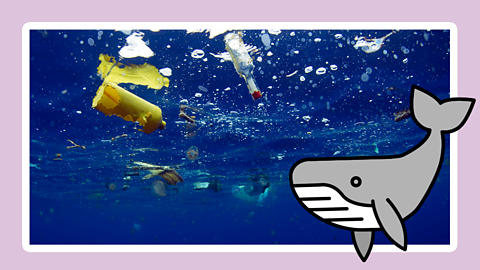
What is ocean pollution?
GREEN CLASSROOM
Power without Pollution
REGENERATORS POETRY
Videos for teachers
GREEN CLASSROOM

More from The Regenerators
BBC BITESIZE